Shakedown will provide an analysis of the legal arguments made here in more detail at the end of the week, prior to Judge Desai’s decision on the matter on Monday August 20th.
Month: August 2018
The Axe Murder Appeal: Rumor Control and what to expect?
Over the weekend, some media reported that Henri’s “appeal” resumes today, Monday. It doesn’t. A hearing where the Judge will decide whether to grant Henri leave to appeal will be heard tomorrow, Tuesday August 14th. This date was agreed upon on June 25th, two weeks after Henri was sentenced to three life sentences on June 7th.
Judge Siraj Desai will hear arguments from both counsel on why his findings ought to be appealed. If the defence are able to field a reasonable amount of “new information”, and if the Judge feels there’s a reasonable prospect of success, or a reasonable case to be heard, then he’ll grant an appeal. What the court wants to avoid is simply rehearing the same case, retrying Henri effectively.
In America this is known as Double Jeopardy. According to Wikipedia’s description:
Double jeopardy is a procedural defence that prevents an accused person from being tried again on the same (or similar) charges and on the same facts, following a valid acquittal or conviction. As described by the U.S. Supreme Court in its unanimous decision one of its earliest cases dealing with double jeopardy, “the prohibition is not against being twice punished, but against being twice put in jeopardy; and the accused, whether convicted or acquitted, is equally put in jeopardy at the first trial.”
In the Oscar Pistorius case the Judge granted an appeal on her verdict of culpable homicide, the Supreme Court of Appeal [SCA] then came to a different outcome, Dolus Eventualis [murder with indirect intent]. The SCA sent the case back to the court a quo for sentencing on their verdict. Masipa then sentenced Oscar to a “light sentence”. The state again asked for leave to appeal – just the sentence – but in the second instance, Masipa refused to grant leave. So the state took the case directly to the SCA. The SCA decided to grant the appeal, heard it, and sentenced Oscar accordingly – an effective prison term of 15 years for murder.
In my view, Desai will grant the defence an appeal simply in the interests of hearing a case “to completion”. To his credit, Desai’s trial exhausted very many avenues of legal argument though, so an appeal, if it happens will be very limited in scope.
So what new evidence, and perhaps new witnesses, will the defence bring forth? We’ve already seen one of them:
Another potential witness might be Henri’s girlfriend Danielle Janse van Rensburg. Remember it was Danielle who effectively introduced the Epilepsy Narrative. She apparently was talking to Henri when he had a seizure, she then called her father, a GP, and the next thing the court was informed that Henri had epilepsy. All of this happened right at the end of the trial in November, when Desai was hoping to pronounce his verdict.
Advocate Pieter Botha left the court and the public with this cliffhanger to ponder on over the holiday season when the courts went into recess.
So the Epilepsy Narrative is likely to be fielded, I believe, as new evidence. As I tweeted in May, I believe this evidence was intentionally withheld as a defence strategy, allowing them a back door – a legal loophole – to take the case to trial. It was clear throughout most of this trial that Botha was losing this case for his client.
What do the defence hope to gain through the Epilepsy Narrative? It’s unclear. According to Henri, he blacked out after the crimes were committed. If the defense can persuade the court that epilepsy was there to begin with [something I’ve maintained throughout my book series], then this may have an impact of his memory and theoretically on his culpability.
It’s a weak defence in my view, but who knows, the court may feel curious in the face of “no motive” to find out more. Personally I think this would be a poor reason to rehear the case, but legalities aside, more might be revealed.
What’s interesting to note, over the past few weeks and days leading up to the leave for appeal hearing, we’ve seen a PR Narrative emerge. We’ve seen a Twitter account pop up “Support For Henri”, although if anything, this account shows how little support Henri has amongst the public. To date Henri’s support on Twitter stands at a meagre 17 souls.
We’ve seen a big effort to get the “Henri’s Innocent” narrative into the media, via Henri’s key Apologists, his aunt Leenta Nel [the sister of the murdered mother, Teresa van Breda] and Henri’s girlfriend.
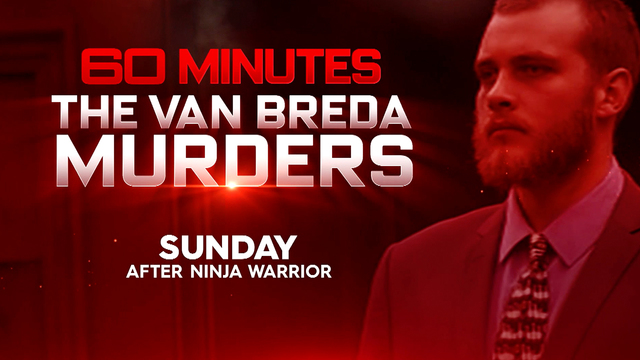
According to Danielle, and what she told 60 Minutes Australia, Henri told her “everything”. Well, then why didn’t she testify in his defence at trial? Why is she talking to the international media instead? But rather than eye-opening insights during the 60 Minutes “world exclusive”, all Danielle basically did was stand by her man. She didn’t field a detailed, evidentiary argument about why he was innocent, except to use sentiment, saying the Henri she knew didn’t like to cause pain to anything. Well, his entertainment choices seemed to suggest otherwise.
Or she simply used words to say she didn’t agree with certain findings, but wasn’t able to provide real insight as to why it made sense that her knowledge was more authoritative or credible.
We also know that Stefan van der Westhuizen, his former best friend, described Henri taking him at the throat when he told Henri Marli was having second thoughts about Henri’s innocence [prior to the trial].
Stefan van der Westhuizen, who cried in court when Henri was convicted on all charges, has gotten engaged in the meantime.
Missing from the roll is Marli. If Marli testified in Henri’s appeal, that would be something, especially if she testified as part of his defence. That Marli hasn’t participated, and all indications are that she will not, speaks volumes. Think about the credibility of a girlfriend testifying in support of her beau, while a close family member who was not only at the scene of the crime, but the only survivor of the axe attack, maintains her silence. All this while millions hang in the balance.
The Drug Narrative is unlikely to be fielded in an appeal, not by the defence at any rate. Conceivably, it could be introduced as a mitigating factor, but also as an aggravating factor. Curiously, some journalists have accepted Danielle’s “rumor control” that Henri’s drug use is all a myth [and throw in a giggle for good measure]. If Danielle says it, it must be true, right?
The Drug Narrative might be fielded by the prosecution, in the event that Desai grants the appeal. Personally I wasn’t surprised, I was shocked when the Drug Narrative was completely excised out of the court case. The fact that Henri and Danielle were arrested on drugs, Henri spent the night in jail as a result, and attended a court hearing on drugs, and yet despite this, never a word about this was whispered in court beggars belief.
Interestingly, Danielle also plays a key role in this area. When the two were arrested for dagga possession, Danielle took the rap for it. The drugs were hers, she said.
I entered into a discussion with Anthony Molyneaux about the Drug Narrative on Twitter, but I see he’s muted/removed it. Molyneaux was effectively calling the entire drug story a myth, simply because Danielle [on the eve of the leave to appeal hearing] said so.

To be fair, there’s not a lot of absolutely clear and verifiable evidence that Henri was a drug addict, not beyond a few tabloid articles, rumors and suggestions that he attended a drug rehab in Bellville. No drugs were found in Henri’s blood sample either, nor alcohol.
But is the absence of evidence an absence of evidence? Sometimes, often, the absence of evidence is evidence.
I’ve dealt with this aspect in detail in my books about the case. The Drug Narrative being so neatly excised from the trial narrative raises red flags, but even if Henri used dagga, that doesn’t make him a druggie. Of course, it doesn’t mean he isn’t one either. One might say, in light of “no evidence” there is no evidence. Again, that’s the lazy approach to this case.
The Amanda Knox case also involved an extremely brutal and bloody murder inside her home, a burglar narrative, and so on. The Drugs Narrative was also neatly excised from that case, even though it was well-known Knox was using marijuana regularly, and Perugia was a hotbed for much harder drugs, like heroin and coke. In Knox’s memoir she wrote about sleeping with a coke dealer on her first train trip into Perugia.
Coming back to Van Breda, what we know is he was expelled from university, he wasn’t on a Gap Year quite as voluntarily as he claimed. We also know that because of his record, he couldn’t get into local universities either. Julian Jansen in his book refers to Henri’s university mates nicknaming him “Druggie” [page 61]. If this information wasn’t credible, the Van Breda’s could theoretically sue Jansen/Naspers for defamation. So why haven’t they? On the contrary, the Van Breda brothers are in regular and close contact with Jansen, often granting him and Media24 exclusives. If they disputed Jansen’s knowledge, some of which cites “anonymous family sources” or friends of family, surely they’d cut him off and not grant further interviews.
And yet they haven’t.

And why would anyone come up with a rumor like that in the first place? Creative license?
According to Jansen Henri “clashed repeatedly with authorities” [in Mebourne, Australia] over drug use. The drugs appeared to be the reason Henri was sent home. Jansen also cites “great discord” in the Van Breda household over drug use. What else could cause severe discord in a wealthy family? Why else would university studies be permanently suspended for an otherwise intelligent kid from a well-to-do family?
In my own family, I had a close relative who was a junkie. This person stole some of my personal possessions. You can see from the way I’ve written this, that I’d rather not identify this person, or reveal whether it’s a he or a she. Why? Because there’ a huge stigma around it, and because of our family relationship, I’d rather not worsen things for this person. So there’s a reason drug use is difficult to see; there’s a collective effort to hide it away. Family are complicit in this. Do I have evidence that this person close to me was a junkie? Like Henri, this person also spent a single night as I recall in jail when this person was caught for possession. This person also used a lot of a dagga in public, and heroin in private. This person eventually had a near death experience due to a heroin overdose; I know because I saw the tubes down the throat, and the ventilator firsthand.
As much as Molyneaux disparages the “tabloid media”, in the September 22 2016 edition of YOU magazine, reporters photographed a donkey cart driver interacting with Henri in front of Henri’s digs. This was just nine months after the incident, and prior to his arrest. When they interviewed him, the man admitted to supplying Henri with dagga on a few occasions. Here he was coming to the guy’s house in broad daylight! The tabloid admitted the man may have been lying.
But why would a tabloid purposefully make up a rumor like that, complete with a photo, in the first place? Creative license?
Some of those renting out accommodation to Henri said the rooms looked like a pigsty.

But why would the Weekend Argus purposefully make up a rumor like that, complete with a photo, in the first place? Creative license?
For me the clearest signs of the Drug Narrative are from Henri himself. Like the family member I mentioned, Henri smokes a lot of cigarettes, and in his own version, drinks a fair amount of alcohol. In his version of the crime, he has himself drinking and staying up until 03:00 while everyone else is asleep.
After the crime he chain smokes three cigarettes, he has a beer at a friend’s home, and later on asks for his father’s whisky when his uncle chaperones him through the crime scene.
The cops on the scene say Henri smelled of alcohol.
While none of this is evidence, it’s clear that even as a young 20-year-old, Henri was particularly fond of substances, including addictive substances. This isn’t absolute evidence, but it’s getting there.
I interviewed a few people who said they had witnessed Henri’s erratic behavior. He apparently removed his clothes in a parking lot, and was singing in a mall. He appeared high or intoxicated to the people who saw him. According to Molyneaux, this is hearsay I guess.
I also discussed the impacts of various drugs on criminality. I’d done similar research in the Knox case. Because I have limited experience with drugs, I wanted to know which drugs were more or less likely to cause criminal behaviour. The sources I spoke to said dagga is the least likely to spark criminal action because of its “mellowing” effect. Alcohol was cited as a good candidate, especially for it’s tendency to remove inhibitions and compromise judgement. Cocaine was seen to be another possibility, especially if mixed with alcohol, thereby inducing paranoia, but also an extraordinary clearheaded arrogance that once the crime had been committed, it could be “handled”.
It might be hearsay and speculation, but sometimes when you dig, more is revealed. Sometimes when you dig, it goes nowhere and you quickly encounter contrary evidence, such as an interest in sport, or healthy eating, or healthy relationships with clean living folks, or an affirming approach etc. You don’t get that here. You have a pattern. Drug addicts are also notorious and habitual liars. Drug addicts are used to living a lie. We saw that in the Knox case too.
If the Drug Narrative mirrors the Epilepsy Narrative, then there’s also the Psychopath Narrative. This disturbs Danielle the most – the impression that Henri is emotionless. I think there’s a reason Henri tries so hard to hide his emotions. It’s because those same emotions empower the Drug Narrative. Some hole has to be soothed*, and so, having committed a crime, those giveaway emotions must be hidden or the real Henri will be exposed. This is why there is not one Henri in this case, but two. The Henri we see, and the Henri we don’t see.

Henri himself intuits two axe murderers, two phantoms, in his version of what happened. One he sees, and one he doesn’t see. These psychological breadcrumbs speak volumes. People who know true crime through and through, know the gold isn’t to be found at the level of what’s visible, but what’s hidden.
Perhaps an appeal will expose some of that.
*I describe the source of Henri’s pain in Diablo, available here.

According to Brendan Miller, Susan Rohde was “calm” shortly before her death
In fairness to the prosecutor, he does challenge Miller’s version during cross-examination. Watch that moment here, transcript below.
VAN NIEKERK: The tone of voice of the late Susan Rohde, you said in your evidence this morning, ‘she was calm’.
MILLER: Correct. It wasn’t screaming or screeching or…
VAN NIEKERK: But…we’ve also heard the evidence from Miss Ameermia that she was agitated. Could that have been correct…?
MILLER: Could be.
Now although the prosecutor highlights – rightly – the “calm” comment from Miller, he seems to go down the wrong tangent. Isn’t it less likely that Susan would commit suicide if she was calm than if she was agitated or worse, overwrought?
Isn’t it less likely that if Susan was calm inside the hotel room, in other words, able to control herself in front of others, that she wouldn’t be able to control herself in private?
For me the observation that Susan was calm is something you’d want to reinforce, not undermine, and yet Van Niekerk does this by referring to how many drinks Miller drank and how his recollection might not be accurate.
There is so much to mine from a firsthand encounter with someone who dies shortly after, and yet all we get from this is that she wore a bathrobe, and according to Miller, approached Jason coming “halfway” down the hall.

Farrah Ameermia was another eyewitness in Miller’s hotel room that night. She’s an attractive woman, so is Alterskye. Some of the head honchos have gathered together in the room very late at night, along with their office colleagues, very attractive women. Was this all polite, innocent fun, all round? All work, no play?
In any event, this is the version Farrah Ameermia’s gave the court in April 2018:
AMEERMIA: [Susan] called [Jason’s] name repeatedly. She was agitated; then she walked into the room‚ took him by the arm. The two left and after a while we heard a commotion outside. It seemed the two were having an argument.
What we have in this version is Susan holding herself back in terms of what she says to Jason. Jason is obstinate. He refuses to leave. Susan then walks right up to Jason, take his arm and basically makes it clear that she’s not going to let him remain in the room. And so, his hand forced, Jason leaves.
As soon as they’re out of sight, there’s an audible commotion. Jason won’t argue in front of his employees, and expects his wife, like his employees, to allow him to do as he pleases. But she won’t. And so, when forced by her to deal with him directly, he does.
Ameermia also provides further insight into Jason’s conduct in her police statement:
AMEERMIA: The door opened and it was Jason Rohde‚ quite drunk‚ entering the room. He sat on the end of the first single bed with his arms crossed. Sue Rohde‚ Jason’s wife‚ opened the door and started calling his name. She sounded agitated and wanted him to get out of the room. Jason refused and shook his head.
Susan running after Jason and Jason refusing – initially – to return to their hotel room paints a very clear scenario:
- Rather than being defeated or depressed, Susan is activated, fighting, fighting for her husband, fighting for her family.
- Susan isn’t afraid to confront Jason, but she’s still controlled enough to do so politely, inhibiting herself, and not shouting at him and making a spectacle.
- Jason, clearly, doesn’t want to be bossed around, doesn’t wish to be controlled, but in this situation he is forced to abide by his wife.
- If Jason is angry he doesn’t show it [he has his arms folded].
- What is more likely – that Jason, wanting to party and leave his wife in the lurch down the hall, and being denied this by his wife, kills her, perhaps while intoxicated, or that Jason willingly leaves the party and in the room makes a reasonable case that the two get divorced, his wife accepts this, goes to sleep and then quietly [leaving no note], kills herself, also careful not to wake him while she does so?
The best predictor of behavior is past behavior, and the most recent behavior we see here is Jason not wishing to acknowledge his wife. She calls his name and he refuses to move, refuses to answer. He’s immovable, despite her emotional pleas.
In her statement Ameermia claims she heard Jason and Susan arguing for 25 minutes. And yet Miller claims he didn’t hear “screaming” or “screeching”. Didn’t he? Not even loud voices?
AMEERMIA: Then the arguing stopped‚ and we all mentioned how intense it was and we all went to bed. I went to my room‚ I presume Jolene went back to hers…
This doesn’t sound like Susan was calm, but more importantly, it doesn’t sound like Jason was calm either. What’s important here is Jolene Alterskye, the mistress. Susan was trying to get Jason away from her, and succeeded. In this, she would have been calmer and more in control.
On the other hand, if Alterskye was the cause of the divorce, and the divorce was finalised that night in a civilized, reasonmable conversation, then theoretically Jason could have left his room and begun his new lease on life right then and there – with Jolene.
Perhaps he wanted to, but clearly, Susan was at the Spier hotel to physically restrain her husband, to physically hold onto him. We don’t know what Jason felt by being denied his guilty pleasure with Alterskye, but we know simply being apart from his mistress in general, let alone late at night after a few drinks, made him mad with frustration:
“All I can think of is you. I want to scream with frustration. I don’t want anything more in my life than to be with you.”
We know that on July 23rd, the day before Susan died, Jason and Jolene left the following messages:
Alterskye 10:02: “My penguin forever.”
Jason 10:47.36: “I absolutely hate it. I just want it to end.”
Jason 10:49: “Having you close is driving me crazy. Sue is driving me nuts!!!!! She follows me around like a f***ing shadow.”
Look at those words, and consider them in the context of murder as opposed to suicide:
my penguin forever
hate it
want it to end
you close driving me crazy
[Sue] a fucking shadow
#Rohde What did “Drama, but OK” actually mean?
The purpose of a court case is to get absolute clarity on evidence. The accused testifies, and then various witnesses, including experts, are ushered into court to corroborate or challenge a particular version. When all the evidence has been tested and studied to exhaustion, when everything that can be set out and clarified has been, then the court must decide on what really happened, and pronounce a verdict. Guilty, based on damning evidence, or not guilty, based either on evidence, doubt or a lack of evidence.
It’s the job of the Judge, prosecutor and defence advocate to be explicit in either making evidence absolutely clear or debunking it. Naturally there’s also an area, especially for the defence team, to murk certain issues in order to create doubt. An easy way to create doubt is to confuse or contradict a particular version, or simply to undermine it.
Van der Spuy did that by invoking the “whisky” narrative. That the officer drank whisky in the morning while taking a statement does undermine his integrity somewhat, although I’m not sure how it changes the schema of this case, or the crime scene. Brendan Miller is hardly a key witness, and it’s only because he’s testified that the whisky narrative even becomes relevant. If Miller didn’t testified, it wouldn’t have mattered what sergeant Appollis drank or didn’t drink when he took Miller’s statement.
Even so, it’s a point scored by Rhode’s defence team, and that’s a team in dire need of scoring points.
But I’d like to elucidate an area in which – I feel – everyone failed. The court failed. It occurred around the testimony Rohde’s colleague gave within hours of Susan’s death. I’ve provided a link below which opens at 9:30 into Brendan Miller’s very brief but very important testimony. The transcript is provided below the clip.
VAN DER SPUY: She [Susan] requested him [Miller’s eyes dart to Jason Rohde] to come with her as I understand it.
MILLER: Correct.
Miller sticks his tongue out very quickly as he answers this, then looks down. I don’t understand why the Judge and prosecutor didn’t challenge Miller on this aspect, or seek clarity on it. In Miller’s version, Susan arrives at his hotel room almost simultaneously with Jason, and then says his name repeatedly. But that’s not what Jason testified.
VAN DER SPUY: Are you able to comment on her [Susan’s]…condition?
MILLER: No…[speaking quietly]…she was calm, just said: “Jason…Jason…Jason…”
JUDGE: She was sorry- I didn’t hear that. She was what?
See, it’s precisely because Miller said this part quickly and under his breath that the Judge couldn’t hear him. Good for her, she interjects and asks him to clarify.
MILLER: She…just…repeated his name.
But that’s not what he said. He said:
SHE WAS CALM.
When Van Der Spuy asks the question, he uses a weird word to ask how Susan appeared: condition. It’s the word we might subconsciously associate with mental illness. The proper word to use in this instance is demeanor. Irrespective, Miller answers – he tells the court, he shares a crucial piece of information regarding the last impression other people have of Susan. Is she shouting, is she hysterical?
SHE WAS CALM.
Now, according to Jason, she’s wasn’t calm. She was shouting at him. She was also shouting in the hallway outside the room. So why not get clarity on this? Why not read to Miller Jason’s testimony and get Miller to confirm or contradict it.
What happens here is the Judge asks for clarity and on this vital point, something that slipped out in court is left out. It’s unfortunate the prosecutor didn’t assist the court in this. One wonders whether and how often the Judge might review the livefeed herself, and perhaps get a stronger sense of what she missed during the first go round. Sort of like the action replay and television refereeing in sports. That said, the whole point of the court process is to get the information there and then, that’s why everyone has gone to the trouble to be there – to field evidence, to examine it, to test it, but none of that can happen if it’s not heard, or misheard in the first place.
Now, Miller inadvertently confirms Jason’s version, that he sat on the bed beside Alterskye, because he could only “get up” to leave if he was sat down. Interestingly, in Miller’s version, he doesn’t explicitly mention that Jason and Jolene Alterskye are sitting together on the bed. Perhaps that’s because the murder accused is sitting directly opposite from the dock, and Miller is careful to avoid eye contact during his testimony with his former boss.
Miller is also adamant that he had no idea Jason and Jolene were having an affair, but later admits he was aware, at the conference, that Jason and Susan were patching things together, and that he shared an office with Jolene Alterskye. It seems a little odd. The boss is invited to a very late night nightcap by his colleague, and who is there, his mistress. Didn’t Miller know about it, and if Jason was patching things up, and Susan, was there, wasn’t it a really bad idea to have the drinking in the room setup setup in the first place?
It’s possible Miller had no choice in the matter – at that stage Jason was the boss, and both he and Jolene were Jason’s employees. Perhaps Jason had asked a few of them to set up the afterparty, and they simply did as they were told. Since Susan arrived on the scene in a bathrobe, one can assume Jason slipped out just as Susan was about to take a bath, or have a shower.
It’s unfortunate Miller wasn’t questioned on whether he noticed Susan’s hair, or their ends, were slightly wet or not. In any event, if Jason wished to escape the hotel room even for a few minutes, while Susan was in the bathroom was perhaps his best chance. When this tiny perk was denied him, did he do a nuclear flip?
Returning to the transcript:
VAN DER SPUY: And did he [Jason] say anything to her?
MILLER: No, he just got up and left.
VAN DER SPUY: You had offered him a drink, you said?
MILLER: Correct.
VAN DER SPUY: Did you pour him a drink; did he accept a drink?
MILLER: No, he left before I could pour.
This is quite ironic. Jason doesn’t have a drink, and thus leaves the hotel room sober and clear-headed. The policeman does have a drink, and thus leaves Miller’s home compromised, along with his statement.
The fact that Jason left the room as quickly as he did suggests Susan didn’t just say his name, but told him to return to their room. Would she have screamed at him, or, having come out of the bathroom almost the second she went him, and having followed Jason not to Alterskye’s room, but another room, all that was necessary was to show herself, and Jason knew the game was up.
At 11:23:35 the previous morning, Susan had WhatsApped Jason her unambiguous feelings:
“You are a devious f***ing bastard!!!!!”
VAN DER SPUY: Once they left, what happened then?
MILLER: Then…[glances down]…they-they-they left and…I think Farrow looked outside the door to see if they were still outside, or if they’d left [sticks tongue out, glances quickly at Jason]…that they were not there. And [shake head] we just carried on chatting.



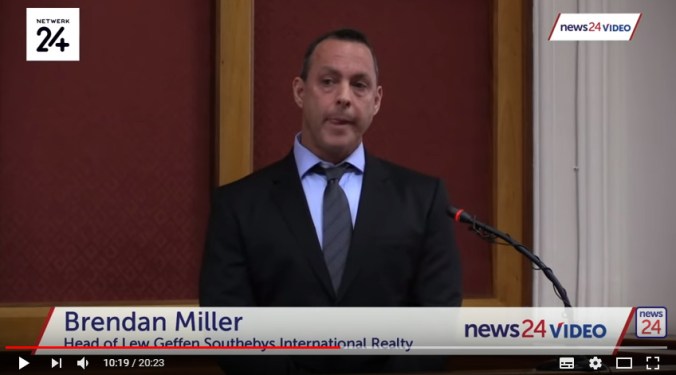
I’m not sure what the sucking in of the lips means, but it seems to be associated with someone wanting information and a sort of facial shrug, as if to say, “Sorry, can’t help you.” [But maybe I’m not so sorry.]
VAN DER SPUY: Um…how would you describe the atmosphere?
MILLER: A little bit tense…um…everyone was just very quiet.
But that’s not how Jason described it. Jason described it as “very, very” tense, and besides that “awkward” and “embarrassing”.
The “intensity” of the day prior to her death, and the last time others saw her alive, is another vital area to get to grips with. Exactly how intense was it? Why would it be tense? One reason is Susan arriving at a room where everyone is dressed, and everyone is an employee of her husband’s, ought to provide some depth to this sense, but then flesh it out.
The texts between Jason, Susan and Jolene also provide crucial insight into just how fraught the situation was between them. I also believe Jason selectively deleted some messages sent by his wife, and some of his own, leaving behind a slightly distorted picture.

Van der Spuy asks whether anyone opened the door to check whether Jason and Susan were there. Miller’s not sure. Strange. He’s just said “I think she looked out the door”.
VAN DER SPUY: Did you do anything after that?
MILLER: No, a little while later…after they left…I sent…um…Mr Rohde an SMS to ask if he was okay.
During the later half of this sentence, someone coughs loudly so it’s hard to make out what Miller said, or who coughed.
VAN DER SPUY: Okay, you sent him an SMS. What did you say in the SMS?
MILLER: I [looks down]…I think I said ‘all okay?’ or ‘are you okay’?
VAN DER SPUY: Right. Did you get a reply?
MILLER: The next morning, after seven.
VAN DER SPUY: I think it’s common cause that you got a reply. Can you remember what he said in the reply.
MILLER [Glances at the prosecutor]: Drama [shakes head], but okay.
I haven’t been able to establish exactly when Miller sent his message to Jason, but it was clearly around 02:00 or 03:00. I haven’t been able to establish when Jason responded, other than that it was roughly after 07:00. Again, it’s frustrating that the Judge and prosecutor can’t nail down these absolutely crucial details.
This is why. Let’s engage a in a brief thought experiment. In Version 1, Jason heads to his room like a good boy, he tells Susan he wants to get a divorce when they go back to Joburg, both sleep soundly and then the next morning, around the time Susan is killing herself, he texts Miller:
Drama, but okay.
In Version 2, Jason heads to his room like a bad boy, and he decides to get a divorce from Susan then and there. He’s been embarrassed in public by her for the last time. The texts sent between the two suggest [from Susan] that only hours earlier Jason had threatened Susan in some way.

All those exclamation marks suggest it was a threat way beyond “I’m going to divorce you”. Prior to that text, almost ninety minutes prior in fact, is another text where Susan is already clear that they’re getting divorced.

Jason’s response then, if anything, is to calm her down, walk her back on the idea of divorce. He’s certainly not confirming or reinforcing the statement. Later he tells her to pack her bags, but it’s still not about divorce. I think one reason for this may be because their home in Johannesburg [worth over $10 million] was in Susan’s name. If he divorced Susan he might lose a sizable asset.
It’s also worth noting Miller’s own body language when he testifies “drama” [shakes his head] but okay.
In Version 2 there’s the possibility that while Jason’s blood was up, he acted on his feelings, and took them out on Susan. While doing so, Miller sent him a message. Jason only answered this message several hours later. Either Jason was busy murdering Susan when this message was sent [which is why when it was sent matters], or he was asleep.
If Jason was murdering Susan while the message arrived on his phone, and if there was a lot of frantic staging and covering up afterwards, including deleting messages off her and his phone [I explained how he could do this in another blog post] and even Alterskye’s phone, then we can understand how, once it was all done, he might say:
DRAMA, BUT OK
In other words, what were the chances Jason sent that message after Susan was dead, and thought of her murder as drama, but also okay.
The alternative is that Jason’s version is true. The couple argued, even exchanged blows, Jason then went to sleep, got up, cleaned himself up, and then – unbeknownst to him Susan had committed suicide hours after their argument [not in the heat of the moment] – and Jason understood the whole situation as drama, but okay.
But it wasn’t okay, Susan was dead.
In Version 2, we can see how Jason knowing Susan was dead could be “okay” now. It was done, but everything was prepared, and from now on things would be better. Or okay. In Version 1, which is Jason’s version, there was just drama, even though he’d told his wife they were definitely getting divorced. If that was the case, why would things be “okay”? Why not say, “not great”, or “Susan’s very upset about last night” and we’re getting a divorce?
How could things be okay?
Miller’s testimony is doubtful because in the same breath that he says Jason [and Jason and Susan] were A little bit tense…um…everyone was just very quiet he’s also concerned enough to send a very late night message. We don’t know exactly when it was, but probably close to 03:00. Miller had to be fairly familiar with Jason to do this, and risk waking him up.
A little bit tense
everyone was just very quiet
DRAMA, BUT OK
 #SHAKEDOWN