BLOOD & SEAWATER 
Available on Amazon
Why was Laci Peterson murdered?
When was Laci Peterson murdered?
How exactly did Scott Peterson dump her body without anyone seeing him?
Even after the landmark court case, the prosecution and the jury couldn’t say exactly what happened, when or how, so what did happen?
Scott Peterson was convicted of first-degree, premeditated double murder. Trawling through the extended backstory of this fifteen-year-old case, the author finds obscure pieces to a familiar puzzle and contextualizes all the available information: court records, interviews, media reports, police reports, evidence, court exhibits, weather and ocean patterns.
Within this paradigm the author shines the sharpest spotlight yet on the man who sits on San Quentin’s death row, awaiting his fate. Van der Leek recontextualizes the case, repeating two simple questions throughout:
How could Laci be taken advantage of?
What was there to take?
As investigative photojournalist Nick van der Leek builds his case, it leads inexorably to a much darker question:
When did Scott Peterson start to plan Laci’s, and her unborn son’s, murder and disposal?
Blood & Seawater dredges the grotesque mosaic of forces, circumstances and conveyors that lured Scott Peterson to the Dark Side, and ultimately, to murder Laci Peterson.
JUSTICE EVENTUALIS 
Available on Amazon
After five years it may seem all has been said and done on this case. Far from it. In his final narrative, true crime mastermind Nick van der Leek finally places the last pieces of the puzzle on the board.
What precisely happened in the cubicle? Where was Reeva standing and how did she fall when she was shot?
Van der Leek’s research potentially turns the entire case on its head – because his version, supported by forensic evidence and the autopsy photos, do not match the state’s version, the Mollett’s research, nor Oscar’s.
So – what does that mean?
Justice Eventualis is the 14th and last book, effectively the last word, on the Oscar Pistorius saga.
The author provides an in-depth review and analysis of the controversial Blade Runner Killer film. What did the film get right, what was wrong, and most unexpected of all, who was their source?
Besides digging into Oscar and Reeva’s backstories for the last time, the author provides the first extensively transcribed transcript – and commentary – of the defining SCA appeal of November 3rd, 2017. He discloses a few private, behind-the-scenes moments that transpired beyond the gaze of the television cameras. He also attended the final episode, the SCA verdict on December 3rd in person, one of a handful of journalists to do so.
In his overview of South Africa’s highest profile criminal case, the author goes further than any other narrative, to find out what really happened that hot and humid Valentine’s night in Bushwillow Crescent.
How did Reeva Steenkamp die, and why?
DIABLO: VAN BREDA 
Available on Amazon
What devilry hides in plain sight?
What lies buried in the details, something not quite right?
True crime maestro Nick van der Leek sat in on Henri van Breda’s testimony-in-chief on Halloween 2017, as well as the state’s multi-day cross-examination. By sitting at arm’s length of the accused and the state prosecutor, Van der Leek absorbs a smorgasbord of direct, first-hand insights beyond the range of the live feed cameras.
Who is the strange young man at the centre of this trial, accused of murdering his own flesh and blood with an axe?
Van der Leek performs another meticulous analysis, this time casting an intuitive net over the accused’s marathon testimony.
He deals with the young Van Breda recounting that terrible January night in 2015, distilling all the key micro expressions, idiosyncrasies and crucial body language the 23-year-old heir leaks while on the stand.
Van der Leek lays these out in scrupulous detail, showing where blocks of time don’t fit or are added, seemingly ex post facto. Besides a number of critical contradictions, the author also highlights a fascinating key “tell” in the accused’s court room poker game of poker.
Are there any instances of duping delight?
The author’s deep dive cross-references the police statement to the plea explanation to Van Breda’s testimony. It plumbs even greater detail than the state prosecutor, but ultimately reinforces many of Susan Galloway’s original arguments.
“A serious problem with Henri’s version of events, both in terms of the police statement and his – far more vague – plea explanation, is that the timeline doesn’t seem to add up.”
In the end, Van der Leek’s experience in the courtroom provides a chilling and at times, terrifying analysis.
“If Henri didn’t love his family then he hated and murdered them. And it’s Henri who gives us this most macabre detail of all, a detail he didn’t need to give, but gives us anyway: that whoever butchered his family, did so while laughing…”
And:
“If one entertains the worst case scenario in this terrible story, the question becomes: what primary driving force could there possibly be to hate one’s own flesh and blood, enough to want to dispatch each in turn with an axe, and then revel in their suffering afterwards?”
They say God is in the details, but what about the Devil?
INDEFENSIBLE: VAN BREDA 
Available on Amazon
Is he guilty? Did Henri van Breda butcher his family to death with an axe? Indefensible skirts around simple questions and obvious answers in search of deeper, darker secrets. Why? What is the operative psychology shadow-boxing in that subliminal, out of sight place?
What’s hidden in plain sight that no one can see?
How does one defend the indefensible? Who are those involved in defending the indefensible, and what are their motivations? Why defend the indefensible to begin with?
Investigative photojournalist Nick van der Leek, fresh from a triumphant run dealing with the enormous JonBenét Ramsey and Madeleine McCann archives, now brings his true crime scalpel to bear on home soil. He brings prescient insight into the distortions of the infamous trial heard in Keerom Street, Cape Town, the latter described evocatively as a kind of “Diagon Alley” of courtroom intrigue.
As for Van Breda:
Who is he?
What motive could he possibly have?
What riddle is revealed behind the emergency call “chuckle”, and what is the answer to the riddle?
What value is there in prognosticating on a case before the verdict?
Using techniques honed through countless true crime interrogations, Van der Leek meticulously transcribes the infamous emergency call for the first time, performing a second by second analysis.
In each instance links are provided to actual material, including up-to-the-second audio clips, court documents, case-relevant images, police statements, media coverage, social media commentary and highlights of the actual testimony.
Beyond the analysis, filtering, timelines, cross-referencing, his synthesis of an integrated psychology, Van der Leek encountered a mysterious man in black in Court 1, and the plot thickened…
EXTRADITION: Third Trial and Conviction 
Available on Amazon
Extradition, the sixth book in Shakedown’s ongoing series, exposes a new narrative in the Amanda Knox case, one that none have definitively dealt with in great detail: The Nencini appeal in Florence. At a time when Knox and Sollecito were both earning multiple millions for their stories, the stakes of the Nencini appeal could not have been higher for everyone.
On Valentine’s Day in 2013, the prosecution in Perugia, Italy challenged Amanda Knox’s acquittal in court. Two days later Knox announced her book deal to the world. On March 26th , 2013, the re-appeal was granted. The proceedings ran for eleven court days over three months: from the end of September 2013 to January 2014. During this period Knox played a cat and mouse game, first declaring herself committed and willing to see justice done, and to have her day in court. But as the trial approached, Knox admitted she was afraid of the Italian authorities who’d supposedly abused her previously. Raffaele Sollecito did the same, eventually appearing in court yet he was not willing to testify. The morning after the verdict was announced, Knox appeared on Good Morning America while Sollecito disappeared. When police found him he was 25 miles away from the border of Slovenia. They confiscated his passport and “reminded” him of the court’s instruction that he was to remain in Italy. When Knox was asked if she’d co-operate with extradition, she demurred.
Extradition covers the maze craft beyond the walls of Perugia, and the extradition treaties between the U.S. and Italy. It delves into never before, or seldom seen, transcripts of Knox’s first and original conversations with her parents. Many have been transcribed and analysed in their entirety by the authors for the first time.
The value of this narrative is in exposing the extraordinary maze that surrounds this enormous case, as it penetrates walls, scales the colossal mountain of evidence files and breaks down mirrors that have confuddled so many others. What lies at the center of the maze? What key is needed to unlock the labyrinth? For the first time, terrifying truths, thus far hidden by smoke and mirrors, entirely untouched until now, are revealed in gruesome detail.
FOXY KNOXY FIGHTS BACK: Second Trial and Acquittal 
Available on Amazon
The fifth Shakedown narrative addressing the Amanda Knox case examines what precisely caused Mignini to lose. Besides the prosecution dropping the ball, something was brewing in the ether that allowed the defense to successfully apply tremendous pressure.
What was it?
The Shakedown team exposes this “machinery”, and explains just how well coordinated and cleverly orchestrated Knox’s defense effort was, even down to the outfits Knox and Sollecito wore on each trial day in 2010 and 2011.
The Foxy Knoxy narrative deals once and for all with the myth that her avatar was an innocent artefact of childhood cynically picked up by the media, and distorted, rather than actively inhabited by Foxy Knoxy herself.
The narrative also offers legal analysis for how, in hindsight, the prosecutor could have won one of the most notorious cases ever to pass through Italy’s legal meat grinder.
Perhaps the most significant insight is a new prism the authors shift into place, which brings not only the lives of Knox and Sollecito into sharp focus, but touchingly, Meredith Kercher’s as well.
DESPICABLE: First Trial and Conviction 
Available on Amazon
Ten years after her cruel and excruciating exit out of this world, can anyone say what the motive was for the murder of Meredith Kercher?
In DECEIT, DARK MATTER and UNDER SUSPICION, van der Leek and Wilson examined the immediate aftermath, and year that followed, of the crime that appalled Perugia, and the world. Fast forward to 2009, and the Shakedown team has taken a front row seat in Perugia’s halls of justice for the most globally talked about trial in history.
The American media, and Knox-supporters, touted there’s no evidence, Knox and Sollecito will be set free. But 100 witnesses and an entire year later, all would gasp when the Judge said Colpevole. Guilty! Who sealed Knox’s and Sollecito’s fate and what exactly did they say?
Van der Leek doesn’t mince words when he analyzes the veracity of the witnesses or the legal strategies at play.
DESPICABLE masterfully wades through the weeds and delivers the most compelling motive to date. Had the prosecutions applied the same psychology, would Knox and Sollecito still be free today?
UELI: Deus Ex Machina 
Available on Amazon
It made shocking headlines around the world. Reinhold Messner called it “A tragic day!” Most who heard it couldn’t believe it. What really happened to the world’s greatest mountaineer, a two-time recipient of the prestigious Piolet d’Or [Golden Ice Axe] on Nuptse?
April 30th, 2017 was a dazzling, icy morning in the Himalayas. Did Ueli Steck fall because of an elementary error? Had he simply underestimated the mountain, or slipped during a momentary lapse of focus?
Using the tools of true crime analysis and deep diving research, freelance photojournalist and amateur climber Nick van der Leek attempts to solve perhaps the greatest mystery in mountaineering today. In a meticulous, systematic approach, he pieces together a cogent narrative of the much vaunted and beloved “Swiss Machine”. Van der Leek made contact directly with the climber less than a year before his death and began developing the first English narrative covering Ueli Steck’s amazing exploits in the mountains.
“You have to be honest with yourself – you can only do this for a certain period of your life.” – Ueli Steck, 2012
In UELI, Van der Leek revisits the well-known aspects of Steck’s legend, including his blistering 2 hour 22-minute run up the iconic Eiger “Nordwand”, Steck’s incredible 28-hour assault on Annapurna, arguably the world’s deadliest mountain, and his assault of all 82 Summits of the Alps in a single summer. He also covers lesser known terrain, such as Steck’s first ascent of Mount Dickey. He provides links in the narrative to videos, photographs and interviews of Steck’s most pertinent moments on and off the mountains. Van der Leek also provides transcripts of his early discussions with Steck in 2016, including the soloist’s childhood memories, and his transition from Swiss carpenter to world class Alpinist, in Steck’s own words.
As he builds and assembles each piece of a surprisingly convoluted puzzle, Van der Leek stumbles across a troubling back story brewing in the background during the lead up to Steck’s tragic fall from Nuptse.
THE OTHER DURRELLS 
Available on Amazon
An unauthorised biography…
“Do idylls like The Durrells do any harm?”
True crime maestro Nick van der Leek wields his scalpel towards the unlikeliest of targets: the Durrells and the literary heroes of his own childhood.
“Is the creation of a perfect world a perfect alibi? Are the idylls of the Durrells, and Enid Blyton, true idylls or are they idylls of penance, idylls perhaps anchored in suffering, idylls angling for redemption of some kind?”
Using his own diary, written during his first years in high school as reference material, Van der Leek plumbs the schisms between biographical fact and narrative fiction. By applying criminal psychology, he tests narrative authenticity and assiduously probes the narrators hidden behind them.
“What risk is there in feeding children’s obsessive desire for escapism? Is there anything wrong with idylls, perfect worlds or preoccupations with what’s too-good-to-be-true?”
Is the business of escapism harmless or has a crime, even one against ourselves, been committed?
“…the irony of fairy tales is that they are born out of nightmares – and vice versa…”
A simple question opens a door to a creaking psychological crevasse. As usual, Van der Leek leads us bravely through a dangerous psychological ice fall, across a minefield of misdirection, through vales of tears and ultimately, deep inside the roaring core…
RESTLESS ANXIETY: Society’s Misguided Attempt to Escape Distress in the Trump Era
Available on Amazon 
It’s not just America that is feeling a heightened sense of anxiety. The whole world is shifting in discomfort. Has America lost its mind? Is it 1984? Who is orchestrating this chaotic, ongoing barrage, and why? What is true, coming out of the White House, and what is not? Why has information been distorted and weaponized of late to the extent it has? What’s happening?
Gaslighting is a psychological technique used to effect extreme anxiety and confusion. Gaslighting tricks its target audience into distrusting their own memory, perceptions or judgment by systematically withholding factual information. In effect, it is a kind of psychological hacking through a systematic breakdown of our psychological firewalls.
On a national scale, gaslighting is a mass psychological warfare that operates in a similar manner to brainwashing. When exposed for long enough, people – and nations – lose their sense of self. Unable to trust our own judgments, we can start to question the reality of everything in our lives. Who can you trust? Trump’s message within this clamoring cacophony is simple: you can only trust me.
What should we do? How do we protect ourselves from psychological hacking? We can install a psychological antivirus before it’s too late…
In his most important narrative to date, bestselling author and investigative writer Nick van der Leek explores the insecure mind’s susceptibility to anxiety, and influence. He regards it as yet another “network” that can be colonized with terrifying implications: the American and global landscape can be occupied and captured from within.
D O U B T 3: The Madeleine McCann Mystery

Available on Amazon
DOUBT 3 is a grim reconnaissance of dirt and graveyards, a brutal interrogation of the gritty undercurrents of intention and motive.
In its mission to find Madeleine, or some substantive evidence of her, the third narrative in this bestselling true crime series burrows down through obvious stratum into the subterranean, stinking caverns underlying this case.
“If Madeleine is invisible then we must resume our search for her not in the visible but in the invisible world…”
As such DOUBT 3 interrogates:
-The Paraiso Restaurante CCTV footage of May 3rd
-Carol Tranmer’s Police Interview
-Goncalo Amaral’s coffin theory
-Possible dates remains were moved
-Madeleine’s final resting place
Through atoms and germs, odours and intuitions, sulphur and smoke, Van der Leek and Wilson attempt to find a thread, a few crumbs or a particle to piece together a long-forgotten form into someone we knew once upon a time.
“Make no mistake, on the other side of all the nonsense, outside of time, some other version of events floats through the ether. That is what we want to get to. Not via a court room, that ship has sailed. Is the true story out of reach or are we up to the task of recognizing and grasping its threads?”
The author suggests that besides Madeleine, something else – something that belongs to all of us – also vanished from the Algarve on that day in early May, 2007.
The author navigates seaside sewers, recent interviews and long dead history in an effort to rescue the one, if not the other…
D O U B T 2: The Madeleine McCann Mystery

Available on Amazon
Buckets brimmed with glinting coins for all who came and played their part. Even so, Madeleine remained missing.
If DOUBT dealt a sweeping view over the vast Madeleine McCann case file, DOUBT 2 roosts over the main highlights of the case.
In DOUBT 2, Nick van der Leek once again boldly interrogates the haunting, not-quite-right, aftermath of Madeleine’s “abduction”.
•Time of death
•Had there been an autopsy, injuries sustained?
•Removal and disposal/s of Madeleine’s remains
•Three weeks after her death, what was used to transport Madeleine’s remains?
•Ultimate suppression of Amaral and others in court
•How the narrative was controlled
•How the pot of gold turned into a goldmine buried beneath the media mountain that sprouted, like a cinder cone volcano around this Missing Person’s Case
DOUBT 2, using a shoestring budget, attempts to go beyond the £11.1 million investigation that was shelved. It aims to go far beyond the £4 million Find Madeleine Fund that was drained dry during the course of an investigation into the disappearance of a little girl who some believed had never gone missing at all…
D O U B T: The Madeleine McCann Mystery

Available on Amazon
Did the little girl at the centre of the most heavily reported missing-persons case in modern history ever go “missing” to begin with?
If Madeleine was never abducted, if she died on May 3rd, why was it reported as an abduction?
Despite the absence of a trial, what we have now is a fairly precise version of events from the McCanns themselves, a by-product of their relentless PR. We also know the original lead investigator, Goncalo Amaral’s, counter-narrative, now a legally defensible matter of public record.
The questions that arise from these opposing narratives are dead simple:
Which narrative is more credible?
Which narrator is more credible?
What was the motive behind all the publicity? Neither Madeleine nor her abductor ultimately benefited from the ongoing media barrage, so who did?
True crime maestro, Nick van der Leek, plumbs quagmires of confusion and a thicket of thorny inconsistencies to probe what lies beneath: the psychologies. What is the significance of “doctors” as suspects? Did it matter or mean anything that the McCanns and their cabal of friends in the Algarve were mostly doctors?
Peeling away the gossamer threads, over the course of just four days [April 29th – May 2nd], van der Leek intuits that very little was routine: not the weather, not where meals were eaten, not where or when they slept and not what they did as a family. But what were their routines when it came to other, murkier things, like sleeping patterns, cell phones and sedatives?
Drawing intangibles out of the darkness, van der Leek sews the vexing loose ends from several conflicting stories into a definite – if not definitive – end-result.
King of Freaks: The Saga of the West Memphis Three

Available on Amazon
True crime’s rising stars Nick van der Leek and Lisa Wilson, fresh from the success of three trilogies dedicated to the unsolved JonBenét Ramsey case, have cast about for a new challenge.
In the West Memphis Three case, they find a heart of darkness to rival the webs of shadowy intrigue bedeviling Boulder Colorado in 1996.
“Having written about the unsolved Ramsey case,” writes van der Leek, “I was looking for a challenging case to rival and to sharpen the true crime saw even further. The West Memphis Three saga does precisely that.”
But where the Ramsey case was a murk of sophisticated smoke and mirrors and legions of chummy, high-powered lawyers working behind the scenes, as we’re about to see, this story is quite different. In Arkansas, at the heart of America’s crime infested capital, very little makes sense. Out of the woods a slew of unsophisticated folks emerge, each floundering in a self-made soup of blood, mud and twisted psychology.
“The irony, for me,” adds Wilson, “was how many supposedly sophisticated folks could be duped by the artless performances of the impoverished and the uneducated, and Echols’ especially.”
Getting stuck in the muddiness of our own sick minds, it turns out, is a fate common to rich and poor, genius and imbecile alike. King of Freaks navigates how and why this “getting stuck” happens, and the way through it when it does…
sequin star 2007-2012


Is the Ramsey case unsolvable? What kind of alchemy is required to dig up new revelations decades after the JonBenét Ramsey case went cold?
In the second Sequin Star narrative, the authors seek to build a brand new psychological case from the ground up. They burrow deep through the darkest vestiges of the criminal archive and hold the Ramsey Intruder Theory up against real cases involving real intruders, like the Karla Brown murder and sexual assault from 1978.
The authors also test a myriad of inconsistencies in the Ramseys’ ever-evolving narrative. Why do they exist? What are these irksome inconsistencies covering up so many years later?
In addition to timeline critical events spanning 2007 – 2012, the second Sequin Star also interrogates:
– Lighting inside the Ramsey home on the night of the murder
– The northern neighbor Scott Gibbons’ eyewitness testimony
– The Broken Playroom door
– The flight itinerary of N2059W, John Ramsey’s personal plane
– John Douglas’ profile of the killer
– The Ramseys’ attitude to the media during the maturing phase of their saga
The narrator, investigative photojournalist Nick van der Leek, examines the Ramsey case file through the fiery psychological shafts of grief. He masterfully casts over endless evidentiary fluff, revealing tangibles buried deep within the 20-year-old Ramsey canon.
Lisa Wilson, an L.A. based true crime researcher, meticulously assimilates and filters all available information to synthesize, from the cloud, the most cogent counter narrative yet.
“The second narrative in this series is solid,” Wilson says. “It expands on the theory of the first in many ways we didn’t expect, and neither will the reader.”
By applying an arsenal of modern investigative techniques, the authors have crystallized the unspoken horror haunting the Ramsey case in the starkest terms to date. So many words. So many years. So much time and life lost. What can be salvaged from the ashes of one little girl’s life?
sequin star 2000-2006
 Available on Amazon
The sequin star trilogy interrogates the sixteen years of ‘post-truth’ surrounding the unsolved JonBenét Ramsey case.
The first narrative spans nine lawsuits, two books, John Ramsey’s first political campaign and the circumstances surrounding Patsy’s death – all during the first six years after the Grand Jury trial was railroaded. It also interrogates the psychological fabric holding these “sequins” together.
Besides testing aspects from the original timeline, the sequin star narrative examines the arch account of the Ramsey case; that treatise of ‘post-truth’ penned by the prime suspects themselves, as well as the writer of the arch counter-narrative, detective Steve Thomas.
“In this narrative,” writes LA-based true crime researcher Lisa Wilson, “we will seek parallels between some of these historiological concepts and the criminological elements of this case. The Logos is the first ‘day’ of Christmas, when ‘word’ is made ‘flesh’, when a star is born, where God enters into the world he has made in the form of a baby.”
“How this literally translates to this case,” adds van der Leek, “is through lawsuits. These lawsuits were essentially a bickering contest over semantics.”
From 2000 onwards the Christmas spirit is inverted. Instead of peace, joy and love for all mankind, words are made cash. Whenever the Ramseys won their suits, millions flowed back to them.”
Investigative journalist Nick van der Leek plumbs the Justin Ross Harris case to seek insight and potential allegory into how a reckless and distracted parent may attempt to conceal this fact.
“The Harris case induces a real star in the death of a child. The son is killed by the power of the sun acting in the closed cubicle of Harris’ vehicle. The test is whether this is intentional or not? Does Harris have a shiny record as a parent or a heart of darkness? Are Harris’ claims plastic or authentic?”
Through their sequin star narratives van der Leek as narrator and Wilson as researcher go far further into the human story and deeper into human psychology than the veneers of other narratives anchored to this particular crime.
The sequin star series is an attempt to understand through the Ramseys in Boulder what our society was and is becoming, and who we are becoming. Is there a cosmic significance to the extinguishing of a single tiny star in the curtain of night above a small hamlet? Can today’s society stand as JonBenét did, perched under a gigantic but artificial star on the edge of a Continental divide, and know what it is to fall from those dizzying, glittering heights into an abyss?
THE DAY AFTER CHRISTMAS 3
 Available on Amazon
The third book in The Day After Christmas is twice the length of the previous two. This epilogue examining the aftermath of JonBenet Ramsey’s murder is chock-full of new revelations. A handful include:
Why are there no fingerprints on the Ransom Note? What hidden charge is buried in the Grand Jury’s True Bill? What is the significance of JonBenet’s My Twinn Doll? How does a knife connect the murder weapon to the murderer? What impact does Lockheed Martin – and money – have on any of this?
The Day After Christmas restricts the laser focus of true crime’s rising stars Nick van der Leek and Lisa Wilson to the year 1999. In their methodical approach to this case, the authors systematically close in on the money train and its itinerant mechanisms. As usual, psychological patterns are distilled from the ether. But beyond the insights and the evidence, what new and secret serum is buried in those glinting mechanical fangs, oiling the coils that have suffocated justice in this case? What machine drives the entire case?
The final narrative in this bestselling series probes the following areas for insights:
-The relevance of Mind Hunter and John Douglas to the JonBenet Ramsey case
-The Lindbergh kidnapping – dubbed “the biggest story since the resurrection” and “the Crime of the Century”
– The impact of Pete Hofstrom
– Behind the scenes revelations into the “Atlanta Fat Cats”
– The significance of the mysterious photo # 17.7
– The likelihood that John Ramsey did not break the basement window, and neither did an intruder
-The powerful symbolism behind money and the Myth of the MegaMachine
THE DAY AFTER CHRISTMAS 2
 Available on Amazon
Most of the legal action surrounding the unsolved JonBenét Ramsey case has nothing to do with prosecuting the case. The premise of the second book in The Day After Christmas trilogy surgically removes the peripheral noise.
“What do we see? We see a case that involves a trifecta typical to the true crime genre. Sex, money and prestige underpin the triumvirate of power, and somehow this crime is a manifestation of all three. Thus far we have dabbled in the prestige but we’ve virtually not touched on sex and money. In this narrative we will deal with sex. What impact did sex have on the murder and cover-up of JonBenét?”
THE DAY AFTER CHRISTMAS

Available on Amazon
“…where does the urge to kill come from and how do we get it if we don’t have it?…”
The first narrative in The Day After Christmas Trilogy focuses on the events immediately following the discovery of JonBenét Ramsey’s small blonde six year old corpse.
In this narrative the bestselling authors of The Craven Silence Trilogy attempt to prove the seemingly impossible. Three prime errors in the JonBenét Ramsey canon are examined, interrogated and if these popular true crime maestros are to be believed, rectified. The implications of these amendments to the canon are profound, hence a second Trilogy.
“In our first book of The Day After Christmas series we will attempt to show why the murder weapon is significant, and why mistakes in this area have seriously undermined all investigations thus far into this case. The black baseball bat is not only not a baseball bat, what’s more, it belonged not to Burke Ramsey but to another member of the Ramsey household. The broken window was not broken months before the murder. In this narrative we attempt to show why that is, and why it wasn’t broken by John Ramsey. By the end of this narrative we address exactly where JonBenét was murdered.”
THE CRAVEN SILENCE 3
 Available on Amazon
Where civilization ends savagery begins…
In their third narrative investigating the unsolved murder of JonBenet Ramsey the two bestselling authors of The Craven Silence 2 have uncovered some startling new evidence.
Is another boy from the Boulder neighborhood involved in the Christmas 1996 incident besides Burke? Why was an aborted 911 call made from the Ramsey residence on December 23rd?
Was John Ramsey having an affair?
Van der Leek and Wilson unravel secret after secret to uncover what lies beneath The Craven Silence.
THE CRAVEN SILENCE 2
 Available on Amazon
Rumor has it Burke Ramsey killed his sister. Once again dark stormclouds have been milling in the media around the Ramsey family. If the rumors are true has the 20 year old mystery finally been solved?
Are we really any closer to understanding why the six year old beauty queen was murdered, precisely where in the Ramsey home and exactly how?
In this sequel to the bestselling THE CRAVEN SILENCE true crime maestros van der Leek and Wilson shine a light where none have dared before. The authors peel back layer upon layer of misdirection obscuring the raw eddies of child psychology. What do the foremost experts on human anthropology say about aggression in children?
This second narrative in a series of three exposes countless contradictions in the statements of those first suspected of the crime. Were those initial suspicions valid after all, and if so, what is left, where is left for this “unsolved” case to go?
THE CRAVEN SILENCE
 Available on Amazon
Nobody knows who killed JonBenét Ramsey.
Despite the efforts of Colorado’s legendary super sleuth Lou Smit, the JonBenét Ramsey case has – to the present date – defied demystification. Smit, who cracked over 200 cases and had a 90% success record, devoted the last years of his life to finding JonBenét’s killer. Smit died in 2010 having failed to solve this confounding case. 6 years later, despite massive media attention and widespread public scrutiny the most famous of cold cases remains unsolved.
Now two rising stars of the true crime genre have put their heads together for their toughest assignment yet.
“The caseload involved is colossal. It’s overwhelming. At times I’ve felt like I was drowning; literally dying while I was investigating this case. I haven’t felt anything as bad on any other case; that should indicate what we’re dealing with here.” – Nick van der Leek, Photojournalist
But The Craven Silence is more than just an investigation into the murder of a beautiful little girl, it’s an investigation into the very basements of the human condition. To genuinely probe the cold desecrations of our common humanity, the authors move through the veneers of winter and Christmas to deeper and darker places.
“I can understand how this case obsessed Smit but ultimately it defeated him and just about everyone else. We’re trying to avoid getting bogged down or lost inside this twenty year old story; we’re trying to find something no one else has and when we do, stay humble.” – Lisa Wilson, bestselling author and blogger
In The Craven Silence the authors have burrowed behind Boulder’s chummy bureaucracy in search of not one murderer, but several…
 the relationship continued after the families moved to Boulder. Not only was Judith a family friend, she was also a photographer who frequently took photos of JonBenet and Patsy. Over the years, Judith got to know the Ramsey kids fairly well.


 people, so completely different, remain united? The investigators on the scene on the morning of December 26, said they thought the Ramseys were either separated or divorced because they basically ignored each other the entire time JonBenet was “missing.” They didn’t comfort each other during the crisis.
 What’s intriguing is that John and Patsy stayed together after JonBenet’s death. A large percentage of marriages break up after the loss of a child because of guilt and resentment, and an inability to move on. The individuals are so swallowed up by their grief, they have no energy left to focus on a partner. But not John and Patsy. They seemed to get closer after JonBenet’s death. What was the driving force that suddenly brought them back together and kept them devoted during the worst time of their lives?
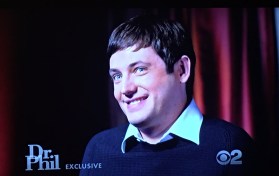 Where do we start with Burke? Was he just a shy, awkward kid? Is it really that simple? Or, was his loner personality, the video games, the laughing and totally care free attitude about the murder of his sister, a symptom of something far worse?
 “When Burke was 4 he was the apple of his parents’ eyes. He could do no wrong. He got the full treatment of gifts, clothes and trips and you name it. But then when JonBenet came along, especially as she got older and her destiny was to be in the pageant system, that attention that Burke had switched from him to JonBenet.”
 television show called Connection Point. The couple were
  Cordeiro seemed to think having “the most hated parents in America” talk about their faith might inspire and uplift his flock. Perhaps the church is no different from the news – no news is worse than bad news? But by speaking to the Ramseys, Cordeiro was certainly assured of getting a lion’s share of attention for his efforts. Christians and heathens alike were likely to tune into his interview. Perhaps he could gain a few converts among the burgeoning true crime community?












 I was a little shell-shocked. I asked Marc: “If our phones are off, does that mean we can’t tweet…No man, I think he means turn off the sound of your phones.”

 Was there something I was missing? Was there some pop-up covering a few paragraphs that would make what I was reading make sense? After a third read, I realized it wasn’t me. These were the schizophrenic ramblings of a hot-headed man. He’s also kind of a nutter.
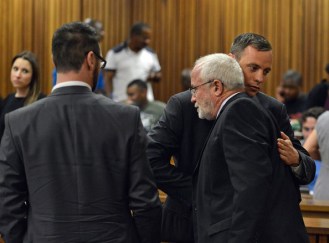 Why wait so long? It’s been three years – a trial, a sentencing, an appeal, and another sentencing, have come and gone. But, hold the fort! Henke Pistorius is an attorney?? Did I read that correctly? WTF. If that crazy revelation is true, what does that say about Henke’s absence in court?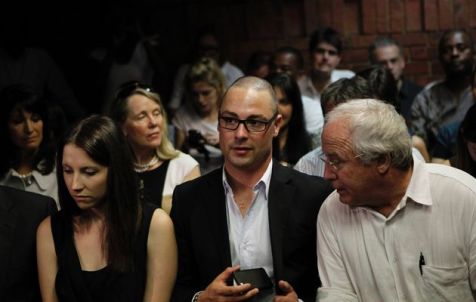
 close, the way we were when were schoolboys causing trouble and getting hidings together. Priorities began to differ, that’s all I can say.”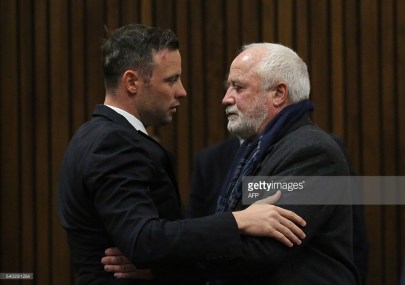
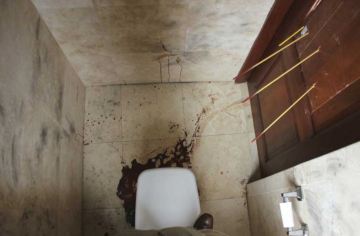
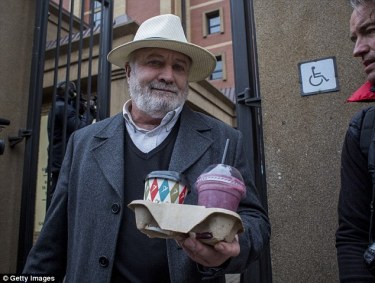

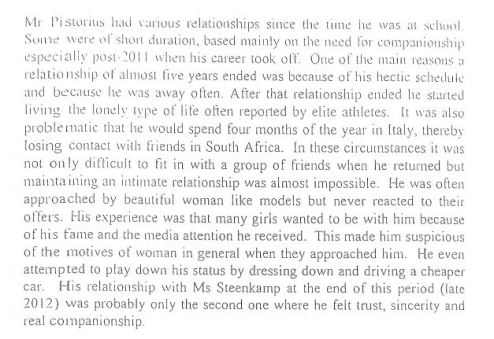
 girlfriend, as the woman that Oscar loved dearly, or the woman that Oscar wanted to share a home with… no, Henke refers to Reeva as Oscar’s “lover.” It speaks volumes about the value Henke assigns to women.


 #SHAKEDOWN
