Stephen Paddock (Life is Beautiful Concert, Las Vegas)
Tsarnaev brothers (Boston Marathon Bombings)
Seung-Hui Cho (Virginia Tech)
Nikolas Cruz (Parkland, Florida)
James Holmes (‘Dark Knight Rises’, Aurora movie theatre, Colorado)
Matti Saari (Kauhajoki College, Finland)
Beslan school siege, Chechnya
There is also a detailed reference to John Hinckley Jr, would-be assassin of Ronald Reagan in Washington DC, as an example of the use of the ‘insanity’ plea, which James Holmes attempted to emulate by acting ‘crazy’ in court at his trial, with his bright orange hair and faux staring eyes.
We tend to look at these killers as monsters. The callous disregard and lack of empathy for their victims makes our blood run cold. The sadism and cruelty involved in the senseless slaughter of innocent concert-goers, high school pupils or cinema goers is incomprehensible to us.
The Columbine killers, Klebold and Harris, not content with planting over 99 bombs, lay in wait for their prey to come running out of the school doors so they could shoot down the fleeing teenagers as they believed they were escaping. This shows a sang-froid, in that there is an element of deliberate torture rather than a straightforward ‘revenge for all the bullying’.
The Columbine killings happened eighteen years ago, amongst the first high school massacres of modern times, yet still it provides a blueprint for copycat killers today, the most recent being Nikolas Cruz in Florida. What is it about Columbine that leads to this phenomenon?
Nick Van der Leek gets under the skin of what this is all about, behind the lurid headlines. Police psychologists at the time claimed it was not possible to draw up a profile of a high school killers from the Columbine incident. However, many mass murders and school massacres later, Van der Leek would dispute this view, as his intricate analysis of each event, his thorough examination of the psychological, philosophical and moral issues involved, has enabled him to formulate a clear profile. He sets out a conclusion of what each of the killers has in common with the others.
The author identifies several common factors, which includes the Freudian concept of anal fixation which holds that a person whose development is arrested at this early unconscious level will be obsessed with detail, routine and accuracy to a near unreasonable degree.
There isn’t any psychoanalysis involved in the book, but the term ‘anal’ is a useful shorthand description by Nick of the salient personality trait. Another is high anxiety levels. Social anxiety can be particularly acute in adolescence, when rejection by one’s peers can tip an already fragile teen over the edge. As a society, we have winners, so there are ipso facto ‘losers’. Van der Leek shows how being a ‘loser’ as all of his examples are, militates as a simmering resentment in the sufferer, like a steaming pressure cooker about to blow its lid, culminating in a murderous desire to wreak revenge on the perceived popular, successful, happy peers, who are blamed in the loser’s mind for the loser’s ‘reject’ status.
Stephen Paddock in Vegas.
Whilst Van der Leek rejects a genetic factor – Lanza’s features seem to show a congenital problem and Stephen Paddock had a sociopathic ‘most wanted’ bank robber father – seeing this as the easy explanation, instead he tries to pinpoint why each of the most notorious killers has such an apparent lack of humanity. Where does it come from, this cool regard for others as objects that can be picked off like sitting ducks, like a swarm of ants going about their busy lives that can be extinguished with just one stamp of the foot, as it were. From whence does this cruel brutality emanate?
Van der Leek can supply some answers to these questions by looking at the common memes, the symbology, the ‘manifestos’, stories, videos, texts, social media and wargaming software of the virtual world of outgunning your adversaries online and how the lines blur between fantasy and reality.
We meet Lanza’s dysfunctional mother (whom he shot dead first, before advancing onto the elementary school in Connecticut to commit one of the worst school shootings known). There is the surreal casino world of the ever-disintegrating inner life of Paddock, who picked off 53 concertgoers from a hotel window in Chicago.
The pious but feral Tsarnaev brothers and their amazing police chase and shoot-out across Boston, a few days after the bombings. Cho, Cruz and Saari are all shooters considered weird by their contemporaries, and we examine their cowardice, their adolescent quasi-Nietzschean nihilism, through their manifestos, contacts with extreme ideologies and their professed sense of alienation from their fellows.
There is the wealthy Holmes and Hinckley and how their parents try to buy their killer offspring off their murder raps (or attempted murder in Hinckley’s case). This is underscored by the appalling tragedy of Beslan where hundreds of young children were killed all for the sake of ideological and political terrorism. Yet, for all the claimed high-mindedness of the hostage takers, Van der Leek identifies the same type of anal-sadism driving the cruel brutal behaviour towards fellow human beings, especially women and children who are innocent civilians in all this.
This book is unique, as I am not aware of another book that has gone into so much depth, outside of the Manson killings or Columbine ones. If you want to know what makes these ‘monsters’ tick and understand the profile of what personality traits they are most likely to exhibit before they commit their atrocities, or even if you just want a jolly good ‘true crime’ read, this is the perfect interactive Kindle publication for you.
I was so astonished at the chorus of ignorance immediately following the Las Vegas shooting, the deadliest to date in America, I penned a blog. I had very little information to go on just two days after the slaughter, but in another sense, I had more than enough.
In the blog I pieced together a rough identity and provided a motive using a psychological technique known as thin-slicing. Almost six months later, I wrote a 522 page book, and with a lot more research, the first motive described in that blog hardly budged. There were a few nuances to it, especially based around Paddock’s experience of childhood, but otherwise the thin slice held up.
In the case of mass shooters, the massacre itself – the scale, the scope, the weapons, the entire theatricality of it, is a massive clue into what message the shooter is trying to send to the world. When the shooter meticulously plans his massacre, kills many people and then kills himself, his motive is obvious. The identity of the shooter in this case was also blindingly obvious, he was a gambler, he was wealthy, and he was the son of a bank robber. The final ingredient was that Paddock was a taciturn loner, with no close friends or family to speak of. That provided all the ingredients for mass murder right there, and yet no one seemed able to see it.
In a sense that’s good. If we could all see into the psychology immediately, that would mean it resonated with many of us [Paddock’s bitter loneliness], and that wouldn’t be good. But the fact that we can’t acknowledge Paddock’s motive is also bad, because it means society can’t see itself, or more pertinently elements of itself, and if we fail to recognize these symptoms, we’re doomed to suffer the same deadly consequences again. So best we do figure this out.
Amazingly, America cast about for days, then weeks, then months, in lieu of no suicide note, no definite link to ISIS, no browser history, unable to put Paddock’s psychology together. Why did Paddock kill so many people at random?
No one seemed to know. The part that I couldn’t believe was that with so many huge pieces of the puzzle on a silver platter, no one was putting them together. A child could put it together!
Four days after the Las Vegas shootings, as everyone bleated in unison about there being NO MOTIVE, I wrote another blog post. Despite having just as little [or as much information] as everyone else, there were already those chiding the public not to think about motive [and not to think at all]. Leave the thinking to the experts, they said. I encouraged folks to think for themselves. Most left the thinking to experts and the experts can up with exactly fuck all.
Three weeks later America still seemed in the dark about motive. I went to some trouble – not a lot – to deal with the fallacy of motive again. Six months later, the FBI, mainstream media’s so-called “senior reporters” and swathes of the American public still don’t know. CNN doesn’t know. It’s still officially a fucking mystery. Stephen Paddock’s brain didn’t show up a tumor or a fortune cookie with a small suicide scrawled there either, and so, no one could say why he committed mass murder.
A long-time editor, reading my thoughts on the topic, suggested I write a book entirely dedicated to profiling mass murderers, including Stephen Paddock. Thinking about the blog posts I’d already written, I imagined a quick-study, eight meaty chapters dedicated to 8 of the worst mass murderers in America, including Paddock, Adam Lanza, Seung-Hui Cho, James Holmes and the Tsarnaev brothers.
Instead, I was in way over my head. I ended up writing 140 000 words, over 522 pages. I wrote a bible on psychological profiling, and once again, a pattern emerged in the profiles.
In true crime, the crime scene tends to be a fairly prescribed space, and the premeditation phase tends to be fairly prescribed as well. Not so with mass shooters. They stew in their juices for months, and plot and scheme and weaponize for years. The cauldron of evidence one has to pick through is gargantuan. And yet when they commit mass murder, there is a sense of randomness about it. Really? You meticulously plan something, to the finest detail, and it happened by accident? Just happened to have a bad day…? Maybe just psycho – that’s the explanation?
Besides the enormous scale of each and every one of these profiles, as well as the huge scale of their crime scenes [the Tsarnaev brothers arguably had five separate crime scenes, and that’s besides their individual residences], many of these shooters leave behind exhaustive manifestos. Incredibly, even when they do leave their motives on paper, as Cho and the Columbine Killers did, society seems dismissive of them. The media disregards them. Books are written debunking the reasons given by the shooters themselves. The FBI writes reports which minimizes the reasons given by the shooters.
Those who don’t write manifestos leave bread crumbs, either in terms of browser histories [Paddock’s has since been made available] or online residues across social media. Ask yourself, if you were abducted by aliens, what sort of information would your browser history give about you, without you to speak for yourself? A pretty good idea, right?
The real mystery isn’t the motive of Stephen Paddock, it’s knowing what we know, and then coming up with the stupefying possibility that we don’t know what the motive is.
The sexist, racist implications of the “Walk up, not out” movement: Walk Up demands nothing of the policymakers who are actually in positions to make change
Cheung’s righteous indignation resonated with Emma Gonzalez’s equally spirited dissatisfaction.
Cheung seems to be a magazine journalist who gravitates towards woman’s abuse issues. That’s fine, but mass shootings are a serious problem in America, deserve serious solutions, and serious contemplation.
So, in that spirit, here’s a serious thought. As impressive as the numbers were in the various marches around America, what’s changed? As moving as the various speeches were from many stages dedicated to the gun change cause, what’s changed? As common sensical as it is to make the changes that are being proposed, what changes have been implemented?
Before dealing with Cheung’s article directly, let’s look at what policies are being looked at and/or implemented. Let’s look at what those policymakers that are being asked and entrusted with these changes are actually doing. Let’s start at the top of the list. The banning of semi-automatic weapons, via the Guardian’s coverage:
The short answer to what’s being done about semi-automatic weapons is nothing.
How about raising the age limit? There’s a practical way to put the direct acquisition [via purchasing] of weapons beyond the age range of school kids.
The Florida governor, Rick Scott, last week proposed a rise in the minimum age – from 18 to 21 – for purchasing semi-automatic weapons such as the AR-15. Three Republican senators have signaled support for the idea. The proposal was seen as out of character for Scott, a Republican with a top rating from the NRA. He made no comparable call for gun control after the 2016 shooting at the Pulse nightclub in Orlando that killed 49 and wounded 58. But the NRA vehemently opposes changing the national minimum age for purchases of so-called long guns, and Cornyn, the Texas senator, recently dismissed the idea, making passage in the Senate anytime soon unlikely.
The short answer to what’s being done about changing the age limit seems more promising, but from a practical results-perspective, the status is the same. Nothing is happening.
What about background checks?
A strong majority of Americans support stricter background checks for gun purchases. And a piece of bipartisan legislation currently before Congress, the Fix Nics 2017 Act, could start to tighten the country’s background checks system. (Nics stands for the National Instant Background Checks System.) Trump has signaled his support for better background checks…
The bipartisan Fix Nics Act that Trump is now supporting does not change the categories of who is barred from buying a gun, or even require all gun buyers to pass a background check before they can purchase a firearm …
Instead, it simply provides federal agencies with a few more incentives to submit records to the background check system – something they are already required by law to do.
The short answer to what’s happening with regard to improving and implementing background checks appears to be very little or nothing.
What about bump stocks? Didn’t the president put his weight around getting rid of those?
A bill to ban bump stocks sponsored by the California senator Dianne Feinstein after the accessory was used in the country’s deadliest mass shooting, last year in Las Vegas, stalled out in Congress but could be revived.
In Chicago, recently, these bills were revived only to be shot down – vetoed – by the governor of Illinois. The short answer to whether bump stocks will be banned is not now.
With that perspective in mind, let’s come back to Cheung’s shallow rhetoric.
Walk Up demands nothing of the policymakers who are actually in positions to make change
Obviously Americans want to see policy change, but you have to be crazy to bang on the front door all day and not try the backdoor, the windows, or sneaking in through the doggy door. Cheung’s all or nothing approach feels good, feels right, but risks coming away with nothing, as was this case following Sandy Hook.
One must work smart, adapt and learn in order to make real progress. Sometimes, often, progress is measured in a number of small steps that add up. This is particularly true when one’s opponent is organized, well-connected and moneyed as the NRA lobby obviously is.
Given that immediate results in terms of gun control isn’t on the cards, what is? According to Cheung:
The “Walk Up, Not Out” movement is led by parents who believe more “kindness” among students, rather than gun control legislation, will end gun violence. Those at the helm of Walk Up have shared ideas such as increased school security measures that would effectively transform schools into prisons and could have negative consequences for students of color. They have also expressed support for mental health resources while ignoring how scapegoating the mentally ill fails to address the real problem. The real problem is guns and insufficient regulation of gun owners who have access to weapons that kill hundreds in minutes (the mentally ill are far more likely to be victims than perpetrators of gun violence).
I’ve recently researched a 140 000 word book called slaughter, profiling 8 mass and school shooters and mass shooters. The book took several weeks to research and write, arguably far longer than Cheung’s 1200 stab at the issue. In sheer numerical terms, it’s about 140 times the size of Cheung’s diatribe. That puts me in a position, I dare say, to call bullshit on the idea that “the real problem is guns”. Guns are a problem, and taking them away and controlling them is necessary, but there’s a far bigger problem than guns. We see it in the lawmakers who refuse to change gun laws, and governors who oppose implementing them. These are symptoms of a society that is incentivized to be sick with avarice and self-interest.
But the malaise in society doesn’t end there. Cheung’s assessment is also way off. As part of her “assessment” she cites a Facebook post as part of her research into the motives [the psychology] of school shooters.
One viral Facebook post shared last Thursday by psychologist Rebecca Wald explores this in depth:
“The myth that school shooters are outcasts fighting back against bullies dates back to Columbine. At the time it was widely reported that Harris and Klebold were social rejects, and much was made of the meanness of popular kids. But the FBI concluded that . . . kids didn’t like the boys because they did creepy things like walking around giving the Nazi salute. ‘Walk Up, Not Out’ is a campaign of cowardice, promoted by adults who want there to be a solution to school shootings that asks literally nothing of us. No tough choices, no exercise of political will, no speaking out to power — just lecturing kids on how to do better.”
In the previous blog I provided unambiguous evidence that the Columbine killers were bullied. Books and articles on CNN and viral Facebook posts notwithstanding, the killers themselves said they were bullied and alienated, and so did their friends. Despite PR to the contrary, it turned out Columbine had a culture of exclusion, a jock culture, something that is true in many high schools in America.
In the above post the FBI, who also claim it’s not possible to profile school shooters, seemed to indicate the shooters were creepy and deserved to be ostracized. As such, the idea of having classmates approach creepy kids puts the “normal” kids in danger, and as Walkd says, requires nothing from “us”. I’m not sure who us is. Is it the policymakers? If so, nothing is happening anyway.
Wald seems to see it as cowardice to “lecture kids on how to do better”. I disagree. It’s cowardice not to. In all the school shooters I profiled in Slaughter [and I mean all, without a single exception], what was missing was one or both parental figures. Typically the father was out of the picture, or else both parents. These left the shooter-in-the-making more exposed than usual during the adolescent phase to ridicule.
It’s clear that warm, genuine parenting could have prevented all eight of the shootings profiled, and it’s likely that a community who could have rallied around the more vulnerable outcasts would have made a difference. Despite popular public opinion, shooters aren’t born overnight, their hatred and disaffection is a process spanning several years. Their disturbed fixations come about through years of systematic humiliation.
If we live in a sick society in terms of our political leaders, and if our media and social media is equally sick and distorted, then perhaps the last bastion of reliance is ourselves, and our communities. If we can’t ask things from our country, or if our demands go unanswered, isn’t it time to ask more from ourselves? Not Facebook communities, or five minute watercooler communities spawning around a hashtag, but real people engaging with one another in the real world, around real mutual interests.
Incredibly, we find ourselves in 2018 sniffing with contempt when someone suggests more kindness to one another. Somehow being kind is called sexism and racism. It was once know as the golden thread – treat others as you wish to be treated, be kind. Today such sentiment is seen as ridiculous. Well, is it any wonder that in such a cruel, heartless society, cruel and heartless players find their way to the stage?
The Walk Up movement is meaningful because it demands more from us, rather than shifting blame and requiring action from others. It’s that anal fixation on them versus us that’s the root of the problem. Why can’t society’s require more from themselves? What’s wrong with that?
The real cowardice at work here is a failure to think. The fact that the mainstream, the FBI and the media haven’t provided so much as a motive for the Vegas slaughter, for Sandy Hook or for Columbine tells you all you need to know about the ongoing incapacity of society to interrogate these shooters.
We have no idea who these people are or why they did their bloody deeds, and we don’t know because we don’t really care. We don’t even know ourselves any more. We think we do, because we think our reptilian responsiveness to social media illustrates our enlightenment. In fact, it illustrates our poisonous narcissism, nothing more.
Our incapacity to interrogate these unconscionable massacres mirrors our incapacity, of late, to interrogate ourselves. Slaughter pioneers the authentic thinking that’s required to heal our increasingly fractured tribalism. As such, it is both terrifying and extremely sad, who we are and where we are today. The first step on the journey to restoring our true and better selves is acknowledgement, isn’t it?
I care about gun control. It cuts very close to home for me. My mother killed herself using my father’s revolver. I was seventeen years old and about to write my final exams at school.
I’m very aware of both sides of the coin – the disaster of having deadly weapons at arm’s reach, and the deteriorating mental health of a person. But there’s also a third dimension to all this. Beyond both sides of the coin, there is also society, in my case, family, that can serve as a soothing or healing agent, or can aggravate the anxiety of those slipping towards their rock bottom.
We tend to fixate on the guns, and we should, but not at the expense of the who and the why. If getting rid of guns won’t get rid of the misery that’s there, or the murderous intent, what will?
After researching and publishing my latest book Slaughter, which profiles 8 high-profile mass murderers and school shooters [including Nikolas Cruz], I’ve been appalled and alarmed at the ignorance and hypocrisy surrounding this latest shooting. Now, to make matters worse, conspiracy theories are popping up like poisonous mushrooms.
Among them, Emma Gonzalez bullied Cruz, and Cruz is being framed for the shooting. The braindead subscribe to these theories, and the motive behind them is clear: there are enemies out there that want you to not trust your government and institutions. The more Americans are divided against themselves, the better these catastrophes in American schools will remain misunderstood, and society will be remain unable to fix itself, let alone be able to diagnose what’s wrong.
Somewhere between these extremes of a society gone mad, the same theme echoes through the ether, just as it did after Columbine, Sandy Hook, Virginia Tech and the Las Vegas shootings.
It’s all about guns. That’s how the narrative starts. Then it’s about the victims. Then the shooter’s identity is drowned in a deluge of rumor and conspiracy in the run up to some official report which can’t pin down a motive, or any easy answers.
No one seems to want answers in terms of where the murderous intent comes from. There seems to be a terror involved in opening the door to the most obvious issue of all: firstly why these shooters develop an abiding hatred for society, so much so they spend months, sometimes years planning and fantasizing on getting payback. Secondly, how and why these shooters are invariably society’s discarded and unpopular losers. They are loathed or passed over to such an extent they soon develop a destructive, often suicidal self-loathing. Does that happen by accident? Does it happen spontaneously or through a long process?
The fact that no one cares about discussing how these shooters emerge out of a patently sick society says something about how careless and distracted we as a society have become. Do we value one another or do we only care about our own value?
Anality & Sadism
In Slaughter I touch upon the relationship between anality and sadism.
Being anal, in the psychological sense, is about an oppressive level of meticulousness or fixation. The more anal one is, the more one is deprived of the spontaneous, surprising, natural goodness of life and people. One’s sadism is directly proportional to one’s anality – the more one is stuck in repetitive man-made fixations [computer games, porn, social media], the more sadistic we become in terms of taking pleasure at the expense of others. To be clear, all of us are at risk if we allow our anality to take over.
In Slaughter I wrote:
“A fixation on gun laws, let’s face it, is both essential and anal. The insistence not to pay any heed to Lanza, or his family, in the Newtown documentary, is both understandable and anal. If we fixate on lobbying for gun control, but refuse to figure out the psychology of these school shooters and mass killers, we’re doomed to see these catastrophes repeat themselves until we do understand.”
On twitter, this anality is reflected in wildly divergent and conflicting narratives at these hashtags: #Marchforourlives versus #Walkupnotout versus #Nikolasneedsourhelp
Sadism is taking pleasure, or benefiting in some way, in the misfortune of others. High school, as we all know, is a popularity contest. The flip side of popularity is humiliation and isolation. For the winners, it’s great. High school is a popularity contest with a captive audience.
Authentic Change or Reactionary Populism?
In all the popular rhetoric flooding out of Parkland, a bunch of seniors are emerging as a tribe of heroes. Emma González arguably the face of a new movement for change, joined twitter in February 2018. Today Gonzalez has almost 1.5 million followers on twitter. She’s not done with high school yet, so the popularity contest continues.
My impression of Gonzalez is that her every appearance is like a carefully crafted circus act. It’s almost Trumpian in its conception. It’s very compelling, very emotional, very popular, it plays wonderfully on twitter but somehow [like a circus act] it’s invariably very forgettable.
Other seniors are also actively appearing on national television and various media stages across the nation, confidently identifying themselves as shining beacons of hope and yes, popular sentiment. Are these the heroes of the future, or flashes in the pan of a high school popularity contest WRIT LARGE?
For the losers, whether in or out of high school, whether on or off social media, life is very different.Losers are insignificant. Invisible. They have no voice, no power. Life sucks. What makes being a loser in high school harder than anywhere else, is if you can’t stand the heat, tough, you’re stuck in the kitchen. There’s no getting out for the foreseeable future. The cool kids and the losers are stuck with each other, which is another way of saying, the losers are stuck – for years – with their oppressors.
In high school, inevitably, popularity contests often go too far. Sometimes the cool kids get too caught up in their own popularity, other times the losers get too bogged down in a downward spiral of humiliation.
When a school shooting occurs, these forces come to a violent nexus. The tribal forces that were in place to begin with, remain in place after the shooting, except that the tables are temporarily turned in terms of the victimology. For the brief minutes of the shooting, the shooter – for once – gains the upper hand. The shooter is the dominant social force, the shooter determines fates – who lives, who dies. For a fleeting, terrible passage of time, they hold the keys to social power and social death.
Afterwards, when the school is asked to account for the shooting, no one can remember bullying, isolating, or ostracizing the shooter, but everyone is crystal clear that something was seriously wrong with the shooter.
This selective amnesia applies to the students and teachers. Any student who remembers picking on the shooter, anyone putting up his or her hand, courts the whirlwind of social blame. Oh so this is your fault? It’s because of you that X snapped? Further inquiry may lead to that person implicating others, and that can’t be tolerated either. And so the tribes that were in place before the shooting remain locked in their loyalties after as well.
This amnesia goes back to Columbine in 1999. Almost 20 years later, no one is sure whether the shooters were bullied. On twitter recently, someone told me bullying at Columbine was a myth. She couldn’t say what the motive was, but she was clear that it had nothing to do with bullying. I’d show you the tweet but it’s been deleted.
Reality Check
Curiously, few people go to the source to find out why they committed mass murder. Invariably, these loners do a lot of writing, so there’s plenty of firsthand material available if one takes the time to go through it. Like this from Colorado Springs shooter Matthew Murray:
So many people don’t have any clue about The Nightmare we’ve grown up in. I mean, it’s not my fault I was raised in homeschool for 12 f***ing years and that I’m not able to “socialize normally.” How am I supposed to socialize and make new friends when I’m always left out of everything, and always made to be the outcast? I’m nice, I’m considerate, a lot of people tell me I’m intelligent and kind….so why the f*** must everyone think they have some right to abuse and reject me?
I hate you people for leaving me out of so many fun things. Never inviting me to all your fun parties, never inviting me to hang out. And no, don’t say, ‘Well, that’s your fault’ because it isn’t. You people had my phone number, and I asked and all, but no no no no no don’t let the weird kid come along, oooh f***ing nooo
Despite the Columbine killers shooting video of themselves at school being bullied, despite writing manifestos for why they did what they did, the public still can’t seem to remember.
Here’s a reminder.
In Eric Harris’s journal, he also wrote that “Whatever I do people make fun of me, and sometimes directly to my face. I’ll get revenge soon enough”
When Emma Gonzalez made her first impassioned speech, she let slip that they’d ostracized Cruz. She volunteered the word, and defended it, screaming: “YOU DIDN’T KNOW THIS KID!” That’s fair, but we also still don’t know what the ostracizing involved. How long did it go on for? Who was involved? What did it involve?
We know there’s a video of Cruz fighting with other kids.
This seems to suggest other kids saw Cruz’s situation as entertainment. I doubt whether he did. That’s not unusual, and the whole high school spiel is the same the world over. It’s not fun for the majority of kids though, is my point. And so with that element – the isolating, the humiliation – missing, no one is sure what the motive was. Was it computer games, or antidepressants? Did the shooter get out of the wrong side of bed that morning?
Meanwhile, who cares about motive, while the popularity contest goes on unabated. Seniors at Marjory Stoneman Douglas High School are in a race to gain as much popularity as they can, and to discredit their peers on their way to popular glory.
A Parkland high school student who agreed to a live debate over his conflicting views over gun reform with fellow Marjory Stoneman Douglas student Kyle Kashuv has pulled out of the deal. Cameron Kasky, an organizer of the pro-gun control March for Our Lives movement, tweeted Monday night that he won’t debate Kashuv, a pro-Second Amendment voice, following a tweet Kashuv seemingly disapproved of.
“Kyle, I’ve enjoyed my discussion about gun laws with you so far, but after seeing this, I think I’m out. For personal reasons,” Kasky said, adding that while he “disagree[s] on certain policies with some family members of some victims,” he would “never go after them, especially not like this. This is low.”
The Unacknowledged Narrative
In the same way that school shooters take sadistic pleasure in murdering their peers, the big chunk of unacknowledged narrative is the sadistic pleasure popular high school kids get out of maligning their peers. This might be because someone lacks social etiquette, isn’t good looking, walks funny or wears braces. There’s evidence of this denial, and the degree to which it is unacknowledged, in the #Walkupnotout hashtag. The idea of reaching out to these losers is absolute anathema not only to those high schoolers involved, but seemingly to society as well. So much so, Isabelle Robinson, a senior at Marjory Stoneman Douglas High School, penned an open ed for the New York Times along these very lines, saying:
…students should not be expected to cure the ills of our genuinely troubled classmates, or even our friends, because we first and foremost go to school to learn. The implication that Mr. Cruz’s mental health problems could have been solved if only he had been loved more by his fellow students is both a gross misunderstanding of how these diseases work and a dangerous suggestion that puts children on the front line.
Robinson’s right. Students shouldn’t be expected to “cure the ills” of troubled classmates. What Robinson neatly sidesteps here is that students tend to expose the ills of troubled classmates, almost as a default setting. Once exposed, classmates are hounded so that their inferiority is made abundantly clear. So while no one should “expect” students to cure their classmates, they should also not be expected to worsen the troubles of their peers, either.
Robinson adds that kids go to high school to learn. Really? Is that the only reason kids are in high school? They’re not there to make friends, to join clubs, to perform in plays and sports, to become class presidents?
School isn’t an individual game, like Survivor, it’s a social game, and it’s all about alliances and achieving social superiority. High school is also about the ability to attract a popular and attractive mate. The community has a lot of say, and to say, in this process. The idea Robinson suggests here, that you go to school in a vacuum, is the same heresy as saying Survivor is an individual game. It’s not, even if you do your damnedest to play it that way, one way or the other, you are part of a tribe, even if your tribe puts you on the bottom as part of an explicit group of discardable rejects.
As for putting children on the “front lines”, it’s an odd thing to say. Kids at school are not so much on the front lines, as they are the front lines. So the idea that one can be in class and not be responsible in some way for the harmony or misery of that class, is asinine.
It is not the obligation of children to befriend classmates who have demonstrated aggressive, unpredictable or violent tendencies. It is the responsibility of the school administration and guidance department to seek out those students and get them the help that they need, even if it is extremely specialized attention that cannot be provided at the same institution.
Robinson’s right again, it’s not the obligation of children to befriend anyone, let alone classmates who are less than friendly. On the other hand, isolating an unpopular child isn’t a solution either. So if it’s not the prerogative of classmates who are stuck with each other to be nice to each other, then the school should deal with them? Wrong.
The school did deal with Nikolas Cruz. He was expelled. It didn’t change the original situation, it aggravated it. Yes, it’s not the obligation for anyone to befriend or be nice to anyone, but as America stands today, a loser who develops an abiding hatred for his peers, has the capacity to access military grade weapons and execute on that murderous intent. It seems to me, that given the choice between maligning someone to such an extent that they fall out of a school system entirely, who may then come back and shoot you, and being less unkind and unfriendly than you and your peer group feel you need to be, the second is the lesser of two evils.
No amount of kindness or compassion alone would have changed the person that Nikolas Cruz is and was, or the horrendous actions he perpetrated. That is a weak excuse for the failures of our school system, our government and our gun laws.
I’m not sure that’s true. High school is a temporary prison for losers, which means any gesture that might make it less humiliating, or might make it easier, for the more unhinged and unstable student, may allow them to better endure the heat in the kitchen.
Put conversely, would it be fair to say that no amount of cruelty or humiliation would have changed the person X was in school…Alienation at a young age has a massive impact on young, vulnerable psyches that are ill-equipped to deal with the unknown hinterlands of adolescence and the emotional shitstorm that accompanies growing up.
I think those influences during the formative years [and Robinson writes about being a young teenager, the most formative of the formative years] are extremely formative.
5 Reasons why Isabelle Robinson’s Op-Ed is flat wrong
First off, Robinson claims she tried to “befriend” Nikolas Cruz when she was thirteen years old, and assigned to ‘tutor’ him. She describes feeling creeped out by the hour-long discomfort of counselling him , something she took seriously and regarded as her first adult responsibility. Performing her duty was by no means reaching out, and even less befriending of any sort, which makes the headline to her open ed disingenuous.
Robinson refers to Cruz’s sadism directly as a “sick twisted joy” as he watched her cry. She can’t remember whether Cruz was confronted over his actions, and yet she can remember him leering at her chest, and feeling proud about sorting out his binder. This is also disingenuous. What this is isn’t confronting, but ostracizing. It’s easier to freeze someone out than deal with them, and so that’s what she did. That too is a cowardly form of confrontation. It’s confrontation via exclusion, done behind the person’s back.
“I am not writing this piece to malign Nikolas Cruz any more than he already has been. I have faith that history will condemn him for his crimes.” But isn’t that precisely the same non-confrontational attitude that allowed the shooting in the first place? If you were there, and you can’t account or condemn someone for his crimes, who will?
Robinson’s main gripe is against anyone who has the temerity to suggest students should have been kinder to Cruz as a potential preventative measure. One wonders, if one could put an algorithm together in an Artificial Intelligence machine, and the machine said, if five people smiled at Cruz on these five days, it would have been enough to dissuade him from doing what he did, how would they respond? One suspects the mere idea of being nice to a loser is too repugnant to even countenance.
“The idea that we are to blame, even implicitly, for the murders of our friends and teachers is a slap in the face to all Stoneman Douglas victims and survivors.” It’s an interesting expression. If we are to blame, even implicitly, then the entire tribe have been slapped in the face. In other words, even the slightest chance that bullying might have aggravated the situation, even the mere mention of that, is a slap in the face of everyone else. It’s a visceral sense of humiliation, is it? This is a great recipe for exceptionalism, where we say: the problem was Cruz and guns, and had nothing to do with us. That may be true, but if it is, why are there school shootings twice a month in America? Because if only American kids are mentally unstable, do they become that way in a vacuum?
Eric Harris blamed society for creating violent outcasts, but that’s no right either. It’s not right for the shooter to blame society, but this is the pertinent point, or for society [and especially the school community] to blame the shooter. Or guns. It’s not just one or the other; it’s not that simple or clear cut.
5 Reasons why Isabelle Robinson’s Op-Ed is on the right track
It is a “deeply dangerous sentiment” to imply that “it takes a village to raise a child”. In other words, if a child rampages against the village, something is wrong with the village [and the child].
When Robinson writes of being forced to endure Cruz, that’s what bullying and humiliation feels like. I suspect any school that is able to curb [not eradicate, just mitigate] bullying and humiliation, will curb [not eradicate, just mitigate] the overall anxiety of its school society. Less anxiety = less anality. Less anality = less sadism.
“I would have done almost anything to win the approval of my teachers.” Losers feel the same way, except they may feel their case is hopeless, especially if they’re not smart, talented or good looking.
“This is not to say that children should reject their more socially awkward or isolated peers — not at all…I strongly believe in and have seen the benefits of reaching out to those who need kindness most.” Yes, reaching out to isolated kids can be beneficial.
“But students should not be expected to cure the ills of our genuinely troubled classmates…” This is both true and untrue. Students should not be expected to cure anyone, just as most kids aren’t expected to win Olympic gold medals one day. If they can, or if they try, super. The question isn’t who shouldn’t, but who should be expected to cure the ills of troubled members of society? The FBI? The school boards? Neither worked in this case. The best answer to this is the family and close friends of the loser. Well, what if the loser has no family or friends, as was the case with Cruz? Then the question that someone in class should be expected to deal with an isolated kid becomes more critical, doesn’t it?
Whenever a school shooting occurs in America [on average once every two weeks], the response tends to be the same:
The shooter is regarded with unbridled contempt
No one is surprised.
And then two more weeks go by and there’s another shooting.
In the context of school shootings, it’s easy to forgot what high school is fundamentally: a popularity contest. It’s also one you can’t escape. There’s that saying, if you can’t stand the heat, get out of the kitchen. Well when the heat is on in high school, there’s no getting out, not for several years anyway. That’s good for the winners, and shit for the losers. When guns are at arms reach as they currently are in America, it makes sense to not make life more miserable for the losers than it has to be. In other words, cool kids, curb your sadism.
I write about true crime full time, so I’ve found the teasing done by Marvel across 18 films compelling, fun and psychologically sound. Marvel are masters at coherent intercontextuality, and in Infinity War, due out next month, it’s going to go up a notch. We know that, what we don’t know is how.
Like many other fans of this franchise, I’ve followed the accessories to the Marvel juggernaut, as they educate and prepare audiences for what’s to come. Ridley Scott seemed to be one of the progenitors of this, providing a series of informative previews and reveals on YouTube that stood alongside Prometheus, but weren’t trailers per se. Marvel and Star Wars have taken up the cudgel since, seeding their content with easter eggs, post credit scenes and plenty of social media discussions – audiences [and true crimes writers] are loving it.
But these ‘explanations’ within the films and in the PR accessories [toys, interviews etc] are still teasers. What are they leaving out? I’m not going to spoil it, because I can’t – I haven’t seen the film myself. But it’s fun to speculate beyond the mainstream speculations, so here, more specifically are my 2 cents.
A lot of Marvel characters are going to die. There’s some speculation that it may be Iron Man, could be Captain America, and as for Vision, he already appears to have lost some color in the trailers. More likely, a bunch of characters will be culled, especially the old ones [Ironman, Captain America, Thor, the Hulk Black Widow etc].
DC beat Marvel to the same punch, but executed badly. In Justice League we saw Superman come back from the dead, but in a less than satisfying way. Many expected to see a darker Superman in a different suit, a black suit. The way DC did it there wasn’t really a punch-in-the-gut reaction to Superman’s death, nor the let’s-do-cartwheels when he was resurrected. DC rushed and botched the job, in a bid to stay in the race with Marvel. They should have stuck to their own pace and gone their own way. What audiences can expect though is for Marvel characters to die, but “die” in inverted commas.
Look to Odin, people. We’ve seen some of the alternate universe stuff already in Odin making appearances in alternate possibilities for Asgard from beyond the grave, similar to Star Wars ghosts but without the ghostly halo. Thor, Captain America and Hulk have started that process of alternate characters occupying – wait for it – alternate universes. When this happens, characters look different, and sometimes seem different. They might have longer or shorter hair, they may have one eye instead of two, they may have lost a shield or gained a new piece of equipment. They may be angrier or have memory problems. In the trailer for Infinity War Thor has an eye patch at one point, and look carefully, he seems to be missing one somewhere else.
Expect more character differentiation. We’ve already seen Thor, Captain America and Spider-Man starting to look different, but it’s happening throughout the franchise – from Groot to Loki to Hulk. Iron Man actually started the whole thing off with his upgrades, and in the modern world, it makes sense that stories have inbuilt capacities to modernize and recontextualise.
Iron Man and Spiderman ended up on another world together…Joining the dots, Spider-Man ends up swooshing onto Thanos’ wormhole maker, but as it departs back into space, Iron Man has to rocket-boost to the rescue. Probably both of them get sucked into another dimension where they first encounter Thanos, and my guess is, that’s where Iron Man buys it, resulting in Spider-Man getting a massive Stark-tech upgrade.
When the last Infinity War trailer opens, it starts with a weird upside-down rotation of the city. No one is talking about that. A lot of nuance is buried in the first three frames of the new trailer, and no one seems to be talking about it. The upside down view is a metaphor for an alternate universe.
The next frame shows Bruce Banner, Natasha Romanov and Iron Man War Machine. It’s shot from above the three appear to be standing on a strange grid. Each of the three occupy a quadrant on the grid. Bruce Banner is the only one with a leg sort of drifting into a fourth quadrant, the others are neatly inside their own clearly delineated grid. Reading too deeply? It may be, and this is a random guess, that these three characters may guide us separately into the alternate universes to come. Natasha Romanoff on Earth, Bruce Banner in some other dimension [as he’s already done in Thor] and Iron Man War Machine is in a third dimension, perhaps a second Earth, or a second Asgard, or somewhere else. Each may take a few characters with them to battle in different places and times – hence Infinity War.
In the third scene we see a meteorite falling across the sanctum window in New York. The sanctum windows are both emblematic of gateways, and in terms of the sanctums themselves, actual gateways. So the meteor passing across the gateway is HUGE psychological fodder. You with me?
When Thanos’ favorite daughter, the green-skinned Gamoa refers to Thanos’ dream of wiping out half the universe, one has to wonder – why half? What about the other half? That’s exactly it, one half tends to mirror the other half. So the half that’s missing isn’t really missing, it’s not destroyed but mirrored in another dimension. How?
Magic.
Why are Marvel doing this? For at least two good reasons. Firstly, many of the big stars’ contracts are coming to an end. Robert Downey Junior anchors the franchise, but he also costs a fortune. Marvel is bleeding new talent, with the new Spider-Man widely seen to be the new Iron Man. I’m not sure if that’s a great move, but then I’m not Marvel’s core target market.
Secondly, alternate universes allow for flexibility. In the narrative sense, character arcs can go one way, and if Marvel decide to redeploy Iron Man, or Captain America, they can bring him back in an alternate reality looking different [including older], without disturbing some of the main story arcs.
Makes sense, right?
As mentioned above, this is likely to happen through the manipulation of Dr. Strange. Remember, Dr. Strange has a green infinity stone that can be used to manipulate time. To unlock the time stone maybe Thanos uses the Vision’s mind stone to control Dr. Strange’s mind…?
From then on, the Marvel universe is likely to become strange and expansive, and perhaps strangely unfamiliar. After 18 films Marvel have held it together, but it’s going to get a lot harder and more complicated to hold it together going forward. In a sense the alternate universe thing is about letting go, but that ushers in unfamiliar territory. Guardians of the Galaxy prove Marvel are up to the task. Black Panther proves not everyone is going to love it. DC should slow down and learn from Marvel’s mistakes, assuming they make any.
On 20 December 2011, Adam Lanza called in to a talk radio program, AnarchyRadio, broadcasted on KWVA 88.1 FM out of the University of Oregon. The show is hosted by John Zerzan, a writer described by The Atlantic as “an intellectual leader of the anarcho-primitivist movement, an ideology that regards technology as a destroyer of human communities.” The reason for Lanza’s interest in Zerzan’s writings is plainly evident in the call itself; Lanza calls to share a story about “Travis the Chimp,” a domesticated chimpanzee that in 2009 “snapped,” and viciously attacked 55-year-old Charla Nash, a friend of the chimp’s owner. The attack was seemingly random, nearly cost the victim her life, and ended when the chimp was shot by police. Lanza outlines how the chimp’s violent episode can be explained by his upbringing “as if he were a [human] child,” and argues that Travis’s “civilized” upbringing was what led to his attack.
LANZA: Because, uh, he brings up questions about this whole process of child-raising.
HOST: Yeah.
LANZA: Civilization isn’t something which just happens to gently exist without us having to do anything, because every newborn child — human child — is born in a chimp-like state, and civilization is only sustained by conditioning them for years on end, so that they’ll accept it for what it is, and since we’ve gone through this conditioning, we can observe a human family raising a human child –and I’m sure that even you have trouble intuitively seeing it as something unnatural– but when we see a chimp in that position, we immediately know that there’s something profoundly wrong with the situation. And it’s easy to say there’s something wrong with it simply because it’s a chimp, but what’s the real difference between us and our closest relatives?
Travis wasn’t an untamed monster at all. Um, he wasn’t just feigning domestication, he was civilized. Um, he was able to integrate into society, he was a chimp actor when he was younger, and his owner drove him around the city frequently in association with her towing business, where he met many different people, and got along with everyone. If Travis had been some nasty monster all his life, it would have been widely reported. But, to the contrary, it seems like everyone who knew him said how shocked they were that Travis had been so savage, because they knew him as a sweet child, and… there were two isolated incidents early in his life where he acted aggressively, but… summarizing them would take too long, so basically I’ll just say that he didn’t really any differently than a human child would, and the people who would use that as an indictment against having chimps live as humans do wouldn’t apply the same thing to humans, so it’s just kind of irrelevant.
HOST: Uh-huh.
LANZA: But anyway, look what civilization did to him: it had the same exact effect on him as it has on humans. He was profoundly sick, in every sense of the term, and he had to resort to these surrogate activities like watching baseball, and looking at pictures on a computer screen, and taking Xanax. He was a complete mess.
HOST: Mmm-hmm.
LANZA: And his attack wasn’t simply because he was a senselessly violent, impulsive chimp. Uhm, which was how his behavior was universally portrayed. Um, immediately before the attack, he had desperately been wanting his owner to drive him somewhere, and the best reason I can think of for why he would want that, looking at his entire life, would be that… some little thing he experienced was the last straw, and he was overwhelmed at the life that he had, and he wanted to get out of it by changing his environment, and the best way that he knew how to deal with that was getting his owner to drive him somewhere else.
HOST: Yeah.
LANZA: And when his owner’s… owner’s friend, arrived, he knew that she was trying to coax him back into his place of domestication, and he couldn’t handle that, so he attacked her, and anyone else who approached them. And dismissing his attack as simply being the senseless violence and impulsiveness of a chimp, instead of a human, is wishful thinking at best.
HOST: Mmm-hmm.
LANZA: His attack can be seen entirely parallel to the attacks and random acts of violence that you bring up on your show every week, committed by humans, which the mainstream also has no explanation for-and-
HOST: No.
LANZA: –and, actual humans… I just- just don’t think it would be such a stretch to say that he very well could have been a teenage mall shooter or something like that.
HOST: Yeah. Yeah.
LANZA: And—
HOST: Wow. Thank you, Greg.
LANZA: Yeah.
HOST: That’s quite a story. That’s, uh, really apropos, isn’t it? Travis the chimp.
LANZA: It’s just that I’m a little surprised that I haven’t heard you bring it up all because… (laughs) maybe I’m just seeing connections where there aren’t any, but—
HOST: Not at, I uh, think not. No, I just… I didn’t catch that one. I didn’t uh… maybe I was out of the country or something, I don’t know, but I missed that it. Thanks very much, man.
There’s big brouhaha going on at the moment in the mainstream media about O.J.’s tell-all confession. It’s made out to be news, but it’s really news that’s 12 years old.
In Simpson’s If I Did It, published in September 2007, Simpson provides a hypothetical [or not so hypothetical] scenario for how he murdered his ex-wife Nicole Simpson and her friend Ron Goldman. The only thing new about this confessional is the format. Instead of reading it, one can now see Simpson tell the story, recorded 12 years ago, as he told it on camera.
People seem to think the content of the confession has changed. It hasn’t . It’s still a true crime cock-teaser where Simpson claims to provide an unadulterated version of the events, but then when he gets to them, he goes blank, literally.
So the television reveal, couched in “everything you thought you knew is wrong, and I’m now going to tell you what really happened,” [only, I’m not] is once again the same crock of true crime cock-teasing nothing. It’s also the mainstream media at its clickbait, fake-news best.
Here’s what we do know, though, about Simpson’s motive.
a) In short, the court said O.J. was not guilty because he was black, and the cops were racist.
b) In his “tell-all” book, O.J. spends a lot of time running down his ex-wife. There’s a chapter devoted to the “two Nicole’s”, where he criticizes her promiscuous lifestyle, and drug taking. While O.J. never says what his motive is in If I Did It, there’s an odd undercurrent that Nicole “got what she deserved” because of behavior.
c) The truth is probably an inversion of If I Did It, in that it was O.J. living a double life that was the problem, and drugs were relevant except it was his drug and alcohol use that caused him to act out his jealousy, often to extremes.
The extended versions of these contentions are provided below:
He was acquitted because the defense claimed the LA cops were racist
What motive was given in court? O.J.’s defense blamed the double murder on drug dealers, saying the murders were a case of mistaken identity, and the slashing of the throats was a “Colombian necktie”, a signature for a kind of gangland hit that was going around L.A. at the time.
If you were sitting in court, listening to absolutely nothing, then the Colombian necklace theory made sense. If you were listening, then the strange size 12 Bruno magli shoeprint left at the scene, the blood trail leading from Nicole Brown’s home in Bundy Drive, into the Bronco, and then onto the driveway of the Rockingham Estate, and inside the Estate, made less sense.
If it was a frame-job or a hit, how did Nicole Brown’s, Goldman’s and Simpson’s blood get into the Bronco, and why was Simpson’s blood, Brown’s blood and Goldman’s blood on the glove left at the scene, and why was Brown’s blood on Simpson’s socks in his bedroom?
O.J.’s defense, led by Johnny “if-it-doesn’t-fit” Cochran, brilliantly argued not so much that O.J. was innocent, but that the cops investigating him were racist, and thus not innocent themselves. They were able to get hold of a voice recording of one of the cops using the word “Nigger” a few times, and that did it for the jury. Many have said the jury got their “payback” on L.A. cops, through this case.
It was the era of the Rodney King incident [two years after to be accurate], but white racism was very much on the minds of disenfranchised black people living in L.A.’s inner city. The trial wasn’t heard in the district where it happened. The jury was mostly black, a black man was on trial, and ultimately Cochran’s appeal to a racist narrative worked.
The fact that Simpson lived in the lily-white neighborhood of Brentwood, and had white girlfriends, and endorsed “white” products like Hertz, and played a white-man’s game like golf and belonged to exclusive [white] golf country clubs, didn’t figure into the reasoning of the jury.
If he wasn’t innocent, neither were the cops who investigated him. A little pantomime around a glove that was made to look like it didn’t fit, also helped the jury do what they wanted to do – they acquitted a much-loved American hero. The sheer brutality of the crime simply didn’t match [in their minds], the beatific image of the celebrity football star.
2. O.J.’s version in “If I did it” was also that Nicole Brown was murdered because of drugs
In If I Did It, O.J. describes himself wanting to break things off with his ex-wife. Kato also becomes an issue, with Nicole wanting Kato gone, when it was O.J. who asked Kato to live with him, to move in with him, after he had originally moved in with Nicole [to help pay the rent]. Inversions abound. O.J. gets upset because Nicole hits an old lady. She’s the abusive one, not him.
Simpson talks about how he hates his ex-wife’s group of friends, whom he describes as “hookers and drug dealers and unsavory characters.” The chapter also includes transcripts of two 911 calls made by Brown about Simpson in 1993.
He explores this idea of a split-personality, claiming that Brown would get violent — even attacking the housekeeper — but then cozy up to Simpson and act normal. He brings up that he thinks she has a drug problem. The couple resolves not to get back together after making an attempt at it.
In the crucial chapter dealing with the night of murder, Simpson discusses the recital, and plays it like he didn’t want to be with Nicole.
I was also doing my best to stay away from Nicole, admittedly. I wasn’t going to go anywhere near that woman. I was sick and tired of her s—. If she wanted to take herself down, that was one thing. But I wasn’t going to let her take me down with her.
Simpson and Kato Kaelin, who was staying in Simpson’s guesthouse, get burgers after Simpson returns from the recital. Simpson begins to pack for a flight to Chicago later that night when Charlie shows up. This is where Simpson clarifies that the following is “hypothetical.”
Charlie is a fictional acquaintance who reveals information about Brown that sets Simpson off. Charlie says that some friends of his were in Cabo when they saw Brown and her friend Faye at a party.
“There was a lot of drugs and a lot of drinking, and apparently things got pretty kinky,” Charlie recounts.
Simpson decides that “Nicole was the enemy” and tells Charlie to get in the Bronco because they are “going to scare the s— out of that girl.”
He grabs a wool hat, the infamous gloves that would later be used as evidence at the trial, and a knife stashed under the seat, but Charlie takes the knife from him. After entering through a broken back gate, Simpson notices that Brown has candles in the window, which he presumes are for a man she is expecting.
At this point, Ron Goldman, a waiter from the restaurant the Brown family ate at, arrives with glasses left by Nicole’s mom. This sparks Simpson’s rage and he begins screaming. Brown emerges from her house and starts yelling back. She attempts to come after him, but slips and hits her head. Goldman gets in a karate stance and Simpson grabs the knife from Charlie before blacking out.
After regaining consciousness, Simpson is covered in blood, unsure of what’s just happened. Before getting back in the Bronco, he undresses and wraps his bloody clothes in a bundle. He passes the waiting limo on his way back to his house and pulls off into the shadows, leaving the weapon and clothes to Charlie and instructing him to park the car and leave when the limo pulls away.
As he’s running back and sneaking into his house, Simpson bumps into an air-conditioning unit, which startles Kato. He washes up, gets in the limo, and flies off to Chicago where he gets the phone call about his wife’s murder. After arriving back in LA, he agrees to go talk to the cops with no lawyers present.
Like O.J.’s defense in court, this rambling confession is hardly a confession at all. All it is is an account of his wife’s faults, and his own faultlessness. He’s at the scene, there’s some fictional character as well, and somehow his ex-wife and Goldman end up dead.
3. Inversions and motive
Many may be inclined to dismiss If I Did It, but if you’re trying to get to the operative psychology, that’s a mistake. That’s throwing the baby out with the bathwater. The authentic emotions are there, even if misdirections abound to obscure them.
O.J. refers again and again to his anger. Often in scenarios like this, when people are looking for blame, it’s easiest to simply transfer one’s own blameworthiness directly onto the other person. Was O.J. jealous – he makes Nicole jealous. Was he taking a lot of drugs – Nicole was taking a lot of drugs. Was O.J. angry, emotional, abusive and possessive – Nicole becomes all of those things. Did O.J. hit Nicole – Nicole hits O.J.
In the JUICE trilogy I deal in a lot more detail with the evidence backing up these conjectures. The crazy part about this case is how much evidence there is, including evidence the prosecutors had but never fielded in court. JUICE deals with that evidence and lot more.
I appreciate your effort to be a comfort to me. I apologize if I seemed angry or antagonistic. I was simply over emotional and as it is often the case worrying about the future. I admit that I have been feeling a bit overwhelmed by my circumstances lately, but in no way do I regret having raised two wonderful children. I have high hopes for you both and will consider my life a success if you and Ryan live happy and productive lives.
There are a few things that I do regret . . . one of the biggest is that I dropped out of college, believing it to be more important to help your father get through college. Financially, it was impossible for us to afford a college education for both of us, and it seemed more important that he receive a diploma. In some ways I regret leaving the workforce as it has severely limited my prospects for the future, but again, it was a decision that I made to take more responsibility for the house and the children, and to allow your father to concentrate on his career. I do feel that I was able to be a better mother and have been able to put great effort into raising you and your brother, so that regret is mitigated in that respect. On the occasion that Ryan or you show some appreciation for my efforts, I feel completely justified in that choice and dually rewarded.
I know that it is harder for you to show appreciation, and that it does not come as a natural response. I really do not want you to feel obligated in that way. I do not expect any help, financial or otherwise, from you or your brother, and would not accept it if it were offered. I am certain that I will not be homeless or begging on a street corner, as your father is obligated by law and morality to see that my 30 years of service and sacrifice are compensated for.
He has assured me that I will live a comfortable life and that my health expenses are covered. He is an honorable man. I am grateful that I was married to someone who honors his responsibilities. He has also taking [sic] responsibility to provide a college education for both you and your brother, so that neither of you will have to struggle and sacrifice as we did.
If you choose to, you will emerge from college with a master’s degree of your choice, debt free, to pursue any career in life that you wish. When I think of what I would like to do for the future, I think I would like to get my college degree first. I just thought of that tonight, as a direct result of my conversation with you. I think it would be possible as I dropped out only a year shy of my degree, and it seems as I might be spending quite a bit of time on campus waiting for you to take classes, so why not take advantage of that?! I suppose I could take classes at the same time you are taking classes.
I agree with you when you say that I should try to think positively of the future and what I want to do today. There is nothing that I can do about my diagnosis, and I do try to be as healthy as I can, despite the prognosis. I am sure that you noticed that I exercise regularly and do my best to stay in good shape. It’s not like I have the attitude that since I will be crippled anyway I may as well give up and get fat and sedentary now. I am working hard to stay as healthy as I can, for as long as I can.
At some point, I might like to start a business. I sometimes toy with the idea of an internet business like my friend, [L], owns. (Did I punctuate that last sentence correctly?) Her website is [xxx]. You should have a look at it sometime and let me know what you think of it.
Anyway, I would like you to know that no matter what, I am very proud of the person you are. I have no preconceived notion of how you should react or respond. I know that you tend to be more reserved and less emotional and I do not perceive that as condescending malignant, or callous. You are pragmatic and stoical. These are fine attributes. I am glad to know that you are glad to be born and appreciate being taken care of. I love you very much and am more than happy to take care of you in any way I can. I suppose I have felt that you didn’t even notice how hard I try to make things as tolerable as possible for you and that has made me feel sad in a way. I am much happier now, knowing that you do not despise me for bringing you into this world. Above all, I want you to be happy, no matter what you choose to do.
You may not think I notice, but my computer is working faster and I have been able to download bank statements faster and search the websites quicker. I was able to get baseball scores for all the games in a split second, and watch a video clip that a friend sent without any freezing. I didn’t know that you had worked on it, so I thank you for your efforts. You should let me know when you do thoughtful things so that you can get credit! As an aside, I am having a problem that has been ongoing for months. The cursor abruptly moves to a different place in text now and again when I am in the middle of typing a sentence. It is very strange and annoying. Maybe you can have a look at it sometime? Thank you for taking the time to send me this e-mail. I now understand your motive and meaning, and I truly appreciate it!
The mainstream media like to beat Amanda Knox’s drum, but in a sense they have to. Any proper analyses of this case would probably result in public posturing, retractions, expensive lawsuits and PR disasters. And yet the media pretends to be a cogent source of news.
What do we mean by proper analyses? What’s missing from the media narrative? In terms of the Amanda Knox case, actually a huge chunk of vital information.
Today, February 21st, 2018, at 10:00, Rudy Guede, the Ivorian man first convicted of Kercher’s murder during a first-track trial will find out whether his already reduced sixteen year sentence may be commuted to ten years. In other words, by the end of today, Guede will know whether he’ll be out of jail by the end of this year.
No matter what one says about the guilt or innocence of Amanda Knox and Raffaele Sollecito, Guede’s original co-accused, no matter how one looks at it, whoever murdered Meredith Kercher has gotten off extremely likely. If Guede’s appeal is granted, the sentence for brutal murder of this splendid student from Southwark, London, will be even less than the minimum sentence of fifteen years handed down to Oscar Pistorius.
Yet as problematic as this situation is, from Guede’s perspective it appears to make complete sense. Though you won’t read about it just yet in the English press, the Agenzia Nazionale Stampa Associata [ANSA, the leading wire service in Italy] are covering Guede’s appeal.
Blasting News, the social news platform, provides useful description on the legal issues at hand. What it boils down to is that there needs to be a kind of internal cohesion in the justice system. If one judge makes a finding, another judge should not deviate from those findings, but remain consistent unless a superior court alters the trial narrative. In this case there were three accused, and two trials – one for Guede, and another for Knox and Sollecito.
In layman’s terms, the findings in Guede’s trial – for consistency sake [for legal efficacy in other words] – needed to be applied as far as possible in the Knox/Sollecito trial. They were and Knox/Sollecito were accordingly convicted and sentenced to a far harsher sentence than Guede’s current sentence, 26 and 25 years respectively.
Ultimately though, Knox/Sollecito using their combined resources, overturned the guilty verdicts. What Guede is arguing now is this: if the court’s didn’t apply his evidence to their trials [it was inconsistent], then he should be exonerated or given a kind of legal credit too.
Blasting News provides the legal-technical explanation as follows:
What the appeal is about
The appeal is on the grounds of “non-compliance” of the rules of procedure and failure to acquire “fundamental elements” of the Court decision Guede is appealing against, on the grounds of ‘internal contradictions’. The alleged contradictions are that in annulling the convictions of the other two defendants in the murder case, Amanda Knox and Raffaele Sollecito, the Fifth Chamber’s written reasons come into conflict with those in Guede’s.
In Italy, Judge’s decisions must be legally consistent with each other.
In Seattle, Knox ought to be on tenterhooks, watching and waiting on the outcome of this hearing. The outcome does have a bearing on Knox, and her controversial version of events. Sollecito, ironically working as a TV expert on crimes for Italy’s Tgcom24, may find himself reporting on his own trial. That ought to make for interesting TV.
The pertinent facts found by Judge Paolo Micheli are what is known in some court systems as “common cause.” Or are they? Can these “facts” as they were found by Micheli in 2009 be applied as “common cause” to Knox/Sollecito, or not? If not, why should they apply to the Ivorian.
The facts found by Judge Paolo Micheli, at Guede’s trial include:
Guede did not wield the murder weapon,
He had had no meaningful prior contact with Meredith, as Guede had claimed in his testimony.
Therefore, he was not invited to the cottage or let in by Meredith, nor had any consensual contact with her.
The burglary mise en scène was a second stage of the crime after the murder.
It, therefore, followed that Knox let in Guede to the murder cottage.
The crime was sexually motivated, and not one motivated by theft.
Guede did not steal the rent money or the phones.
There were multiple assailants.
Guede was guilty of aggravated murder because of his complicity in the attack and failure to stop ‘as soon as the knives came out’.
There was complicity with others: “Above all if the certain facts include the consequent outline of that supposed ‘unknown’ (the presence of the three at the scene of the crime) they are abundant, and all abundantly proven”. (– Micheli)
In my view, having researched this case extensively through the course of two trilogies:
Correct. Guede did not wield the murder weapon, which means Guede, although present at the scene, and although he participated in the torture, he didn’t murder Meredith Kercher, someone else did.
Correct. Guede had no meaningful prior contact with Meredith. Knox on the other hand did, and so did Sollecito. Sollecito’s contact with Meredith as Meredith’s flatmate’s boyfriend, was more than Guede’s. In the sense that both Knox and Sollecito were more personally close to Kercher than Guede, and given the highly personal nature of the crime [seven cuts and sixteen bruises , including injuries to her nose, nostrils, mouth, and underneath her jaw compatible with a female-sized hand being clamped over her mouth and nose], didn’t it make sense that the attack was committed by someone close to Meredith? Who was closer to her than an American roommate living next door, that didn’t like to be told what to do or how to do it?
Correct. Meredith would not have invited Guede in, however it’s possible Knox did.
Half-true. There was no burglary in terms of the way the crime scene was presented [Filomena’s broken window etc.] However a few of Meredith’s belongings were stolen, including her phones and her rent money. If the motive was burglary, why were both Meredith’s phones immediately tossed into someone’s garden? Why wasn’t her laptop stolen? And who would know about Meredith’s rent money besides someone who lived there, who was also paying rent?
Correct. Knox let Guede in, possibly without Sollecito’s knowledge.
Half-true. The crime was only sexually motivated in the sense that there was a sexual rivalry between Knox and Meredith. The “sexual nature” of the crime, however was “staged” to impute a male attacker, or put otherwise, to negate the possibility of a female housemate with no alibi being involved in her housemate’s murder. This was why Meredith’s body was staged to appear sexual, her body moved from the original killing scene and placed on a sheet, both legs spread wide open, her hips propped on a pillow and her bra removed after the murder. Thus, the sexual crime, just like the burglary crime, were both staged to distract from the actual crime – the murder of Meredith Kercher.
Correct. Guede did not steal the phones, but whoever did, had the presence of mind to attempt a transaction on Meredith’s phone at her British bank account moments after the murder. Who would think to siphon money from Meredith’s account but a student of computer engineering, or someone who was actively using international banking services herself?
Correct. There were multiple assailants, hence Meredith had virtually no defensive wounds, and did not scream out during a botched stabbing of her throat. Meredith’s death was extremely unpleasant. She drowned in her own blood, an event that would have taken minutes to kill her, and would have involved violent expirations of blood, as well as arterial spurts from her throat. She would not have screamed if she was unable to scream, if she was being muzzled.
Correct. Guede was guilty of complicity in Meredith Kercher’s murder. He held her down, perhaps assuming it was a game between friends, perhaps simply because he was asked to help, and perhaps he “helped” because he wanted to impress Knox [and/or sleep with Knox].
Correct but arguably unproven in court. There was complicity with others.
In the Supreme Court ruling in which Knox and Sollecito had their convictions annulled, in March 2015 it was found that Knox ‘had covered up for Guede’ when falsely implicated her former boss; Knox told police Patrick Lumumba was the culprit.
It was only after Lumumba was arrested and jailed for about two weeks, when the police began processing the scene, that they discovered evidence that pointed to someone else, someone that wasn’t Lumumba. Although Knox, Sollecito and Lumumba appeared in court together, Lumumba was released due toi lack of evidence, and despite Knox’s allegation against him.
Bloody fingerprints found at the scene were run through forensic systems, and matched one Rudy Hermann Guede. Because of Guede’s immigrant status, his prints were on file, which is how and why he was caught. On November 20th, about three weeks after the murder, Guede was arrested in Mainz, Germany.
Frankfurt – A fourth suspect in the gruesome murder of a British exchange student nearly three weeks ago in Italy was arrested in Germany on Tuesday, German police said. The suspect, 21-year-old Rudy Hermann Guede from the Ivory Coast was seized in the western German city of Mainz while travelling on a bus or a train, a police spokesperson said.
“He was travelling without a valid ticket,” the spokesperson said, without giving further details.
Fingerprints at the scene
Guede, already known to Italian police, faces charges for the murder and sexual assault on November 1 of British exchange student Meredith Kercher, who was found with her throat slit the following day, sparking lurid headlines.
Detectives reportedly discovered Guede’s digital and genetic fingerprints at the scene of Kercher’s murder in the central Italian city of Perugia. Three other suspects were arrested on November 6 – Kercher’s American housemate, Amanda Knox, Knox’s Italian boyfriend Raffaele Sollecito and a Congolese musician and bar owner, Patrick Lumumba Diya.
Italian forensic experts said on Friday that they had found DNA traces of Kercher and Knox on a knife at Sollecito’s home, which Kercher is not believed to have ever visited. Investigators have reportedly found no evidence linking Diya to the scene of the crime.
Known for petty thieving
Italy’s ANSA news agency reported that Guede was picked up as he was travelling on a train between Mainz and the nearby city of Wiesbaden. Under Schengen procedures, he will be extradited to Italy, but it may take two or three days.
Guede has lived in Perugia since he was five and was adopted by an Italian family at age 17. Italian and British press reports have described him as a drug dealer, while Ansa has said he is known to police for petty thieving. The case has been beset by leaks from Italian police and intense media speculation that have been criticised by lawyers representing the accused.
Police said Kercher’s assailants “apparently had a sexual motive” though initial autopsy results showed the Briton from south London had not been raped.
Blow dealt by a man
Investigators have said that the depth of the fatal knife wound in Kercher’s neck indicated that the blow was dealt by a man. It was possible that Knox cut herself with the knife while holding it or washing it.
The probe had initially focused on a flick knife belonging to 24-year-old Sollecito as the possible murder weapon. Kercher was in Italy on a student exchange programme.
The crux of Guede’s appeal for a review of his case is that it is a legal absurdity to find as a fact he did not commit the actual killing, but that the police are not looking for anybody else as ‘the multiple attackers’, despite Knox and Sollecito walking free notwithstanding the evidence of the presence of either or both of them at the scene (the ‘unknown others‘) ‘they are abundant, and all abundantly proven’.
Marasca & Bruno proclaimed that the two main reasons for the annulled convictions of Amanda Knox and Raffaele Sollecito were because of ‘a flawed investigation’ and ‘undue press influence’. The pair were released because of ‘insufficient evidence’. It raises the question, if it was ‘flawed’ for Knox and Sollecito, then would not the same state of affairs apply to Guede?
If the Italian courts find in Guede’s favor, the absurdity of the Amanda Knox case will be full exposed.
When 23-year-old triple murder accused Henri van Breda stepped into Court 1 on Day 64, for a brief moment he resembled his equally bald defense counsel. Are three bald heads better than two? Was this really a good option for Henri?
Henri, I’m advised “cleans up quite nicely” when he wants to. Some female readers of the first two books have said as much, as have a few members of the public I’ve encountered in the public gallery of the Western Cape High Court.
To be honest, I hadn’t noticed. If anything, I found Henri something of an oddball, who often seemed calm if ill-at-ease in court.
It’s interesting how impressions differ. For me, the physical attractiveness of an accused is pushed far to the background as one examines what they have done. Of course, we’re all human beings, and some of us are more human than others. Having heard Henri’s appearance in glowing terms, I started seeing him in a different way. He can look like a nice guy, and at turns, has a male model-ness about him.
If the image adjustment was meant to distract the court – and the judge – from Susan Galloway’s arguments, it sort of worked, and didn’t. Henri’s new look occupied many on social media, and the media, but not necessarily in a good way, as this video capture shows. Have a read at the comments below Aartsi Narsee’s tweet.
Pictures of the doctor before trial show what appears to be a professional, well-respected doctor. In court, the five-o’clock-shadow suddenly made Nassar look exactly the way he was – a creep and a predator using his credentials as a doctor to prey relentlessly on women.
Nassar’s behavior – and appearance – pissed off a Michigan court so much, one aggrieved father [265 victims came forward] tried to pounce on the little slime-ball. No charges were brought against the understandably unhappy father.
Surprisingly, over the course of this case, Henri’s appearance has varied almost as much as his ties. This appears to be both a sign of immaturity, and of a youngster “finding himself.” What’s strange and certainly compelling about this case, is we are seeing Henri growing up [become a man, arguably] inside and outside the court, and on camera. In a way, it’s a Western Cape High Court version of The Truman Show, except the stakes are much higher in The Van Breda Show.
When the show is over, Henri may well spend the rest of his life behind bars. Whatever we may say about his guilt or innocence, given his youth and obvious potential, this is a sad ending, but far less tragic than the way the lives of Martin, Teresa and Rudi ended on that January morning three years ago.
No matter what Henri loses, Martin, Teresa and Rudi have – and always will have – lost everything.
The incident took place barely three months after Henri’s 20th birthday. Although three years have passed since then, and Henri’s tested out various looks and identities for himself, he’s clearly still a very young and brash 23-year-old.
CAPE TOWN, SOUTH AFRICA – MAY 15: (SOUTH AFRICA OUT): Murder accused Henri van Breda at the Western Cape High Court during day 11 of his trial on May 15, 2017 in Cape Town, South Africa. Police forensic analyst Henry Stuart who analysed various hair samples from the Van Breda home, had initially testified that his analysis showed that the hair resembles that of Henri’s hair, but under cross-examination conceded that it was highly unlikely. Henri Van Breda is accused of the brutal murders of his parents and brother, and the attempted murder of his sister in 2015. (Photo by Jaco Marais/Foto24/Gallo Images/Getty Images)
03 FEBRUARIE 2017 NUUS RAPPORT Die moordbeskuldigde Henri van Breda (22) se voorverhoor het op Vrydag, 3 Januarie 2017 in die Kaapse hooggeregshof plaasgevind. Sy strafsaak begin op Maandag, 27 Maart 2017 in dieselfde hof. Foto: CONRAD BORNMAN/NUUS RAPPORT SUID Storie: Julian Jansen
19102016 NETWERK24 Murder-accused Henri van Breda and his girlfriend Danielle Janse van Rensburg arrive at the Cape Town Magistrate’s Court on Wednesday to apprear on charges of alleged drug possession. Table View police arrested the couple for alleged dagga possession on September 6, 2016. Van Breda was granted bail of R1 000 and Janse van Rensburg of R200 at their first appearance. The case was postponed last week due to outstanding paperwork. The 21-year-old is out on bail of R100 000 after he was charged with the triple murder of his mother, father and brother at their Stellenbosch home last year. He appeared for a pre-trial hearing in September. He stands accused of axing to death his parents Martin, 54, and Teresa, 55, and his brother Rudi, 22, in their home on the De Zalze golf estate in the early hours of Tuesday, January 27 2015. photo: Jaco Marais
By Day 64, Henri’s appearance has fluctuated the full circle; from shaggy Neanderthal to evil Nazi. Until now, for the most part he’s come across neat and presentable, even if, as Galloway noted in her closing arguments, Henri’s decision to take the stand “ultimately left a poor impression [in terms of his alleged innocence]”.
By shaving away his hair, the face is far more exposed, and without hair there’s less reason to pretend to brush at one’s face in order to hide nervous ticks etc.
Nartsee’s video has exposed Henri’s seemingly screwy countenance, but the fact is, when one examines the LiveFeed throughout the trial very closely [I highlighted dozens of nervous lipsnarls Henri made during testimony in Diablo], that hooded, screw-slightly-loose look has been there all along.
For the Judge, it will be important not to factor appearances into his assessment of Henri, but Judges are human too, and if anything, Henri’s new look has shot himself in the foot. Because he looks so different, it’s difficult not to look at Henri even more closely than we are, and wonder: who are you?
We have no way of knowing the outcome on this side of time, but it’s possible a poor grooming decision for a triple murder accused may add years to a potential sentence, just as good grooming decisions [for example in the Jodi Arias case] can sometimes mean the difference between a death sentence, and life imprisonment.
Coming soon: Diablo2 available in middle February 2018
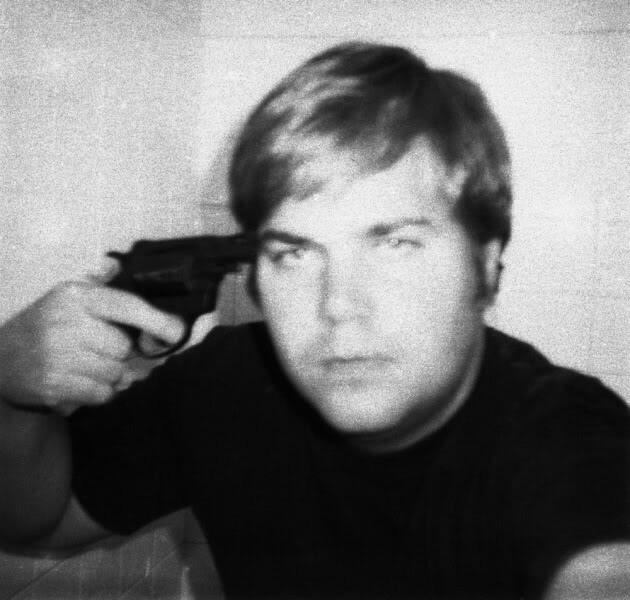
 We tend to look at these killers as monsters. The callous disregard and lack of empathy for their victims makes our blood run cold. The sadism and cruelty involved in the senseless slaughter of innocent concert-goers, high school pupils or cinema goers is incomprehensible to us.


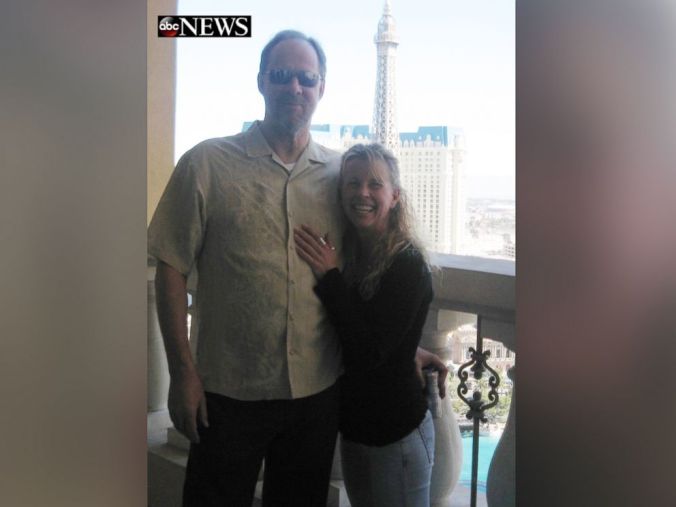


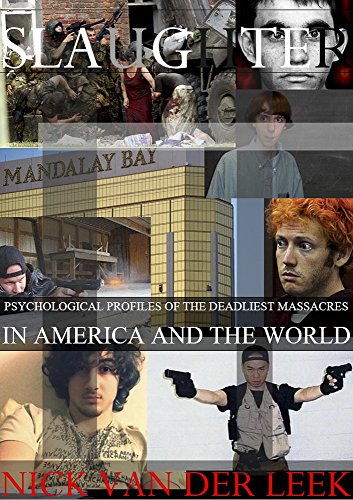
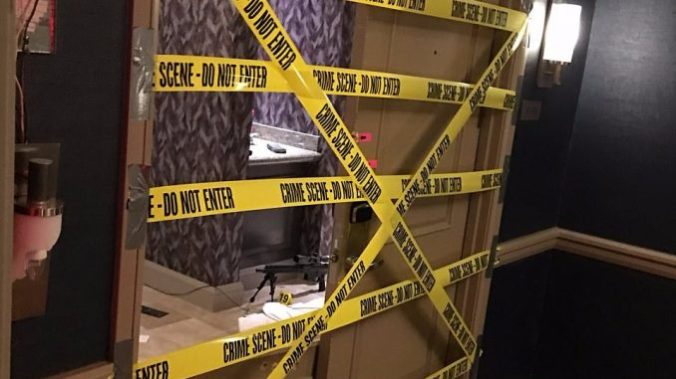


 So, in that spirit, here’s a serious thought. As impressive as the numbers were in the various marches around America, what’s changed? As moving as the various speeches were from many stages dedicated to the gun change cause, what’s changed? As common sensical as it is to make the changes that are being proposed, what changes have been implemented?
 What about bump stocks? Didn’t the president put his weight around getting rid of those?
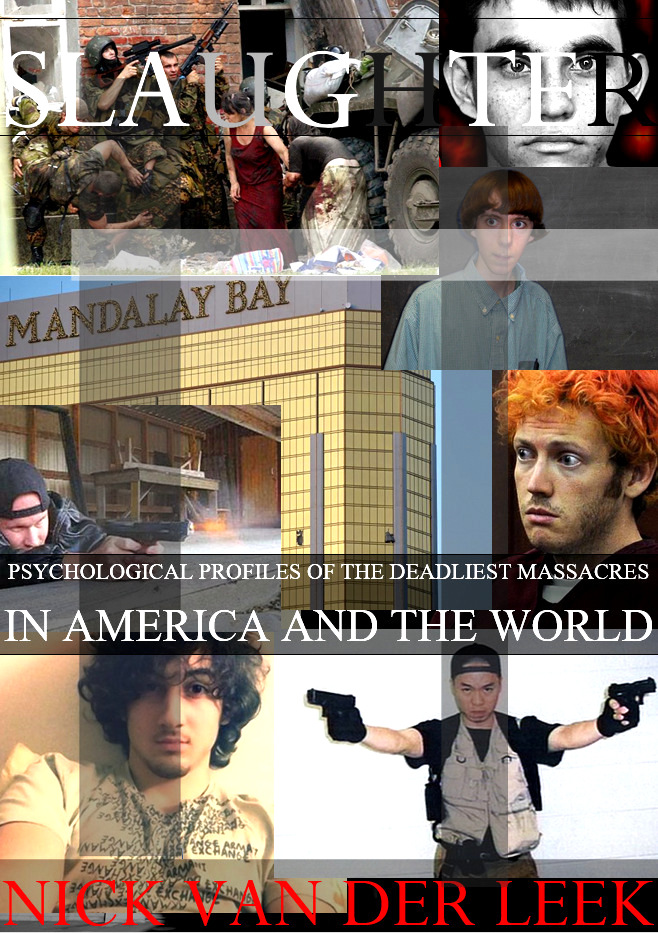 I’ve recently researched a 140 000 word book called slaughter, profiling 8 mass and school shooters and mass shooters. The book took several weeks to research and write, arguably far longer than Cheung’s 1200 stab at the issue. In sheer numerical terms, it’s about 140 times the size of Cheung’s diatribe. That puts me in a position, I dare say, to call bullshit on the idea that “the real problem is guns”. Guns are a problem, and taking them away and controlling them is necessary, but there’s a far bigger problem than guns. We see it in the lawmakers who refuse to change gun laws, and governors who oppose implementing them. These are symptoms of a society that is incentivized to be sick with avarice and self-interest.
 Wald seems to see it as cowardice to “lecture kids on how to do better”. I disagree. It’s cowardice not to. In all the school shooters I profiled in Slaughter [and I mean all, without a single exception], what was missing was one or both parental figures. Typically the father was out of the picture, or else both parents. These left the shooter-in-the-making more exposed than usual during the adolescent phase to ridicule.
 If we live in a sick society in terms of our political leaders, and if our media and social media is equally sick and distorted, then perhaps the last bastion of reliance is ourselves, and our communities. If we can’t ask things from our country, or if our demands go unanswered, isn’t it time to ask more from ourselves? Not Facebook communities, or five minute watercooler communities spawning around a hashtag, but real people engaging with one another in the real world, around real mutual interests.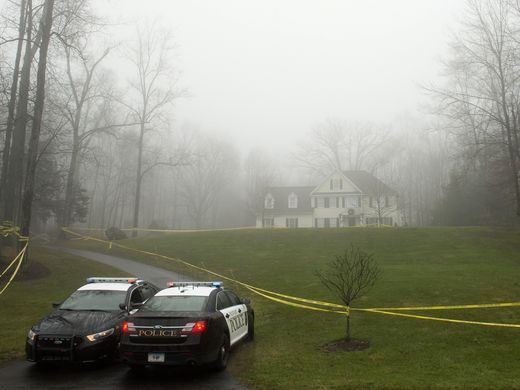
 I care about gun control. It cuts very close to home for me. My mother killed herself using my father’s revolver. I was seventeen years old and about to write my final exams at school.
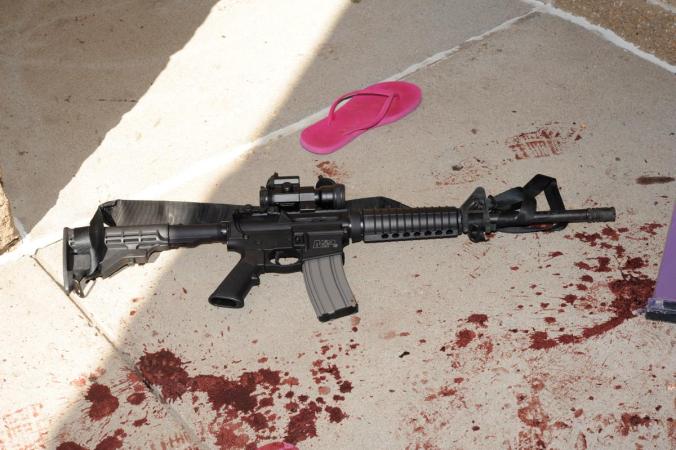 In Slaughter I wrote:
 My impression of Gonzalez is that her every appearance is like a carefully crafted circus act. It’s almost Trumpian in its conception. It’s very compelling, very emotional, very popular, it plays wonderfully on twitter but somehow [like a circus act] it’s invariably very forgettable.
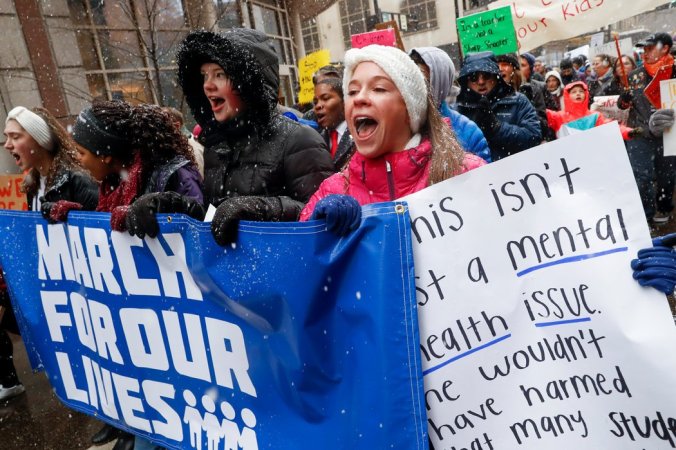 Afterwards, when the school is asked to account for the shooting, no one can remember bullying, isolating, or ostracizing the shooter, but everyone is crystal clear that something was seriously wrong with the shooter.
 Meanwhile, who cares about motive, while the popularity contest goes on unabated. Seniors at Marjory Stoneman Douglas High School are in a race to gain as much popularity as they can, and to discredit their peers on their way to popular glory.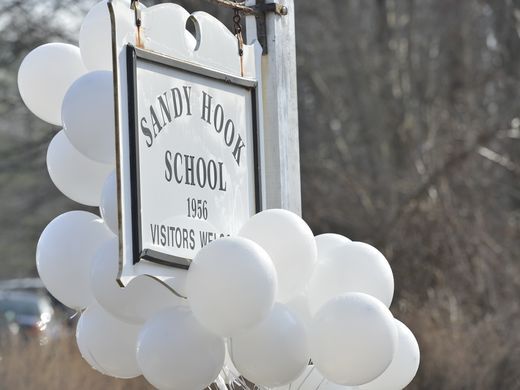
 The school did deal with Nikolas Cruz. He was expelled. It didn’t change the original situation, it aggravated it. Yes, it’s not the obligation for anyone to befriend or be nice to anyone, but as America stands today, a loser who develops an abiding hatred for his peers, has the capacity to access military grade weapons and execute on that murderous intent. It seems to me, that given the choice between maligning someone to such an extent that they fall out of a school system entirely, who may then come back and shoot you, and being less unkind and unfriendly than you and your peer group feel you need to be, the second is the lesser of two evils.
 5 Reasons why Isabelle Robinson’s Op-Ed is on the right track


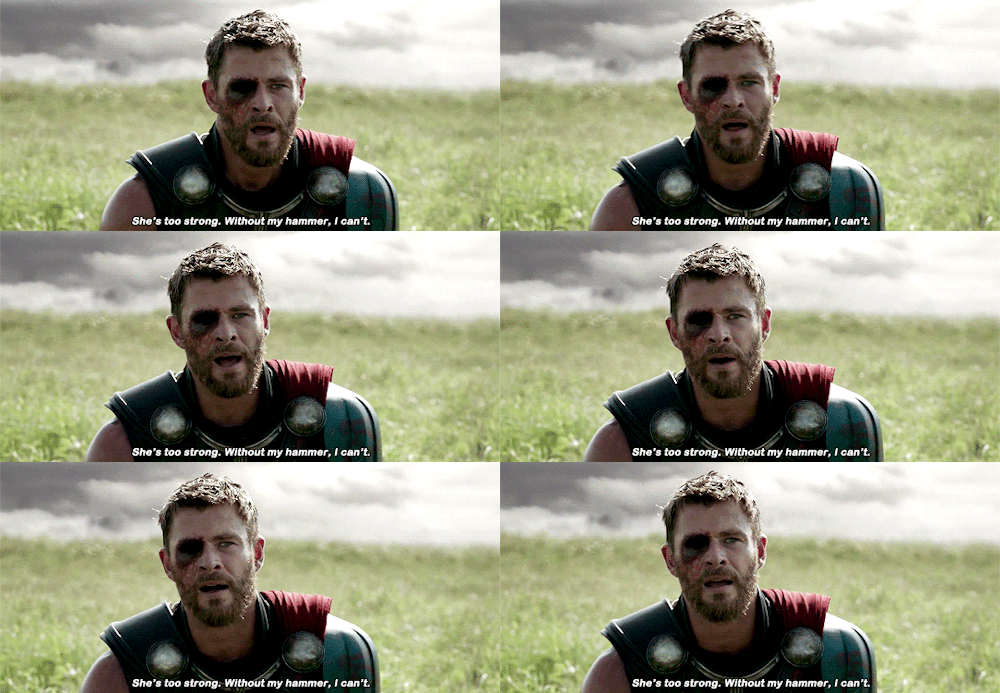


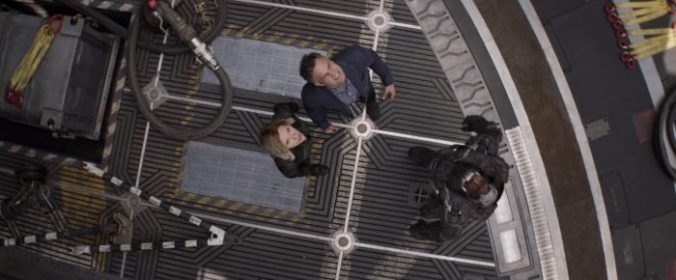


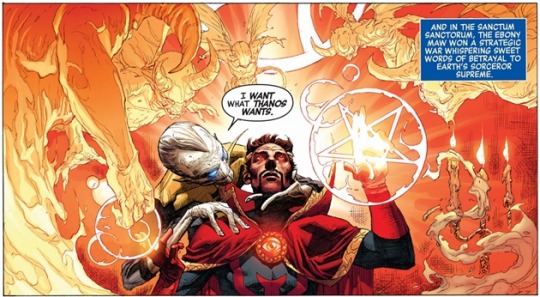
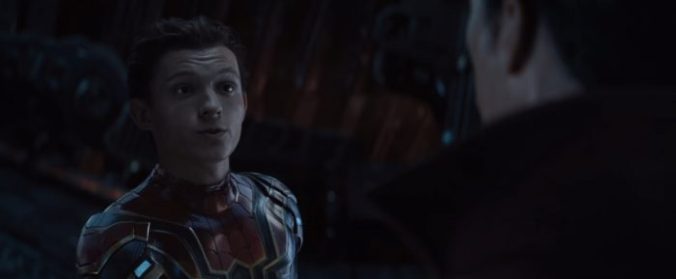



 The extended versions of these contentions are provided below:
 The fact that Simpson lived in the lily-white neighborhood of Brentwood, and had white girlfriends, and endorsed “white” products like Hertz, and played a white-man’s game like golf and belonged to exclusive [white] golf country clubs, didn’t figure into the reasoning of the jury.
 2. O.J.’s version in “If I did it” was also that Nicole Brown was murdered because of drugs
 3. Inversions and motive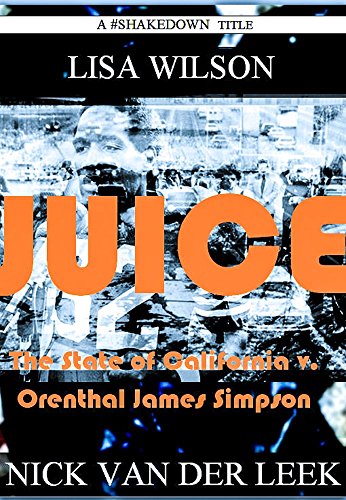
 Yet as problematic as this situation is, from Guede’s perspective it appears to make complete sense. Though you won’t read about it just yet in the English press, the Agenzia Nazionale Stampa Associata [ANSA, the leading wire service in Italy] are covering Guede’s appeal.
 Ultimately though, Knox/Sollecito using their combined resources, overturned the guilty verdicts. What Guede is arguing now is this: if the court’s didn’t apply his evidence to their trials [it was inconsistent], then he should be exonerated or given a kind of legal credit too.

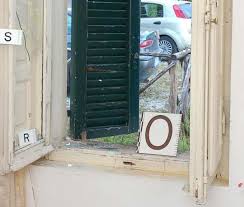 However a few of Meredith’s belongings were stolen, including her phones and her rent money. If the motive was burglary, why were both Meredith’s phones immediately tossed into someone’s garden? Why wasn’t her laptop stolen? And who would know about Meredith’s rent money besides someone who lived there, who was also paying rent?
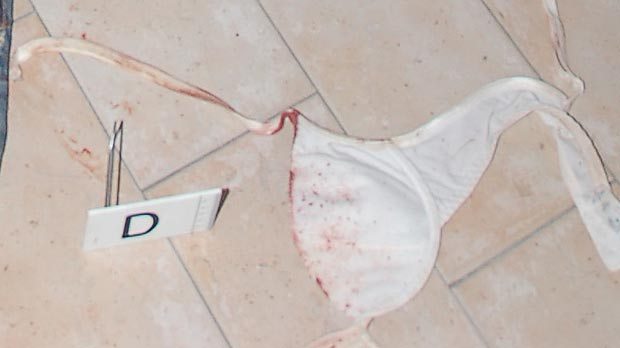 Thus, the sexual crime, just like the burglary crime, were both staged to distract from the actual crime – the murder of Meredith Kercher.
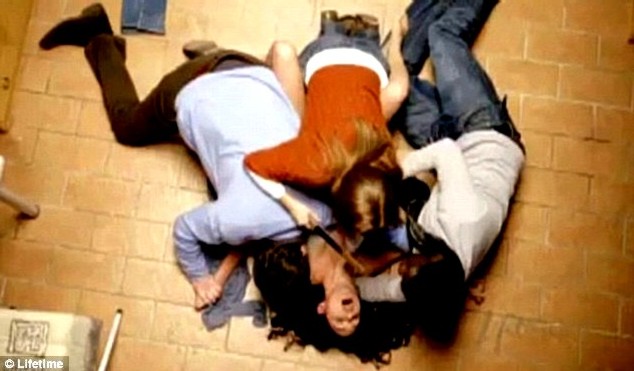 Meredith’s death was extremely unpleasant. She drowned in her own blood, an event that would have taken minutes to kill her, and would have involved violent expirations of blood, as well as arterial spurts from her throat. She would not have screamed if she was unable to scream, if she was being muzzled.
 Although Knox, Sollecito and Lumumba appeared in court together, Lumumba was released due toi lack of evidence, and despite Knox’s allegation against him.


 #SHAKEDOWN