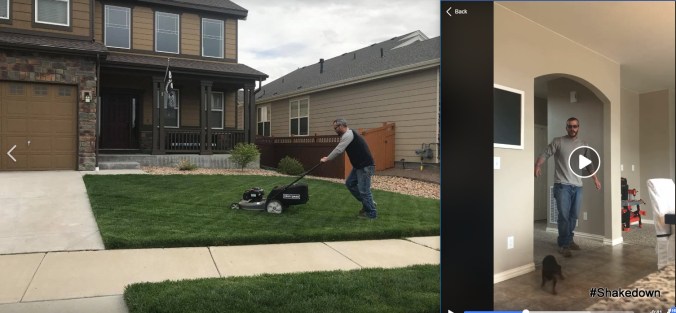
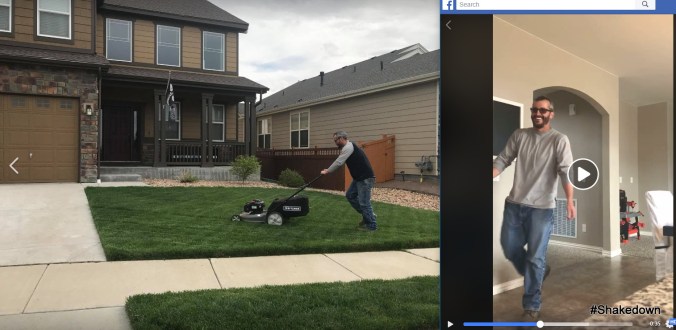
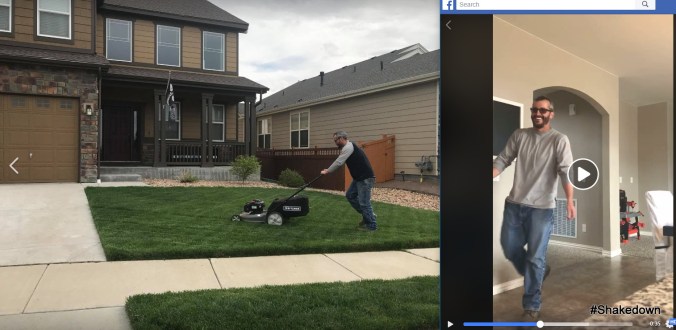
May 8th was the day Shan’ann broke the news to her husband that she was pregnant. At that stage she’d only been pregnant a week to 10 days. Notice the message captioned to this photo of the dutiful husband getting up early to go to work then mowing the lawn afterwards: #Helovesme.
Did he really? Because that’s the question at the heart of this case. Did he love her and was the unborn child loved and wanted?
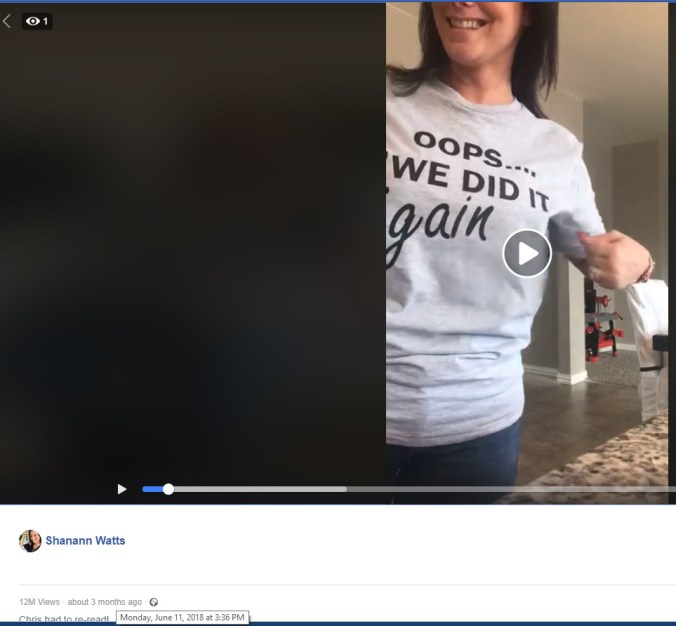
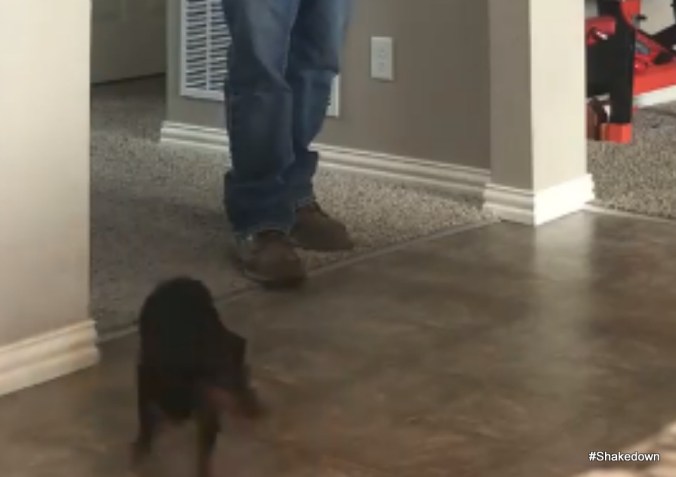
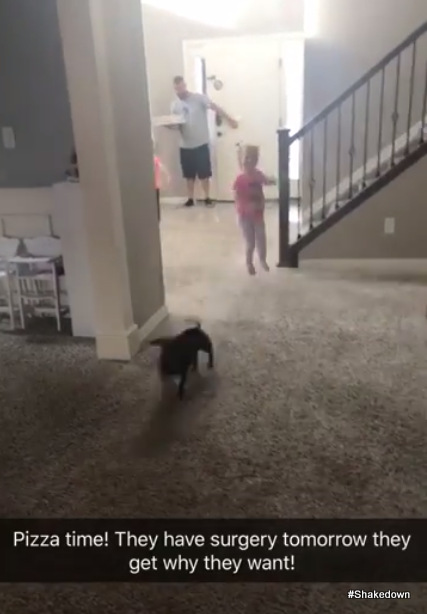
Although the video was recorded on May 8th [by the looks of his clothing, beard, glasses and shoes], Shan’ann posted it June 11th. Anything unusual – do you think – in waiting a month after recording the video before posting it to social media? Anything unusual in how soon she knew she was pregnant, and how soon the video was recorded?
If he didn’t love her, would he really have wanted this stuff posted on social media?
Was he going to give her that support, or was he acting in front the cameras then knowing what he intended to do all along? Was this evidence [in his mind] potentially exonerating him? We know in the Indle King case, there was purposeful acting on camera, appearing caring and considerate, precisely for this purpose of plausible deniability.
If the video was held back, whose decision was it to delay telling everyone?
And if the videos were never posted to social media – not in June or any other time, and Shan’ann never made it to her gynecologist – who would have benefitted from that? Would certain people not have known she was pregnant to begin with if she disappeared prior to the gender reveal party?
The fact that this coverage of her pregnancy was there anyway and she was murdered in spite of it says a lot about his commitment and intentionality. There was an urgency driving him to get rid of her and apparently his children as well, wasn’t there?
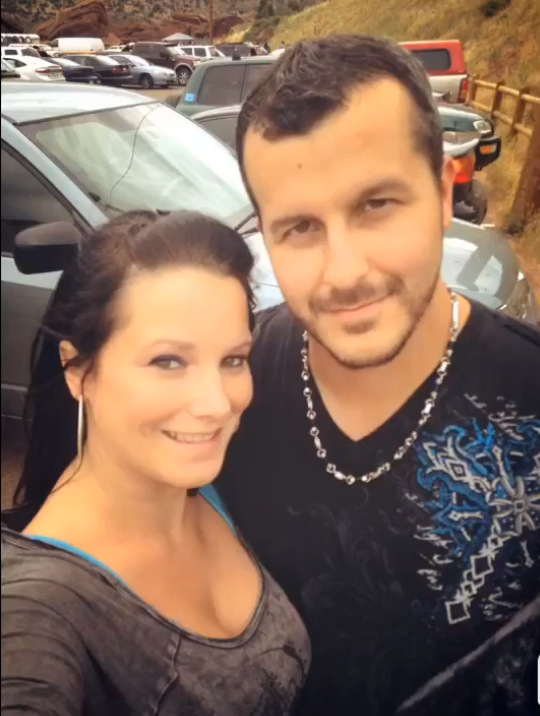
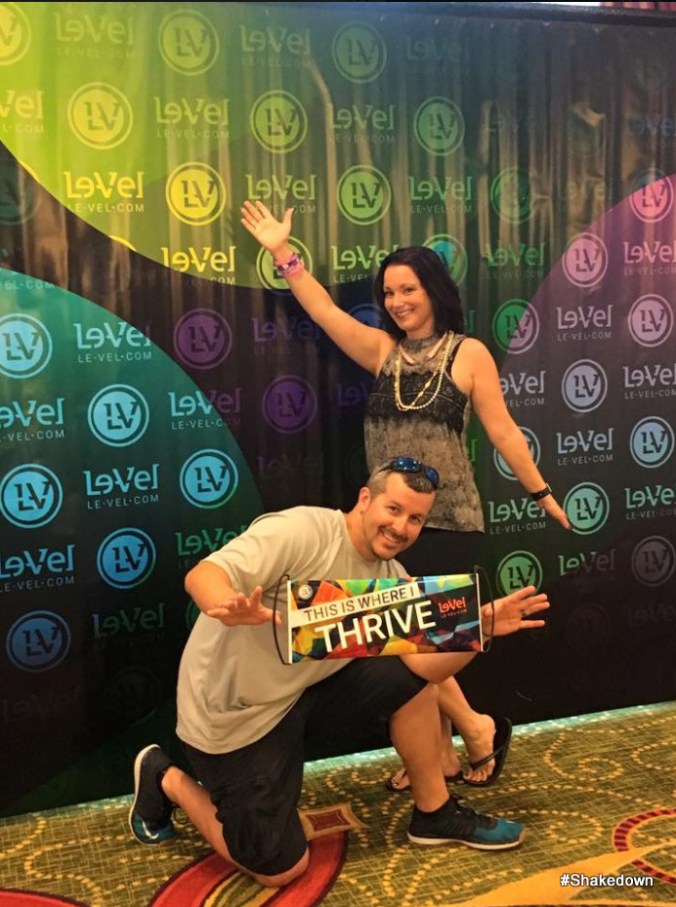
Shanann Watts and husband Christopher Watts, Hard Rock Hotel & Casino in Punta Cana, Dominican Republic, from Cristina Meacham facebook page, posted Feb 2017 no credit
I highly recommend watching the THRIVE promo video above to get a sense of the glossy, glitzy spiel they’re selling.
The short answer to the above question is no. I recall someone made a claim that elevated Vitamin B in the Thrive patches could have caused mood swings in Chris Watts. This idea and all permutations of it are patently ridiculous. It’s comparable to soaking a band-aid in alcohol and then claiming you were driving under the influence not because you were drinking, but because of the band-aid.
I suspect the folks who’ve started discussing this idea that the Thrive products “caused” Chris Watts to lose it and murder his pregnant wife and two children on August 13 misheard or misinterpreted someone saying effectively: “I’m telling you, the Thrive shit drove him nuts.”
That part may be and probably is true. Shan’ann was a network marketer, which basically means she turned her whole life [including her family] into a series of sales pitches. Meals become sales pitches. Holidays are all about peddling products and the “Thrive” lifestyle. Literally everything becomes subsumed by it. And to get a sense of this, one simply has to look at Shan’ann’s Facebook page. She’s a brand ambassador and pretty much all her marketing is done on Facebook. Those who cheerlead her efforts are other network marketers.
So, revisiting the question: “Could thrive supplements and patch be the cause of Chris Watts’s Rage?” In the sense that he became tired of the endless rah-rah that’s part and parcel of network marketing, the tireless always-on selling, literally day in and day out, it’s a valid question.
Very likely he was very put off by it, and let’s face it, someone like that who is selling your home life constantly on Facebook, putting a little jingle on every moment, over time isn’t going to tug at your heartstrings. It’s not romantic it’s mercenary. It’s not genuine moments, it’s financial desperation.
Although the Thrive business had a significant impact on Chris Watts’s disillusionment, it clearly wasn’t the main driving force in his motive to commit murder. It’s an important part of the puzzle certainly, but not the biggest part. Did it feed, in some way, into the motive? Absolutely.
To determine the extent of his disillusionment with her one only has to trawl through Shan’ann’s social media to get a sense of the sheer volume of the promotion. It’s difficult to come across a single picture of her without one of the patches featuring prominently. She also has her husband and kids posing endlessly to sell the Thrive lifestyle.
It looks exhausting. In her video feed she has 357 videos posted over a two year period. That’s almost a video every two days.
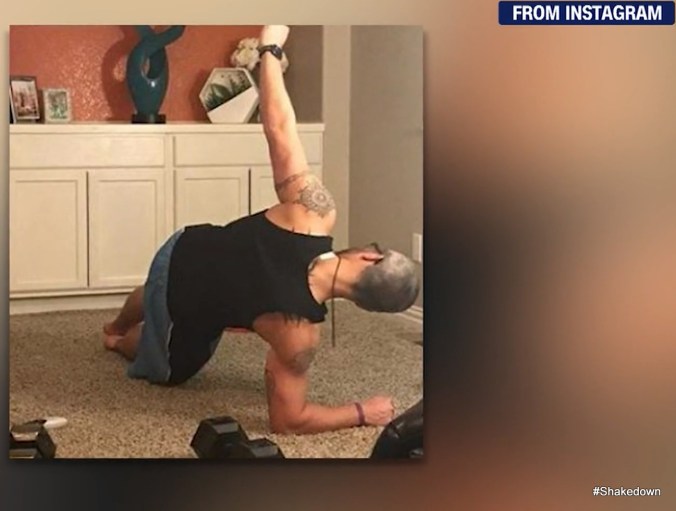
Her Facebook profile photo shows her prominently lifting her arm and displaying a patch. This is her version of her identity. This is her version of who she says she is.
Shortly after her death, after posting a few initial messages of support, her Thrive pals reverted to more endless, breathless promotion on Facebook.
It’s maddening, and if the social media of her closest friends and their mercenary attempts to sell sell sell so soon after her distressing death, then her own content clearly portrays something similar – there’s a mechanical sense of a brand and product eclipsing almost all the family stuff on her Facebook. She has two small children and had recently become pregnant, so for the product placement to eclipse the kiddie and family stuff takes some doing.
There’s also an irony in the endless promotion of Thriving while they – as a couple – were dying. They were bankrupt, Shan’ann had an autoimmune disease and her husband was actively cheating on her. But it was all being sold and packaged as a shiny fairy tale.
The real question is did she know how bogus it was beyond the financial ruin side of things? Did she know the family was a fiction, but was selling it anyway? Based on a few early accounts by friends that have come forward, she did know/suspected her husband was cheating on her, and still sold him as the best thing since sliced bread.
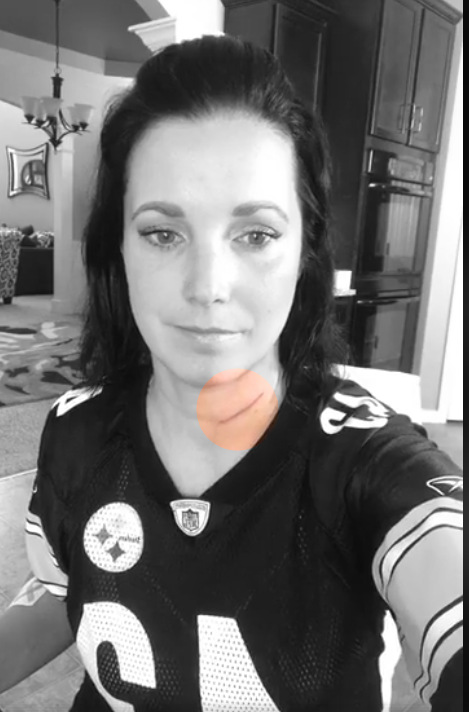
That’s no small cut above the collar of Shan’ann’s shirt. It’s no paper cut either. Was it made by one of the patches when she removed it? If not, then how? The video was posted ten months ago on October 29 2017, at 21:20.
At the time Carte Blanche aired their coverage of the Van Breda trial I was doing an interview with A Dark and Stormy Book Club podcast on my book The Murder of Vincent van Gogh. I was angry that Carte Blanche were releasing crime scene footage in a “South African television first” when I had directly and repeatedly petitioned for the release of those same records, in the court building, in person but to no avail.
I was also gobsmacked that an award winning investigative show would interrogate motive without contacting someone who’d written five books specifically interrogating that subject, especially when no one else had.
You might imagine this is sour grapes, but from an investigative perspective, do you really think you can come into a narrative when it’s all over and pick a few brains over 5 minutes and gain any insights, when ultimately those same brains didn’t answer the question of motive in prior court appearances, or to the media? So why would they be in a position to know more now?
The court wasn't able to figure out motive. I find it kinda strange that I sat in court through every word of Henri's testimony, covered motive in depth, wrote 5 books about this case, and…well, what do I know? I'm sure you've done great investigative work though. #VanBreda
I assumed of course that when Carte Blanche sold their show on why Henri killed his family that they would actually do that. As is typical in investigative shows these days, they hype up the exclusive reveal of “why”, of motive, and then when it comes down to it, they either say “we’ll never know”, or they shovel the same shit that’s been shoveled by the accused since the beginning. In short, they don’t deliver on their premise or their promise. They sell their show on why and then they shortchange their audience.
Now, I did get to watch a repeat of the show during their Monday broadcast. For me the most revealing and important moment came over a few seconds right at the end. State advocate Susan Galloway was careful to emphasize [twice] that it was her personal opinion that Henri’s motive amounted to:
…a culmination of a festering of a perceived injustice…
You can watch that moment below, but notice the way Galloway says it. There’s a slight smile, and a slight stuttering and pausing in the way she communicates it.
The reporter then tries to draw out a little more. “Over a period of years though?”
Galloway confirms this, repeating: “Over a period of years.”
When Andre van Breda, Henri’s uncle [Martin’s twin brother] is asked the same question, he basically inverts it, repeating that he’s been asking the same question over and over to himself. “I still want to know why…I don’t want to think about what happened in that room. I can’t imagine. I can’t imagine.”
At the end of the clip the reporter offers the van Breda family comfort, saying: “May the Van Breda’s find the answers they need.”
The thing is, isn’t that the job of an investigative show, and investigative reporters? Wasn’t that what the show explicitly claimed to be providing?
It’s been the question many have been asking: why did Henri #VanBreda brutally attack his family with an axe? This Sunday, in an SA television first, we look at the actual crime scene footage & @Devi_HQ speaks to Henri’s uncle to try and make sense of this tragedy.
So did they? Did they make sense of the tragedy?
I’ve written extensively on the subject, especially in Diablo and Diablo II, so I’m not going to rehash all of that here. I do want to pluck a few low-hanging fruit, if only to expose just how lazy the thinking is, including by the mainstream media.
It seems to me that sometimes influencers are absolutely incapable of thinking. You run to an expert and an insider, and if they can’t do your thinking for you, then…well…it stays a mystery.
So without further ado, here are 5 Easy Insights from the Carte Blanche Show:
The reporter asks the pertinent question: Why would someone murder their family members in such a brutal way. The question isn’t just why Henri murdered his family, but why the brutality? Judge Desai referred to it as “unbridled violence”. Why did Henri feel justified in being so gratuitous, so cruel, about dispatching each of his three family members?
Advocate Galloway goes some distance to answer this question, although the distancing of the language she uses is hardly helpful:…a culmination of a festering of a perceived injustice…So, placing the semantics side by side, Henri’s brutality towards his family was as a result of a culmination of something. Or: Henri’s brutality towards his family was as a result of a perceived injustice.
And that injustice took place over a period of years…
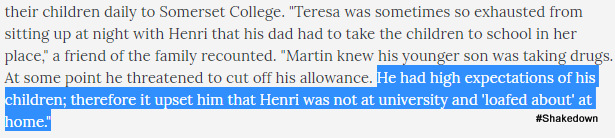
What could this distancing language possibly imply, because that’s precisely what it does do. It says something without saying it. So what’s it saying? On December 3rd 2017, an extract from Julian Jansen’s book was published in the Sunday Times. It was appropriately titled Who is the real Henri van Breda…? The answer to why a middle child, and second son harbored violent intentions not just to one member of his family, but all can only be addressed by addressing the family dynamics. In the Carte Blanche interview Uncle Andre addresses the family dynamics, but not very helpfully, because naturally he’s part of that family. So there’s the mismatch between Henri being a wonderful almost perfect son, and then this horrible crime. When Andre van Breda says he can’t imagine what happened in that house, in terms of the crime, there’s some psychological mirroring of him also being unwilling or unable to imagine what went on in the house before the crime. In terms of discord. Julian Jansen, however, addresses it.Now, did friends visiting the family in the week before the murders know better, have better insight than the Uncle living in Pretoria? You’d think so, wouldn’t you? In this tiny little snippet are big answers, though incomplete answers, to the riddle of why. The first is so obvious it’s almost ridiculous. Henri was laboring under acute sibling rivalry. Whether you want to call it a sense of his brother being favored by his father, or Henri himself being jealous of Rudi, it’s the same thing. It’s sibling rivalry that’s at the center of a crime, and thus, it’s the key to seeing why Henri’s attack started where it did and with whom: Rudi in the boy’s room.
Just as Galloway’s semantics are distancing and don’t really reveal the emotional heart at the center of this case, and this crime, talking about sibling rivalry is the same thing. It’s throwing out words but not really feeling them out, not testing them in scenarios and contexts that were playing out during the real life timeline of this family, their lifestyle, their expectations, their culture and Henri’s individual experience within all that. We only get a handle on the subtle and slippery family dynamics, we only figure that out by climbing higher through the true crime tree and getting beyond the low hanging fruit. That’s not easy. When I was in court I spoke to Galloway directly and mentioned my research, specifically into Rudi’s Facebook account, and suggested the key to understanding Henri was to see him through the eyes of a student, and a young man wanting to individuate, who wanted to be allowed to be himself in the world [whoever that may be]. In other words, to fathom Henri’s identity, who Henri really is within the context of other family members. Rudi provided a glimpse through extended social media posts to the world Henri either aspired to, or was jealous of. Julian Jansen touches briefly on this as well, this idea that the one son – the older son – is at university achieving, partying and progressing while the other is not. Henri pulled the wool over everyone’s eyes when he said he was not studying, and taking a year out because it was a Gap Year, and by choice. Really?
To do justice to this question, and to answer it to completion, can’t be done in a single blog post. I devoted several chapters in Diablo and Diablo II to interrogating these issues.
What I will say here is that no matter how wealthy the Van Breda’s were, and no matter how much Martin favored Rudi over Henri, and no matter what the scales of Henri’s “perceived injustice”, sibling rivalry alone isn’t a sufficient explanation for Henri’s “festering” inadequacy.
Virtually every family with siblings in this world has sibling rivalries. It’s absolutely normal and healthy for a sibling to be upset when another gets slightly more cool drink at a birthday party. If that wasn’t the case, people and animals wouldn’t survive the real world. They’d get trampled. We absolutely should demand and fight for what’s due to us in the family setting and beyond.
So I believe there was another issue eating at Henri. The unacknowledged narrative – the hidden narrative – is that if Henri was on drugs and seriously compromised by them, then something was fueling that disproportionate need for soothing. We look at the drugs and say Aha, but what we miss is the thing chewing at him. And it wasn’t just sibling rivalry, although I believe it fed into that. It was, in a manner of speaking, a “perceived injustice”.
This something was disproportionate to Henri and this in turn was mirrored in the savage violence he visited on his folks. But what was it?
I won’t reveal what that thing was here, because that’s a narrative in and of itself, but it was mentioned in court, and it was rumored, just like the drug rumor, from the get-go. Once we intuit that narrative and its implications in the context of university student wanting to occupy his place in the world, we suddenly see the source of almost unfathomable rage coming into sharp focus.
The short answer to why this crime was so brutal, and why the axe murderer laughed while slaughtering his own flesh and blood, has to do with a person who on the one hand was pushed down [by his family and by other things], while on the other hand he’s out of his mind in some way. We experience this in the emergency call, where Henri oddly out of it; he doesn’t seem to be 100% in the real world.
How do ordinary people completely lose their inhibitions in the suburbs, on a daily basis? Not drugs, but…?
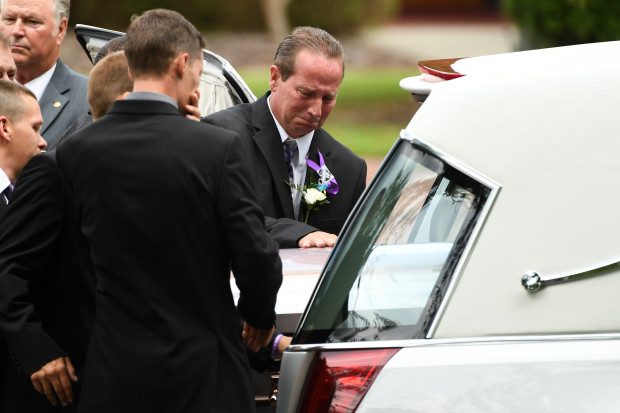
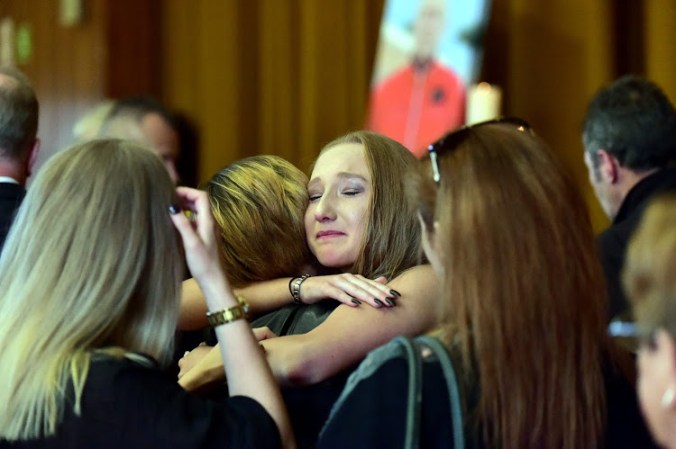
Prior to the funeral, the city of Frederick put purple ribbons [Shan’ann’s favorite color] all over the city.
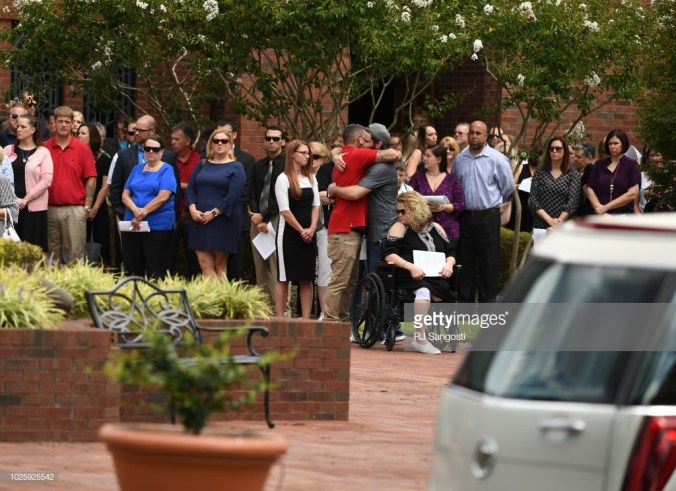
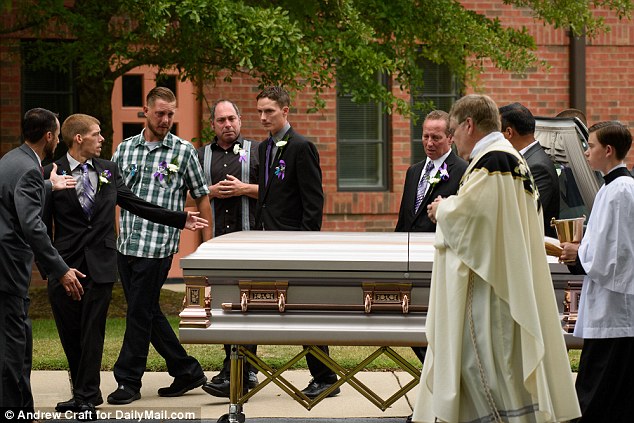
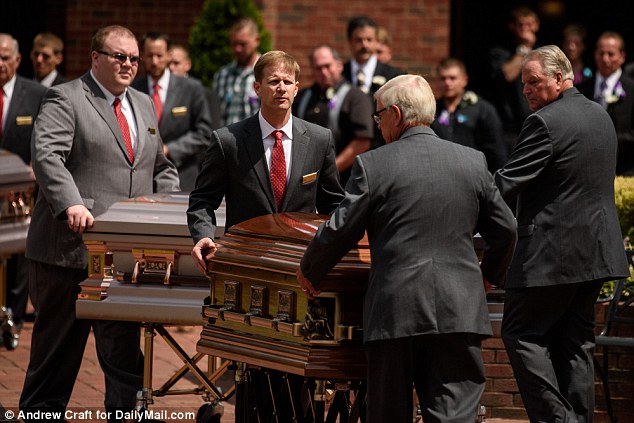
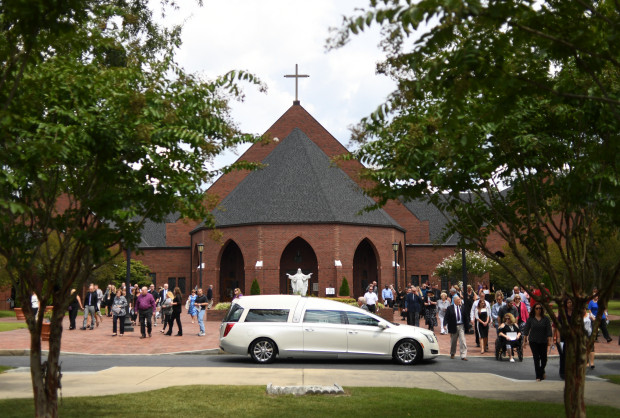
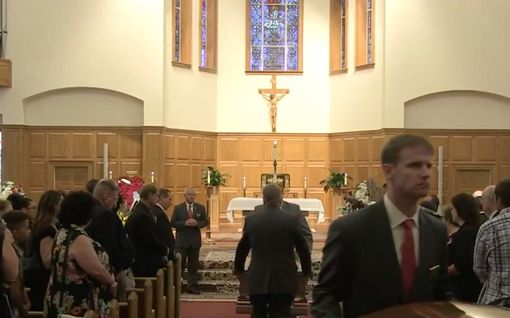
The service at the at Sacred Heart Catholic Church in Pinehurst, North Carolina lasted 1 hour. Sandra Onorati Rzucek, Shan’ann’s mother, described Shan’ann as a “fireball”. Rzucek asked God to “give all our love” to her daughter and grandchildren.
“Mom, Nonna, loves you with all her soul,” she wrote. Father John Forbes read comments aloud from Shan’ann Watts’ father, mother and brother.
Forbes said Shan’ann Watts’ family would like to see good come from the tragedy, including a law to recognize the lives of unborn children such as their grandson.
“They do not desire vengeance and death, but justice and life,” Forbes said.
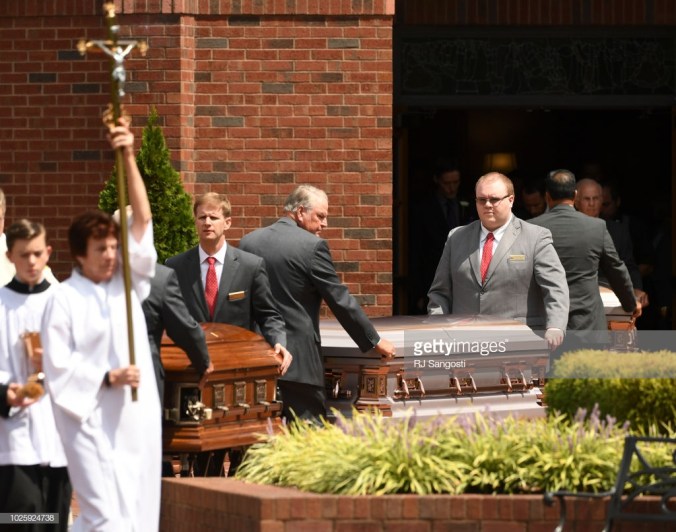
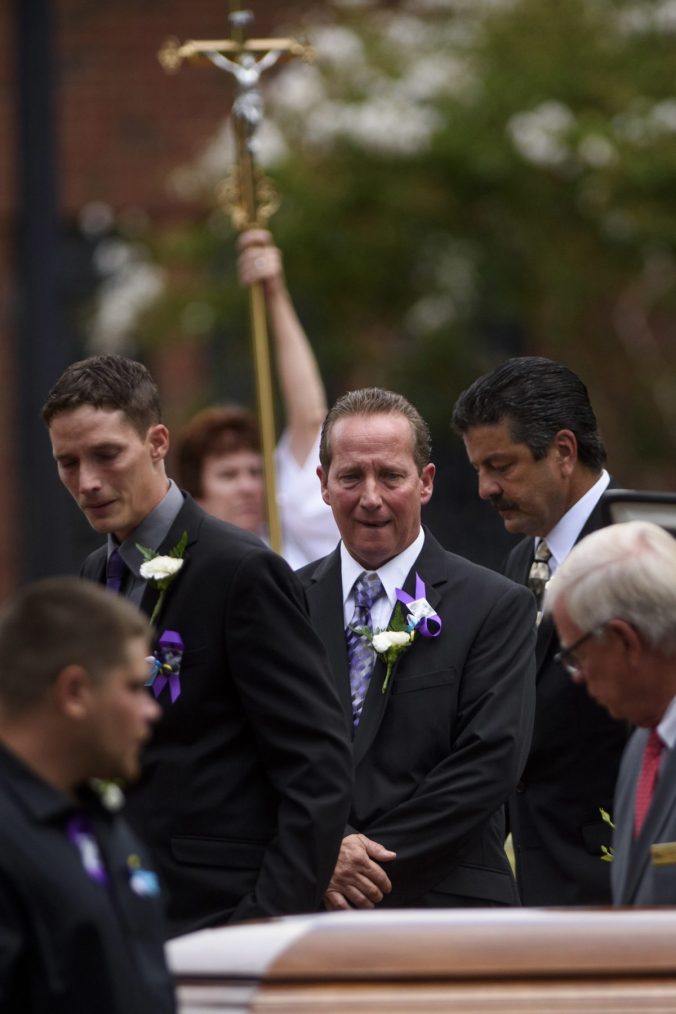
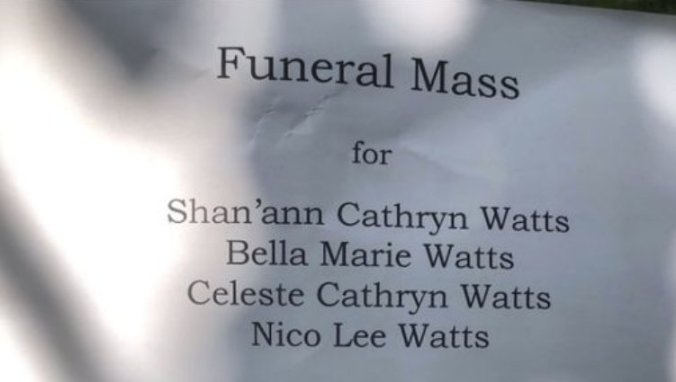
PINEHURST, NC – SEPTEMBER 1: Friends and family make their way from the Sacred Heart Roman Catholic Church after the funeral mass for Shan’ann Watts, 34, her daughters Bella, 4, Celeste, 3, and unborn son Nico on September 1, 2018 in Pinehurst, North Carolina. (Photo by RJ Sangosti/The Denver Post)
Additional images have also been released of the dump site.
On June 21 2011, the New York Post provided coverage of the Casey Anthony trial, and 25-year-old Casey’s “mostly sullen façade [during] the first weeks of testimony.”
By now everyone who knows this case knows that after her two-year-old daughter Caylee disappeared on June 16th 2008, Casey “went on a bizarre, monthlong partying spree while lying to everyone that Caylee was still alive.”
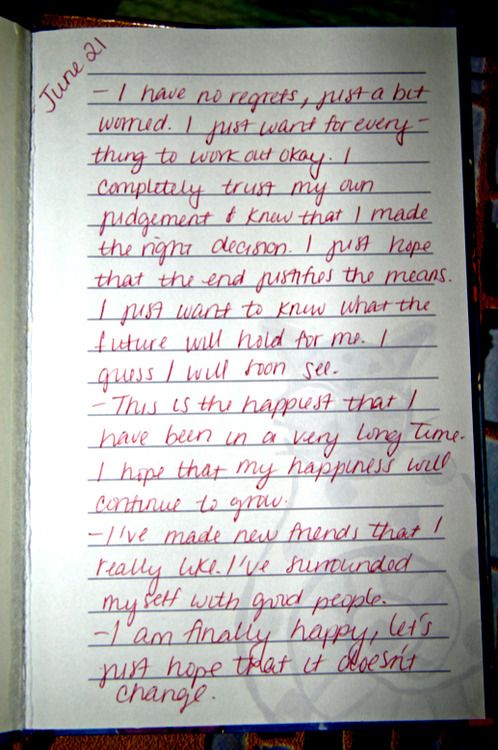
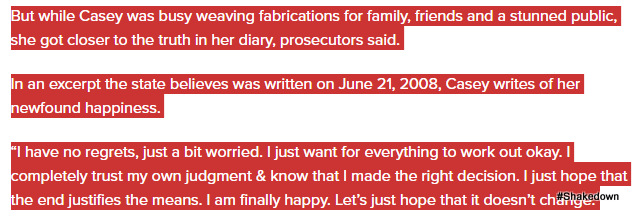
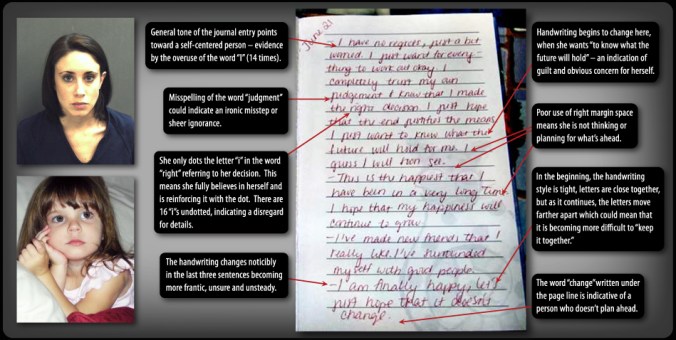
During that time, almost everything Casey said was a lie. Almost everything. On June 21st, Casey scrawled the following entry into her personal diary.
Here’s the full version again with the parts left out of the article in bold, even though the diary page speaks for itself:
I have no regrets, just a bit worried. I just want for everything to work out okay. I completely trust my own judgement & know that I made the right decision. I just hope that the end justifies the means. I just want to know what the future will hold for me. I guess I will soon see. This is the happiest that I have been in a very long time. I hope that my happiness will continue to grow. I’ve made new friends that I really like. I’ve surrounded myself with good people. I am finally happy. Let’s just hope that it doesn’t change.
In that simple paragraph the word happy or happiness comes up three times. She herself clearly anchors her happiness to “good people” which we now know was a new group of friends she made in early June. She also locates her happiness contemporaneously. We see that according to her she wasn’t only happy that night in June, but had been unhappy for a period of months prior to that weekend.
Although she’s happy, it’s coming out of a period of misery which is why she hopes it will continue to grow. Who or what is the source of that misery? Well, whatever it was that prevented her from having nights like these, experiences like these.
The Post describes the diary entry as being from June 21 2008 and a wider angle of the diary appears to show the number ’03 in the upper left corner. If it was written five years earlier then Casey was around seventeen-years-old and still at school when she wrote it. Caylee wasn’t even more. In 2009, when the information first surfaced ABC reported:
Hundreds of pages of newly released evidence from prosecutors in the investigation into the murder of Florida toddler Caylee Anthony contribute to a growing body of circumstantial evidence against the child’s mother, but reports on a key detail against Casey Anthony are being vigorously challenged by representatives of the jailed mom.
Anthony’s representatives insisted that a seemingly damning diary entry prosecutors allege she penned was written before the child was even born — not in 2008, as has been reported.
Calls to the prosecutor’s office were not immediately returned.
A representative for Casey Anthony, Marti Mackenzie, told ABC News that the entry was written in 2003, before the Caylee was born.
The Post also cites prosecutors saying they believed the diary was from 2008.
On a blog posted in 2009, two years before this evidence was led at trial, there is some mention that the specific diary Casey used wasn’t on the market until 2004.
We know Caylee disappeared on June 16th, and probably died that day too. Five days later, clearly, Casey felt no regrets, and was hoping “everything would work out okay”.
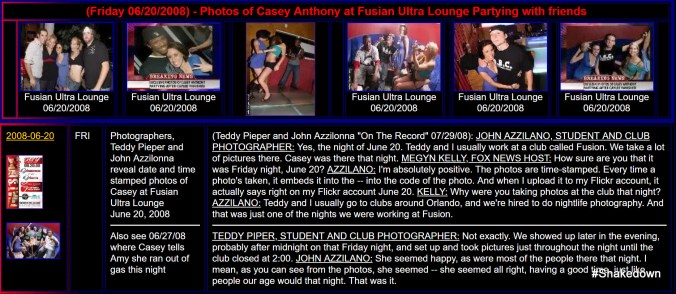
When we look into the timeline, we see June 20th, the day before Casey wrote in her diary, Casey was at a Hot Body Contest at the Fusian Ultra Lounge with many of her friends, as well as her new boyfriend.
Casey won the Hot Body Contest that night, then spent the rest of the weekend with her boyfriend. This time there were no real babysitters to worry about, no curfew to obey, no rap songs kicking off her phone from Momma cussing her, and calling her home.
Either Mark Minnie went to his friend’s home in Theescombe to commit suicide, or he went there on Monday morning for some other reason. To figure out which is the most likely is simply a matter of lining up what he was doing in the days and hours before that fateful last day of his life – Monday August 13th.
Our best source in terms of these questions is from Minnie himself. What was he doing? What was he saying? In the last days of his life where was his head at, what was weighing on his heart?
Although the article says the interview was conducted “3 days” before Minnie’s death, it was actually closer to two. The interview began at 11:00 and ended at around 19:00. Minnie died Monday morning relatively early, based on a farmworker who reported hearing a gunshot.
Did much change over the 48 hours between his interview that ended Friday night and his death on Monday? Did Minnie have a change of heart overnight essentially?
The suicide and suicide note suggest that Minnie felt he had completed his work, was “tired” and, having published the book and reached the finish line, he felt like he wanted to rest permanently. Really?
There are two reasons this scenario doesn’t gel.
Both Minnie and Steyn had been investigating several leads that have cropped up since the book was launched but had been careful to not publicise what they had since unearthed.
Minnie was totally paranoid and didn’t want people to know that he had already returned to South Africa from China months ago. I had to give him my word that I wouldn’t tell anyone.Finally, after he had checked out my background, he agreed to meet me.Upon our return to Port Elizabeth he mentioned that he feared for his life, even if only a handful of people knew that he was back in South Africa. He also said that people on social media had tried to find out where he was.
If Minnie felt he had completed his work, why was he still investigating leads? If he felt it was mission accomplished, at least for himself on Monday, why was he out and about with journalists for hours on end on Friday night investigating leads? Does that sound like someone tired of life?
This clearly shows he didn’t feel he was done, even if the suicide note said that he was. There have also been plenty of comments by the authors that their book was only “the tip of the iceberg”. That doesn’t suggest their work was over by any means, does it?
There’s also this from Marianne Thamm, the woman who wrote the foreword to Minnie’s book, and so, had to have known of this directly:
“I know he was terrified for his life and that there are many who lurk in the shadows who would benefit from his death. During my meeting with him in Cape Town last year, he informed me he feared for his life and that the book would stir [up] a hornet’s nest.”
Minnie met a source on Friday and was meant to meet another one on Monday. Both authors had been concerned about their safety and were reluctant to appear in public.
In terms of Minnie fearing for his life, why would you fear for your life if you planned to commit suicide? Why would you be paranoid about your safety 48 hours before planning to shoot yourself? Why would you set up an interview but shoot yourself before doing it?
If anything, if it was going to be over soon, wouldn’t you be more reckless? If you were going to die anyway, wouldn’t you publish files and photos you were carrying around with you? If you’d gone to so much trouble to stir up a hornet’s nest, why wouldn’t you go out with a bang in the sense of releasing your most compromising and dangerous stuff with your suicide note?
I believe Minnie went to Brent Barnes’ homes for two reasons. Firstly to keep a low profile. He was giving interviews around the clock, but he wanted to be careful about where he was staying and where he could be found. This caution is also not the sign of a tired heart or mind. He wanted to be away from where he was staying, and figured Theescombe was sufficiently rural that anyone looking for him wouldn’t find him. Secondly, his friend Brent Barnes is also an ex-cop. Minnie probably figured he’d be safe near Barnes.
There is a possibility that Barnes left his gun lying around and Minnie saw it, had a sudden mood swing, and decided on the spur of the moment that it was all too much for him. If that was the case, wouldn’t Minnie have made sure everyone knew his friend hadn’t killed him? Wouldn’t that be in the note? Wouldn’t he have left a message at the house where his body was, to save a search for him and Barnes’ becoming an obvious initial suspect? As a cop, Minnie would be painfully aware of how crime scenes appear, and so to not be clear that he’d taken Barnes’ weapon raises flags.
Now consider the mismatch between investigating Barnes for negligence, but not needing to investigate Minnie’s death.
And far from Minnie not coping with stress, it seems he was. According to News24:
[Minnie] laughed when I asked him why he smoked so much. “It’s the only way I can cope with the stress.“…He was also excited about the first official launch of the book in September.
“Will I see you there [at the launch]?” [Minnie] wanted to know.
“Absolutely,” was my response.
So much work goes into a book, so much blood, sweat and tears, so much teeth-gnashing frustration, there are few authors who would abandon those efforts after publication and prior to the glitzy and glamorous launch that makes it all worthwhile. The recognition, the reward, the chance to talk about your work. Why would you write a book, promote it and then not launch it?
Did Minnie really have a change of heart between Friday night and Monday morning about his book? This was a book he’d quit his job over, moved from China to South Africa in order to get it done. Those are long term plans, life changing shifts. Also, Minnie himself was molested as a youngster. He’d lived with that knowledge for decades. It was deep-seated. It was part of his identity. So why would any of this suddenly bother him between Friday night and Monday morning?
We also know that after his interview on Friday, Minnie continued to maintain contact on Saturday and Sunday with other folks. Minnie’s publishers for one. Tersia Dodo for another. Minnie had told Dodo if he died, that she must know it wasn’t an accident. On August 16th, Dodo told SABC:
I spoke to a couple of my cousins today and to all of them, he expressed that his life was in danger, and that if anything did happen to him, we must know that it was done to him, not by himself,” Dodo said.
It would be good if all those who received messages could come forward to establish a continuity of messages or emails they received. This is important if only to show cogency in Minnie’s state of mind throughout the weekend, not that there’s any real doubt about that.
Maryna Lamprecht, commissioning editor at Tafelberg Publishers, confirmed Minnie’s death and added that the publishing house was “sad and devastated” by the events.
“We are proud to have had him as an author and we’re in contact with his son, who is in China.” She said Minnie was excited about the publishing of the book and the leads it had brought up. He was adamant that he wanted to investigate the matter further and had been working closely with a number of people who had come forward.
“He was very proud of the book,” Lamprecht said.
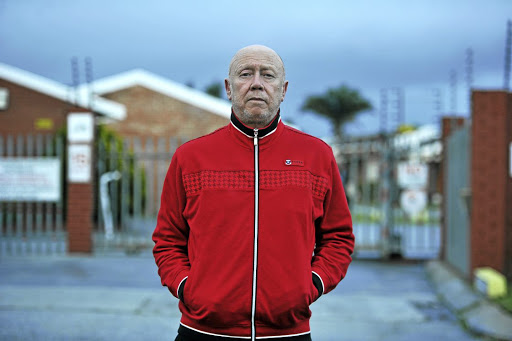
Curiously, Minnie’s cell phone disappeared the same day he died. If Minnie was killed, then his cell phone would be of crucial importance, especially to see what was being said on it, and with whom. It would also be necessary for Minnie to be alive so that his killer could “unlock” it.


















 Now, did friends visiting the family in the week before the murders know better, have better insight than the Uncle living in Pretoria? You’d think so, wouldn’t you? In this tiny little snippet are big answers, though incomplete answers, to the riddle of why. The first is so obvious it’s almost ridiculous. Henri was laboring under acute sibling rivalry. Whether you want to call it a sense of his brother being favored by his father, or Henri himself being jealous of Rudi, it’s the same thing. It’s sibling rivalry that’s at the center of a crime, and thus, it’s the key to seeing why Henri’s attack started where it did and with whom: Rudi in the boy’s room.


















 Curiously, Minnie’s cell phone disappeared the same day he died. If Minnie was killed, then his cell phone would be of crucial importance, especially to see what was being said on it, and with whom. It would also be necessary for Minnie to be alive so that his killer could “unlock” it.
 #SHAKEDOWN