Two Sides to the McCann Story – or more?

“Every truth has two sides; it is as well to look at both, before we commit ourselves to either.”  — Aesop

“No matter how flat you make your pancakes, it still has two sides.” — Daniel Tosh

“In seeking truth you have to get both sides of a story.” — Walter Cronkite

Having covered half a dozen high-profile criminal cases, some of them very difficult and very complex cases, we believe we’re ready to investigate Madeleine’s story.

If there are two sides to Madeleine’s story, then there’s certainly an opportunity for even more sides to the story merely on the McCann’s side alone. This is in terms of Kate’s version of events vis-à-vis Gerry’s.  There is also the possibility that Kate’s version may deviate from “the McCann’s” narrative or that Gerry’s might.  By McCann narrative, I mean their common cause.* If and when we find these deviations, we will find signature cracks to this case.

8

When dealing with the possibility of more than one suspect [and at one time** police believed both Madeleine’s parents were prime suspects or “arguidos”], there is not one arch narrative mirrored by one opposing narrative.  When there are several suspects*** there are typically several opposing narratives, each claiming to be the definitive narrative.

In other words:

McCann narrative vs Counter narrative

Gerry McCann narrative vs Counter narrative

Kate McCann narrative vs Counter narrative

Gerry McCann narrative vs McCann narrative

Kate McCann narrative vs McCann narrative

Gerry McCann narrative vs Kate McCann narrative

McCann narrative vs McCann narrative

The counter narrative is effectively the narrative the McCanns wish to oppose, control or discredit.  Typically the counter narrative confronts the opposing narrator as a suspect, where he or she, or both, are seen as a protagonist(s) in his or her, or their, own invented spiel.

If it sounds complicated at a single glance, it is.  It’s much simpler to sample one piece at a time, and then piece the whole thing together and see how it fits.

Having written one book short of three trilogies on the unsolved JonBenét Ramsey case, we hope the readers will allow us, through the course of this narrative, to make certain linkages between both the Ramsey case and the McCann case as they come up. It is also useful to draw similarities and inferences from various other cases.

These intertextual similarities help us to develop confidence in what’s there, and to notice what’s far more important: what isn’t there.  The absence of evidence is sometimes the more compelling evidence.  It is the nature of true crime that information is missing and not merely missing, but hidden.  More often than not these holes in the suspecttrue crime narrative are found by inference.

We will use various data mining techniques to filter through this enormous narrative.  What we’re hunting for are inconsistencies in the narrative cosmology.  The dissimilarities help us to see the idiosyncrasies of a particular case on their own terms. So, for example, we might ask:

What do abductions of small children typically look like?

Do abductions look any different when they happen in foreign countries? 

What sort of profile can we draw up based on an abduction scenario and does that profile fit this case? 

If so, how so?

If not, why not?

On the other side of the narrative divide we might ask simple questions like:

What kind of people are doctors?

What kind of parents are doctors?

How are doctors different [as people and parents] from others, if at all?

Simple questions in true crime often have difficult answers.

I might as well be upfront right now and make it emphatically clear that the PR surrounding this case is absolutely staggering.  Given that no criminal trial specific to this case, or a trial for those thought to be directly involved ever occurred, the intensity of the coverage is even more mind-boggling.

However, the saturation media coverage surrounding this unsolved case is something the McCann and the Ramsey cases [a case twice as old as the McCann case] have in common.  There are two sides to saturation media.  There is the hijacking of a particular narrative one way or the other in the media but not necessarily by the media, and then there is the repeated laying down of a narrative – of a version of events – by the suspects themselves.

The effect of these repeated assertions and also counter-assertions by other players and responses to these – in the media – is similar to making sworn statements in court and then being cross-examined in court.  The only difference is, in the media there are far more opportunities and potential players who can control, influence or steer a narrative.

While the media can be an effective tool, it can also turn on its masters.  Give someone enough rope to hang themselves and invariably they do, don’t they?

Just a year or two ago, we likely would not have thought a cogent analysis of this case would be possible without court documents, which necessarily are a detailed public record of various positions, including expert testimonies and detailed outlays of forensic evidence.  The Ramsey case, I believe, provides a prescient example where more than sufficient narrative has been laid down [even in the media, especially in the media] despite the absence of a trial.  In addition to these “unofficial” narratives are countless depositions and police statements.

In both cases, many additional narratives have emerged through alternative sources. There are countless interviews which form part of a public record.  There are also several books, not merely those by the [former] prime suspect/s but also by the investigator in charge of the case.

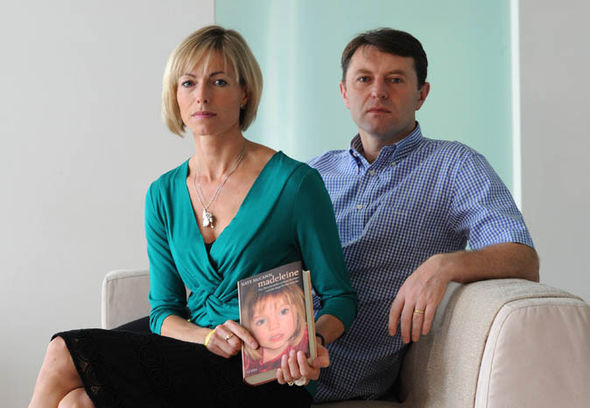
In the Ramsey case, both parents were suspects and both parents wrote a book to “set the record straight.”  In the McCann case both parents were suspects at one time, but it was Kate McCann – the more media shy of the couple – who elected to tell her story.
7

In the spirit of two suspects and two sides to a story, the DOUBT narrative is a two [possibly three] part series.  The second narrative interrogates the events and players crucial to what happened on May 3rd in sharp detail. The second narrative attempts to provide a cogent scenario for who, why and when Madeleine was killed, and what happened to her remains. The second narrative also deals more particularly with Gerry and Kate.

The ambit of this narrative is to briefly introduce the characters involved [such as the Tapas 9], to contextualize the massive media coverage, to meticulously locate the case on a beach in Southern Portugal and to resolve the greatest mystery of all bedevilling this case: the motive surrounding Madeleine’s death.

If Madeleine did die, how was her death and disposal covered up?  The Ramsey case provides, I believe, very useful reference material in terms of the first part of that question.  Some elements of the second are also there. However, what isn’t found in reference cases is part of the unique terrain of this case and we make no bones about it, these are very difficult areas to intuit and interrogate.  It can be done but requires precision analysis, absolute concentration and an absorption of all the available data.  All of these then feed into an attempt to try to interrogate a compelling psychology
surrounding the disposal of one’s child, if that is what happened.

Part of how we intend to achieve this is by trying to understand the McCanns themselves.  This discussion spans both narratives, but starts off with a broader focus which becomes more targeted and more surgical as the narrative progresses. Although we begin with a particular end in mind, we must let the evidence and the actors guide us.  The difficult part is deciding what to use to guide you and what to discard as mischievous malingering.

What is DOUBT?

Why DOUBT?

DOUBT is like a raven that doesn’t belong in a cloudy sky. It flies low over tawny terrain and crawling, baby blue waters of the North Atlantic. Like a black dagger cutting across white limestone, it searches across many paths for the true story of a solitary little girl.  The path to the doctors’ daughter requires a bold line of inquiry, so how about this:

What if the whole world thought Madeleine McCann was missing when she was never abducted to begin with?

What if Madeleine was murdered?

This book occupies itself primarily with the first question.


*Common cause is also known as a “shared purpose.”  In the legal sense it is the set of facts agreed on by both the prosecution and defense.

**On September 7th 2007 the McCanns were formally identified as suspects in their daughter’s disappearance. They were accused by police of killing Madeleine, hiding her for several weeks and then secretly disposing of Madeleine’s body.

***High-profile cases involving more than one prime suspect include the JonBenét Ramsey case, the Amanda Knox case, Steven Avery and the West Memphis Three. Ultimately the prosecution, or prosecution failures, in all these cases were arguably far from adequate.


The first installment of DOUBT will be available on Amazon in May

best version

shakedowntitle.com

Where were you when Madeleine was reported Missing?

The onset of the McCann case predates my work as a true crime author by about seven years.  When I first heard about it I was in the process of quitting my job as a Data Team Lead at a large pharmaceutical company, moving north and working in a new field – the media.

Press 2

The media played an enormous role in publicizing the McCann case. One cannot and should not interrogate the McCann narrative without acknowledging the media as a sort of partner at best, co-conspirator at worst.

As a key player in the narrative, the McCanns became the main source of the narrative [in Britain], and if the media shaped the narrative so did the McCanns.

The part that is easy to miss is that the arch narrative also shaped many of the other players, not least of all, Madeleine herself.  Madeleine, despite her cause trumpeted far and wide, is still missing.  But was she really missing to begin with?* Is Madeleine still alive and still missing, or neither?

To understand the scale and scope of the impact of the McCanns on Britain, we need to examine the McCanns and the media.  In 2007 the media landscape was in flux. A powerful ongoing narrative like the McCann case helped the media find its feet and find its direction.  The irony is in learning to tell the McCann’s story across brand new platforms the media also proved how effectively it could be used as a tool for “post-truth.”

As a Communications Specialist in the country’s second largest media house in Johannesburg, South Africa, I’d be a worker bee inside a buzzing open plan newsroom. Yet certain aspects in the new role were the same as the old one – to filter through data, to determine statistical trends and relationships, and to effectively map and communicate these. The goal was to understand which news stories were gaining traction and why they resonated with audiences, and to use this data to build the media brand and improve our advertising income.

It was an exciting time, although a stressful time for media houses worldwide.  Newspapers had to deal with a strange new player to the media landscape – digital media – and they didn’t quite know what to make of it.  Some ignored the online dimension as a passing fad while circulations plunged.  Others – like Times Media** where I worked – tried to do something with it.  And social media, well that was a brand new peripheral thing that the mainstream media were even more in the dark about.  My boss, until very late in the game, didn’t know about Twitter and when she did hear about it, wasn’t convinced there was any point to it.  Even less, how an online news service might use it.

By car, I was around 13 461 km [8364.5 miles] away, give or take, from Rothley, in Leicester which is where the McCanns were based from September onwards.  And yet the case often made headlines on my side of the world.

I recall at the time I couldn’t make up my mind what had happened to Madeleine, one way or the other. All of it was pretty confusing.  There didn’t seem much more to go on at the time other than the expressions of the parents.  Did they look like they were involved in their daughter’s death or disappearance, or didn’t they?

Kate and Gerry

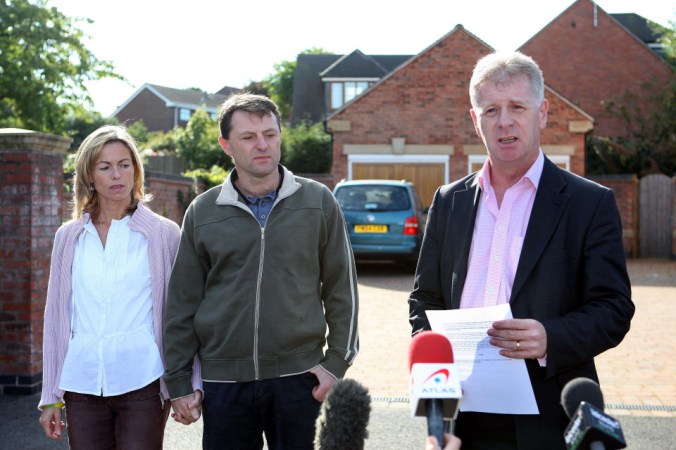
The first time I saw the McCanns they were on television standing outside their home looking rather glum while they had someone else speaking entirely on their behalf.  I thought it a little odd, and I also thought the fellow representing them seemed a little odd.  He seemed to really enjoy reading and conveying his message, and although he conveyed it well, it seemed…I don’t know…too well conveyed.

13

The couple standing alongside didn’t seem emotional one way or the other; if anything they seemed faintly annoyed.  Surely when the media come to your door [apparently at your request], it’s a chance to make an appeal for someone you care about and a chance to make that appeal with all your heart.  So why weren’t they?

I didn’t know then that various appeals had already been made at other times especially between May and August.  I didn’t know then about the many special events dreamed up by the McCanns or the saturation of media coverage, such as the balloon releases on the 50 day and 100 day anniversaries of Madeleine’s abduction.  I didn’t know then what was circling endlessly in the British tabloid media.  All I knew was that announcement I saw in September of three people standing in front of the house seemed stilted and charming at the same time.  In other words a bit off.

But then the tides of time swept me one way and the McCanns another.  Now it’s 2017, and we’re at the ten year anniversary of poor Madeleine’s departure from this Earth.  Yes, I believe Madeleine is dead, not simply “disappeared” and even less “abducted.”  DOUBT will attempt to explain why that is, even though her parents have steadfastly*** claimed the opposite, and still do even today.


*Madeleine McCann was reported missing at 22:40 by an emergency call to police.

**Times Media in South Africa is related to Britain’s Times.

***On rare occasions in mid-July 2007 Kate McCann implied that she believed Madeleine was dead.


DOUBT will be available on Amazon in May

best version

shakedowntitle.com

Levi Page interviews The Craven Silence authors March 2017

In The Craven Silence the authors have burrowed behind Boulder’s chummy bureaucracy in search of not one murderer, but several…


The Craven Silence is available on Amazon


Suppression of Burke Ramsey as a Suspect

During a hearing yesterday, March 8th, for Burke’s $150M civil suit against Dr. Werner Spitz, Lin Wood said he doesn’t understand why Spitz would point the finger at Burke when nobody else has been speaking about Burke’s culpability for years.

“I know that since 1998, 1999 [when Wood, on behalf of the Ramseys, sued several parties], not a single member of the mainstream media or the tabloid media have ever accused this boy of killing his sister again.” – Lin Wood, attorney for Burke Ramsey

3

Based on our research, that’s simply not true…

November 5, 1999, Court TV 

1999: New York Post 

1999: The Star 

1999: New York Post 

2001: Daily Camera

2001: Daily Camera 

2003: Fox News [Burke Ramsey named a defendant]

2010: Daily Mail 

2010: CBS 

2010: CNN 

2012: The Daily Mail 

2012: Huffington Post 

2012: Fox News 

2013: CNN 

2016: News.com.au

In addition, if Kolar’s book, published in 2012 is considered source material for the 2016 CBS show implicating Burke Ramsey, and Wood describes it as such, and Kolar himself appeared on the show which purported a Burke Did It Theory, then all coverage promoting Kolar’s book in the mainstream media including in the Huffington Post is further evidence of coverage in the mainstream media, with either direct or tacit reference to Burke Ramsey’s potential involvement.

shakedowntitle.com

Where to buy sequin star: 2007-2012

The second installment of the sequin star trilogy has arrived!  We will not be selling it on Amazon, our usual selling platform.

How can you get a copy of sequin star: 2007-2012?

Purchase a PDF version of the book.  All of our hyperlinks will still be functional.  On the top right sidebar of the #Shakedown site is a yellow “Buy Now” button.  Click the yellow button and follow the steps to purchase.buynowbuttonUpon completion of payment, the system will generate a blue “Return to Merchant” button.  Click that blue button and you’ll be taken directly to the PDF document, which you can then download to your device.return-to-merchant

If you have any issues with the download, please contact:  juror_13@yahoo.com

We value your loyalty and your opinions, and would love to hear from you.  If you’ve read our narratives, please take a moment to visit Amazon and leave a review.   Your feedback makes a world of difference.  Thank you!

1-fullscreen-capture-20161107-021024-pm

Is the Ramsey case unsolvable? What kind of alchemy is required to dig up new revelations decades after the JonBenét Ramsey case went cold? 

In the second Sequin Star narrative, the authors seek to build a brand new psychological case from the ground up.  They burrow deep through the darkest vestiges of the criminal archive and hold the Ramsey Intruder Theory up against real cases involving real intruders, like the Karla Brown murder and sexual assault from 1978.

The authors also test a myriad of inconsistencies in the Ramseys’ ever-evolving narrative. Why do they exist? What are these irksome inconsistencies covering up so many years later?

In addition to timeline critical events spanning 2007 – 2012, the second Sequin Star also interrogates:

–              Lighting inside the Ramsey home on the night of the murder

–              The northern neighbor Scott Gibbons’ eyewitness testimony

–              The Broken Playroom door

–              The flight itinerary of N2059W, John Ramsey’s personal plane

–              John Douglas’ profile of the killer

–              The Ramseys’ attitude to the media during the maturing phase of their saga

The narrator, investigative photojournalist Nick van der Leek, examines the Ramsey case file through the fiery psychological shafts of grief.  He masterfully casts over endless evidentiary fluff, revealing tangibles buried deep within the 20-year-old Ramsey canon.

Lisa Wilson, an L.A. based true crime researcher, meticulously assimilates and filters all available information to synthesize, from the cloud, the most cogent counter narrative yet.

“The second narrative in this series is solid,” Wilson says. “It expands on the theory of the first in many ways we didn’t expect, and neither will the reader.”

By applying an arsenal of modern investigative techniques, the authors have crystallized the unspoken horror haunting the Ramsey case in the starkest terms to date.  So many words.  So many years.  So much time and life lost.  What can be salvaged from the ashes of one little girl’s life?

shakedowntitle.com

star4


Excerpt #2 from sequin star #JonBenetRamsey

From the chapter…

Sexual Deviant or Just Deviant

Crimes and criminals, devils and deviants will always defeat logical inquiry, they will sidestep our attempts at nailing down forensics.  All can be covered-up, all can be concealed but never the cogent psychology it springs from, even when that psychology is evil incarnate.

It’s interesting that a week after JonBenét’s murder John’s reinforcing [on CNN] the assumption that there was a kidnapping, and he does so by invoking the note.  What’s also worth noting is Patsy’s response to the question.  Interviewer, Brian Cabell has asked John whether he thinks a kidnapping is the “wrong assumption” and John, invoking the note, seems to suggest that no, the idea of a kidnapping still makes sense.  What does Patsy think?  Is the kidnapping a wrong assumption?

From cnn.com:

PATSY [shaking her head]: It don’t sound like kidnapping to me. [John shoots Patsy a dark look].

JOHN: I guess that’s what concerns me because if we don’t have the full resources of all the law enforcement community on this case, I am going to be very upset.

It’s amazing how John already associates the idea of his concern with police resources around his assumption that it’s a kidnapping.  Isn’t this John already hedging an outcome where the police don’t think it’s a kidnapping, and John can then say, see, it’s because of the poor resources involved in this case.

The point is, a week after JonBenét’s murder, John’s focus is on defining the crime as a kidnapping.  There’s zero mention of “strangling” or of a “garrotte” or that JonBenét was tied up. There’s also zero mention of JonBenét’s head injury; that Little Miss Christmas was bludgeoned.

Meanwhile, the same day the Ramseys took CNN into their confidence, Boulder’s Daily Camera confirmed what they knew.

From dailycamera.com:

  • A handwritten ransom note was found at the house requesting $118,000.
  • Between 1:30 and 2 p.m. Thursday, an undisclosed family member found JonBenét’s body in the basement. Police ruled the death a homicide.
  • The autopsy revealed that JonBenét had been strangled.
  • There were no signs of a break-in at the house.
  • Many people – including multiple housekeepers, gardeners, caterers and a landscaper – had keys to the house.
  • Police collected blood, hair and handwriting samples from John Ramsey and his children. No samples were collected from Patsy Ramsey.
  • John Ramsey hired Denver criminal lawyer Bryan Morgan.

Now it’s clear early on that television audiences would have been aware of the kidnapping aspect, while readers of the local newspapers ought to have known JonBenét was strangled to death.

Steve Thomas presciently observes in his book, when he first learned of the crime at night over the radio while driving from Denver with his wife, he wondered why the kidnapper would leave a dead body behind when he could still get the ransom?  The Lindbergh case is a case in point where precisely this happened.  Why go to the trouble to break in, abduct, write your note but then leave the most vital part behind after she’s been immobilized?

Jumping ahead to the Ramseys’ second press conference on May 1st, 1997, the words: “kidnapping,” “abduction,” and “strangled” are now entirely absent from the Ramsey narrative.  What are present for the first time are the words “sexually molested” and John is…..

sequin star interrogates sixteen years of ‘post-truth’ surrounding the unsolved case.  This first narrative of the trilogy spans nine lawsuits, two books, John’s first political campaign and the circumstances surrounding Patsy’s death.  It also interrogates the psychological fabric holding these “sequins” together.

Available on Amazon

1-fullscreen-capture-20161107-020707-pm

shakedowntitle.com

An Excerpt from sequin star #JonBenetRamsey

From the chapter…

Mary, Mary Quite Contrary

 Deputy D.A. Mary Keenan said the body language of John and Patsy wasn’t suggestive of deception, and that men were not in a position to judge Patsy Ramsey’s demeanor. — Steve Thomas

What we see with Keenan is a logical psychology [a history of criminal behavior is logical] but it’s not applied with logical intuition.  Instead she leaps impulsively to suspects who suit her theory. She makes the same impulsive leaps in her intuitions because the original logic isn’t tied to the genuine fabric of the family dynamic.  McReynolds and Karr are two of the most implausible suspects for absolutely logical reasons, but Keenan is too blinded by her beliefs to appreciate this.

It makes me wonder to what extent the driving forces of this case are cancer and Christianity.  Lou Smit’s wife died of cancer and so eventually did Lou.  This coupled with Lou’s Christianity and the Ramseys’ Christianity set the stage for a marriage between investigator and suspect made in heaven [or perhaps instead of heaven, the safe haven of the District Attorney’s office, who knows?]

Were these same forces – driven by personal circumstances and personal belief – not driving the psychology of this case for people like Keenan?

From websleuths.com:

When [Hunter] left, Mary Lacy took over, and she was even worse. At least–according to Henry Lee and ST–Hunter would hear all sides. Lacy was like Paul Simon’s Boxer: hears what she wants to hear and disregards the rest. She refused to even SPEAK to the investigators who worked on the case during Hunter’s tenure. She made up her mind from Day One that since the Ramsey’s didn’t fit the standard profile, they couldn’t have done this.

She sounds a little like Lou Smit, right? Lou soon became a lone ranger on the case, and an outspoken one, and Keenan, in her own way, did the same.

If there’s any case where one’s own biases are going to transfer into how one sees the case it’s this one.  What’s our relationship like with our own family, with siblings, with our mother, our father, with strangers, with friends?  Those individual experiences will tend to inform our intuitions, but is that intuition coming from the case or from us?

“This is not a greenhorn…”

From forumsforjustice.org:

Coffman said, “At least from what she told me about it, she was basing her opinion on the Ramseys’ innocence on the fact that they don’t fit the profile of murdering parents. This would have been the summer of 2000 that I talked to her.”

Again, I think one has to be careful fitting the profile to the crime.  There’s a difference between a profile for a murderer and an accessory.  What is the profile for someone who habitually covers up?  What is the profile for someone who dresses up, choreographs, and manages a scene and a narrative in a certain way?  Does this profile of pageantry and “controlling the narrative” fit the parents?

But if Keenan grew reticent late in the game, that wasn’t always so.

From forumsforjustice.org:

Keenan… joined the Boulder prosecutors’ office in 1983 [and] was far from a silent bystander in the early stages of the investigation.

Over the course of three days from June 22 to June 24 in 1998 – following a major presentation by Boulder detectives to the district attorney’s office but before Hunter’s announcement that he would take the case to the grand jury – the Ramseys submitted to a second round of interrogations. Keenan made an impression on investigators at that time.

Because the Ramseys distrusted Boulder police – who they believed were fixated on them as suspects – John Ramsey was interrogated by veteran El Paso County homicide investigator Lou Smit and grand jury specialist Michael Kane, while Patsy was grilled by Denver district attorney’s investigator Tom Haney and Boulder prosecutor Trip DeMuth.

All interviews were videotaped and every few hours, completed tapes were transported from the Broomfield Police Department – where the interviews were conducted to avoid media attention – to Boulder, where they were studied by Boulder detectives and prosecutors, including then-Deputy District Attorney Keenan.

And so Keenan herself studied the interrogations [just as we have], and what did the smart, tough, practical prosecutor make of her careful study of the Ramseys? ….

Read more in sequin star now available on Amazon Kindle

shakedowntitle.com

JonBenet Ramsey Case: A Question About Lights

In the time between Officer French’s arrival at 6am and JonBenet’s body being found around 1pm, we know of four people (other than John Ramsey) that entered the basement: 1. Officer Reichenbach 2. Officer French 3. Fleet White and 4. Officer Weiss (to photograph)

French’s Report:  Page 3  Page 4  Page 5  Page 6

The lights were on when Fleet White searched the basement.

Who turned on the basement light?

shakedowntitle.com


2016 was good to us

#Shakedown will continue working hard to unravel some of the highest-profile crimes in the world in 2017.

Nick and I started this venture into true crime writing in 2014 as two curious people on opposite ends of the planet trying to figure out who the other Oscar Pistorius was; not the one burbling in court, the other one.

In three years we’ve written thirteen books to that end, eight covering the trial as it unfolded, two covering the appeal [which we both attended] and three covering the sentencing [which Nick attended]. Did we succeed in exposing the Other Oscar?

In 2017 Nick will appear in a documentary that covers the unanswered questions that still linger in that case.  Unanswered questions are our specialty.  We believe with enough resolve, all can be brought to light.

What has surprised us as authors is just how much information is buried in plain sight, and further, how much more can be found when one scratches just below the surface.

We believe we’ve found a golden thread where many other narratives either simply rehash news stories or get lost in minutiae, or simply go off track following a tangent to its illogical conclusion.

“There is nothing worse for the lying soul, than the mirror of reality”..Steve Maraboli… The White Horse trilogy, (written with penetrating insight by Nick and Lisa) explodes into our consciousness revealing the reality of the tangled web of lies that remained after the trial of Oscar Pistorius … This tragedy is truly a mirror, blinding in its fractured and splintered reflections revealing the emptiness behind a mask… Brilliant!

In an incredibly short span of time, people from around the world have found value in our deep drilling interrogations.  Our aim has been to create authentic narratives, and to go further than the definitive accounts do in uncovering powerful insights and exposing the clear psychological patterns driving these cases.

Where others concede defeat, do we come up with brand new explanations that integrate all the data in a credible fashion?  Our readers have quickly become just as obsessed as we are with our thorough interrogations, and as a result, our work has been all consuming. It consumes our energies and our readers quickly become addicted to the “no holds barred” quality of it.


Our 20 highlights from 2016:

  1. #Shakedown published 18 books this year covering the cases of:  Steven Avery, OJ Simpson, Oscar Pistorius and JonBenét Ramsey.
  2. Nick added three more books to his popular series of mountain narratives with the release of Neverest II and III, as well as his narrative focusing on the tragedy at K I I.
  3. By March, our books regularly started making the bestsellers list.
  4. Juice, published on March 6, was a #1 bestseller consistently for more than 4 weeks straight.
  5. Ten of our books would go on to be #1 bestsellers by the end of 2016.
  6. On May 20, #Shakedown launched its website.
  7. On June 17, only one month later, we got 41,334 hits in a single day.   The story that inspired so many people to visit our site was the publishing of Reeva Steenkamp’s crime scene photos.  On June 16, Barry Steenkamp, Reeva’s father, pleaded with Judge Masipa to let the world see what Oscar had done to her.  He asked, we answered, and the world responded.
  8. Nick spent three days at the High Court in Pretoria for Oscar’s sentencing.  While there, Nick met privately with Gerrie Nel and Andrea Johnson to provide a tip. He also had a chance to briefly reunite with Barry and June.   From that experience, three additional Oscar narratives titled White Horse were conceived.
  9. Also in June, we collaborated with Beth Karas regarding Oscar’s manipulation of the crime scene.  That interview achieved over 1,000 views in just a few short days.
  10. Beth would join us again in the fall for a discussion about JonBenét Ramsey.
  11. Additional interviews and podcasts included discussions with Leonard Carr, Dr. Lillian Glass and the Mollett brothers.
  12. After months of research, on September 13, we published our first book on JonBenét titled The Craven Silence.
  13. Three weeks later, on October 5, the top news site in Australia interviewed us about our work on the JonBenét case.  Their article was then picked up by numerous other sites not only in Australia but also in New Zealand and parts of Europe.
  14. Since that time, we’ve published two complete trilogies on America’s most famous unsolved case – a total of six books with three more in the pipeline.   For both Nick and I, this case has been by far the most challenging, most emotionally draining, and rewarding thus far  In 2017, we’ll be visiting Boulder to bring you more on this story.
  15. Smack dab in the middle of our JonBenét work, Nick was approached by a producer he’d met in Pretoria back in June.  That producer will soon be completing a documentary about Oscar.
  16. Of the eighteen books published this year, two I haven’t mentioned yet are Nick’s solo works:  Hot Water, the story of Michael Phelps, and White Privilege, a fascinating and scathing interrogation of race in South Africa.
  17. To date, our most reviewed books are Deceit [67], Neverest [45], Audacity [44], Dark Matter [28], Fool’s Paradise [18] and The Craven Silence [18].  Recidivist Acts, which was an assemblage of both published and unpublished investigative magazine and newspaper articles covering Oscar Pistorius, has the highest average review rating of 4.8/5.
  18. On December 18th we reached a new milestone in Kindle pages read in a single day – 9964 pages read over a 24 hour period.
  19. Nick also signed an exclusive publishing contract for his Bloodline fantasy fiction in November 2016 with an American publisher.
  20. I’ll leave you with one more statistic.  I’m sure our loyal readers will appreciate this one.  The book that wins the award for most F-bombs goes to Juice.  Nick and I tore it up with a whopping 47!

We have a lot of really exciting stuff planned for you in 2017.  In addition to our continued narratives on JonBenét, Oscar and OJ, we’ll be tackling the upcoming murder trial of Robert Durst. robert-durst

Durst will be in court in Los Angeles early in the year, while CBS slugs it out in an epic $750 million lawsuit against Burke Ramsey.  The cases of Oscar Pistorius and Steven Avery are still ongoing.  And what is Jodi Arias up to?

If there are books you want to read that we haven’t written yet, leave a comment and perhaps we’ll bump some up or down the schedule based on your feedback.

A good year starts with a commitment from all of us to simply be better. Things change gradually and along a prescribed continuum.

Goodness –> Greatness –> Great Balls of Fire!

We hope our work continues to inspire you wherever you are on your road to greatness.

shakedowntitle.com

flashlight-in-woods

Deconstructing the Ramseys’ Tapestry

The following is a deconstruction of just one of many key fragments from the JonBenét Ramsey canon.  It’s the Ramseys’ account of events on Christmas day in their own words.  What we’re analyzing here is a cut-out from a carefully woven tapestry. We want to study this cut-out in-depth. We want to look at what is left in, what is left out, what is under-emphasized, what is over-emphasized, what’s distorted, what’s embellished? 

 The First Words Spoken

 The first words spoken in the Ramsey narrative come from JonBenét.  She tells her parents to “wake up” because it’s Christmas.  The next to speak is Burke.  His words are “we gotta see what Santa brought” and “hurry up.
I find the chronology and the quotes telling.  Burke is mentioned first, perhaps because he is the older brother, but he doesn’t say anything first.  We know from previous narratives that Burke was awake before anyone else, even JonBenét and evidently the most excited when it came to Christmas time.  We also know from Burke’s own words on Dr. Phil in 2016 that Christmas was such a big deal for him he crept downstairs later that same night to play with a toy. On Dr. Phil Burke describes his almost ten year old self that Christmas as “super-excited.”
In addition, in the Ramseys’ account they allude to Christmas 1996 being a much better year because the kids had waited this time to rouse them.  In Burke’s interview with Detective Schuler in 1998, he reveals his parents had given he and JonBenét a specific time that it was okay to wake them.  Even though he and JonBenét were awake before that time, they played in his bedroom while they waited.
The point is, I don’t think JonBenét speaks first, and I don’t think it’s JonBenét who rouses the Ramseys. Curiously on the first page of their account, John refers to his own childhood and his inability to wait for Christmas.  He puts the wait for Christmas and the wait for the signal to begin unwrapping presents as follows:

“I couldn’t stand all that waiting then.”

Did Burke inherit this particular trait in this particular context, an inability to delay Christmas gratification, from his dad?
In the context of the crime isn’t it ironic that the child that would lie dead in the home would also urge the family to “wake up?” 
jonbenet-star
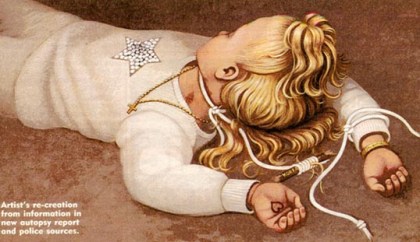
The child with the sequin star on her chest would lie for six hours overnight in the basement, seven hours with the police present, and another seven hours on the very carpet under the Christmas tree where they’d celebrated Christmas hours earlier.  In this context of an immobile person, this admonition to “wake up” is telling.
And still keeping in mind the context of this case, the interminable wait for the body to be discovered, there’s also Burke words, the nagging need to “hurry up” and “[someone’s] gotta see [something].”

Coming this year…

shakedowntitle.com