It’s fascinating sitting in on the Van Breda trial, and then juxtaposing the court room strategies of that defence team with the Rohde trial. There are so many parallels to draw. These parallels show that there is a clear formula for defending these sorts of cases, and the formula is used because it works. Well, it has worked. It doesn’t always work.
In this blog I want to shed some light on the formula, enumerating some of these strategies and then dealing with them one by one. This is good stuff to know when one watches other court cases, and one can then see the wood for the trees, and see the overall game that is being played, rather than becoming bogged down in particular elements of a day’s testimony.
Just as the Van Breda case is basically indefensible, and yet the accused threw millions into his trial [R9 million apparently], the exact same circumstance applies here. Both defence teams have pleaded poverty at one point, and yet both have continued a long and hard fight going on for countless court days.
In my opinion, Jason Rohde’s so-called defence is just as absurd as Henri’s laughing pair of balaclava-clad intruders [who forgot to steal anything, forgot to leave any trace of themselves, and forgot to kill him]. But as absurd as Rohde’s defence is, it’s not that easy to dismiss in court, because there are some compelling reasons that show Susan Rohde was deeply compromised psychologically at the time of her death. She was desperately unhappy, losing weight, not sleeping well, and in Dr. Dr. Larissa Panieri-Peter’s opinion, “vulnerable” to suicide. I happen to agree with that assessment.
On the other hand, in any situation that is fraught, one could argue that someone is – generally speaking – “more vulnerable”. One wonders why an expert is necessary to make such a self-evident “assessment” in the first place.
It’s a pity Dr Peter didn’t do what the court needed her to do, which was simply to provide her opinion on Susan’s and Jason’s state’s of mind. In fairness to her, I don’t think that’s what Van der Spuy wanted from her – I think he wanted to hand the prosecution another mountain of testimony to disentangle.
From a narrative perspective, Dr Peter’s testimony was gold. She provided a lot of insight, and a lot of additional glimpses into Susan’s inner world. Just one aspect that I’d been wondering about, that was vital, was the amount of sleep and other medications Susan had been prescribed. This was important to know, because the more obvious way to commit suicide, especially in a hotel setting, would have been to overdose on sleeping pills. Painless, soundless, easy, and not a completely unusual sensation [the medication, and the method of taking it].
I’m sure there’s literature showing a correlation between wealthy women who commit suicide in hotels, and drug overdoses, certainly a much higher correlation than suicide from hanging. I’ve done a little cursory research on this point. The trouble is, hanging is such a common method of suicide because it’s cheap. So one has to factor out the lower LSM’s to filter in the apposite comparison.
It’s up to the prosecutor to demonstrate why it is more reasonably possibly true that murder was committed here, than suicide. One of the major hurdles he faces along the way, is the question that automatically arises if you accept Susan Rohde was murdered:
Would anyone be that brazen to commit murder in a public place, at a convention no less?
The real key to answering that question is around the word “anyone”. Jason Rohde wasn’t just “anyone”. So the answer to the question, tentatively, is that almost anyone [or everyone] wouldn’t be so bold to commit a crime in similar circumstances. It’s the job of the prosecutor so show why Jason Rohde is the exception in this regard. Not necessarily easy, but Rohde’s job proving his wife committed suicide, in terms of the hair iron and the door, hasn’t been easy either.
The prosecutor must not only demonstrate why his version is reasonably possibly true, but that the accused’s is improbable. It does feel improbable, but proving it’s improbable can be a sticky business. One has to have one’s wits about you, one’s eye on the ball and one has to stay on the ball.
Let’s spend a little time examining the strategy of Rohde’s defence thus far. It started with Rohde himself on the stand, then it was Dr Perumal’s turn, and recently, Dr. Panieri-Peter’s testimony. There was a point yesterday, during her testimony, that I felt the tide was turning in the defence’s favor. Dr. Peter was creating reasonable doubt. The fact that Susan Rohde was suffering from chronic lack of sleep was an important factor, along with some of her own words about her condition, even if those were conveyed second and third-hand. But there was another aspect that was a growing problem for the prosecution, and that was the growing mountain of “evidence” Van Niekerk was now having to deal with. This is #1 in Defence Strategy 101.
DROWN THE PROSECUTION IN A DELUGE OF INFORMATION
The job of the defence team is actually quite simple and easy – raise reasonable doubt. What one sees time and time again in high-profile cases that seem to be cut and dried slamdunks, is an effort to burden the court with mountains of information.
No matter how strong a prosecutor’s case, if the defence comes along and slows down, weighs down a court, the momentum shifts. Sheer fatigue can cause a sense of conviction to be diluted. As more and more information is fielded in court, a certain amount of amnesia sets in, where one begins to simply forget about other witnesses, and other testimonies.
Dr. Perumal’s testimony went on for so long, the prosecutor asked for two weeks in order to prepare his cross-examination. That’s the other aspect. Even if the defence case is a mess, even if a lot of the evidence is bogus and can be disproved one nitpick at a time, the risk is that the court’s patience – and attention – become’s exhausted. If it goes long for long enough, a poor Judge [or jury] may become inattentive, or worse, disinterested. Then, in that crack, the defence can sow the seed of reasonable doubt.
The good news, in both the Van Breda and Rohde cases, is that the Judge’s involved are savvy and strong. I’m not sure that was the case in the Pistorius trial, where the Judge seemed intimidated by the high-profile nature of the case, and possibly struggled to keep up with subtle legal arguments around intentionality, witness accounts and what-not.
I’ve sat in on both these cases, and both these Judges are very assertive. This morning we saw Judge Gayaat Salie-Hlophe cross swords with the defence advocate, and despite his bellicose response, the Judge dug in her heels, showing grace under fire, and a lot less pique than Van der Spuy.
Having Dr. Peter’s testimony thrown out – all of it – has not only been a massive write-off in terms of the evidentiary aspect to the defence case, but it’s cost a lot of money too. It’s a huge bonus to the prosecution, this state of affairs, because it means Van Niekerk no longer has to spend days and nights analysing a 42 page report, and while trying to deal with that, frantically trying to get on top of his cross-examination of Dr. Perumal.
2. WHATEVER YOU DO, HAVE A VERSION HANDY
Another key defence tactic is simply to have a possible alternative version handy. All the defence has to prove is that this version is reasonable and possible. And Susan’s suicide seems, at face value, to be both.
The same applies to all other legal issues that arise. Have a version handy. Digging deeper, I’m not sure the suicide narrative is either reasonable or possible. It’s a staggering thought – that Rohde potentially staged his wife death, and did so quite shabbily. The more one examines the testimony around the hair iron noose-lasso-knot, the more it sounds improbable even to reconstruct.
3. PLEAD POVERTY
When the prosecution fields its case, the defence team can object to its scale and scope, by claiming financial constraints. This is a bid to influence the prosecution to curb its enthusiasm and make its own job much easier.
4. TIMING IS EVERYTHING
Both legal counsels are sparring with one another in the court room, trying to outfox one another. In some courts, Judge’s aren’t so lenient to grant adjournments, and so an advocate will try to release his witness at the end of a day, when his opponent is least fresh. We haven’t seen much of that in this court, however.
I don’t think it was an accident that the Van Breda case was finalised [dragged out would be another way of putting it] so that both the verdict and sentencing fell inside Ramadan, a period in which the Judge’s energy resources would have been less than usual.
5. ALL EYES ON THE MONEY TRAIN
We are at about Day 46 [give or take a day], which means this is already a very expensive trial for an unemployed man. Rohde is worth about R30 million, and has tried to liquidate the R10 million home shared by him and his wife. I’m not sure whether he’s succeeded in that, the Rohde story is a very fine thread weaving in and out of the media narrative, and sometimes it’s there but difficult to find. The Sunday Times provided the following insight in November 2017:
In the Rapport newspaper, in June 2018, Julian Jansen described Rohde “getting money” in Afrikaans, but described the circumstances as broekskeur. It means feeling the pinch, although the word literally translates to the more descriptive “pants tearing”.
According to Jansen, Rohde has made urgent applications against the executors of his wife’s inheritance, to force them to pay him more than R1.7 million. At the time, Rohde had blown R3.4 million on trial costs, and owed [or owes] an additional R2.5 million. That sounds about right given the budget for Henri van Breda’s 70 Day court case, given Rohde is more than halfway to that number.
The Bryanstan home eventually sold for R7.7 million. Rohde is looking to get his hands on those millions, even though the house is in his wife’s name. Rohde still owns another home in Plettenberg Bay, which he has offered as security in the event he is found guilt. It’s a tricky situation, he is liquidating his wife’s assets in order to plead his case against her, why he didn’t murder her, similar to the Van Breda set-up. One would think the law would be a lot more rigorous in keeping bloody paws off money not earned by the murder accused.
According to Jansen, Rohde also tried to borrow R400 000 from a friend, but that feel through. The disposal of the original home of a murder accused is typical in these high-profile cases, and invariably, these properties end up having very sad narratives of their own, as their values spiral downwards, forever tied to the fate of the former occupants.
In my book investigating the “suicide” of Rebecca Zahau, one of the most valuable and famous properties in San Diego, the Spreckels Mansion, suddenly faced the same curse – depreciating value. The same happened with John Ramsey’s home in boulder, and the unfortunate holiday apartment – 5A – in which 3-year-old Madeleine McCann disappeared. Eventually the whole holiday resort shut down, and after that, tourism to Praia da Luz suffered a gut punch.
6. THE PR ASPECT
I’m not going to go into this in too much detail, except to say Rohde – as a businessman – was very aware of the PR-disaster aspect of being accused of murdering his wife. The defence has the advantage in that they can leak their side of the story to the press. If the prosecution does this, especially the police, this can compromise their case. It’s somewhat one-sided then, the way the defence can influence the media narrative, while the prosecution needs to tow the line to a higher set of standards.
Like many high-profile murder accused, he hired a PR team. I’ve been looking to verify that in the media, but as of right now, I can’t find anything. If any of you do, please send them through. It’s not clear what’s happened to them [the PR team], but it’s likely Rohde is painfully aware of what’s being written about him in the newspapers and on social media.
To illustrate this, during one adjournment, I headed downstairs in time to see Mr Rohde emerging from the men’s room still studying his phone intently. It’s likely murder accused are advised against looking at their phones in court, something that is easy for the rest of us to overlook. When no one’s looking, what is the first thing they’re likely to do?
7. EXPECT AN APPEAL
Invariably the public grow very impatient as they become voyeurs to these court cases. A familiar refrain, even on the day of a verdict or sentencing, is why it’s taking so long, and when will it be over. The answer is, when the money runs out, or when the accused gets his way.
Next week Tuesday, when Van Niekerk’s cross-examines Dr. Perumal at length, expect fireworks.
Remember Gollum? He was an unearthly creature, the one that stole the show from all the Hobbitses, elves and orcs. We were amused most of all by Gollum, but we weren’t sure why. We have the same ghoulish fascination for Henri, and we aren’t sure why.
After 70 court days, the court that was called to prosecute Henri for his cold-blooded crimes, doesn’t know why either. Incredible as it sounds, it’s not the job of a court or the law to say why, only how, and with what.
Judge Desai, during his judgment, mentioned “clear intent” and almost immediately after “having no explanation.”
There is an explanation, and it’s clear as day it’s being hidden. It’s something Henri feels ashamed of, and the lack of remorse, the lack of any flicker of emotion, especially during sentencing, completely lines up with the Henri that’s been with us all along, since that weird-as-hell 25 minute emergency call. So what is Henri hiding?
To understand the psychology, to enter the ring of power, as it impacts the blood of young men, we must intuit the life of a 20-year-old. The libido, the hubris, the mood swings, the ambition, the idealism, the physical strength, the emotional weakness, the frustration and anger, the ego, the interplay with fantasy and reality, the spectrum upon which the individual finds himself in terms of social and sexual maturity. At 20-years-old, a man must answer the call to be a man, or hide from that call, cowering, like a coward. Sometimes boys who wish to leave the cave and become men feel especially humiliated during this time, and many feel that humiliation is deserved – because a bird must leave the nest in order to fly, and in order to relieve the burden on others.
Some families exert tight controls over their progeny. Sometimes the encouragement is too little, sometimes the cutting down to size, the bringing back to earth, is too much. It is the job of parents to give their children two things: one is roots, the other wings. Which did Henri have? My opinion is that he was too rooted, and for reasons I won’t go into here, wasn’t allowed to have his version of having wings. He got his wings, incidentally, after his family were dead. And Henri in court today seems satisfied with his decision. One has the impression, if he went back in time, he wouldn’t change anything.
I say Henri was too rooted for three main reasons. One, he was loafing around at home for months before the murders as it was. This is a stressful, fraught time for any man, to feel useless, directionless, inhibited, especially at this prime time in his life. Imagine being a first year student, and told to come home, and stay home, and basically find yourself grounded after you’ve tasted freedom.
For another, Henri wasn’t only at home, but he wasn’t applying himself. Although Judge Desai says Henri gave no explanation, he gave many indirect reasons for he was. He revealed what he was preoccupied with at the time of the slaughter – watching anime while the family was sleeping, playing games late at night on his phone, watching Star Trek on the family’s new theatre system, drinking rum and coke, walking the dog, smoking cigarettes that he had to hide in his shoes, and trying to engage with a girl [Bianca], only she seemed less interested in him than he was in her. In other words, Henri was a perfectly normal young man, except, from an extremely wealthy family, a high-performing bunch of perfectionists that brooked no truck with a Bart Simpson [give-up-don’t-try] attitude to life.
It’s that dodgy time in a man’s life where he’s part man, but still part boy. He doesn’t know who he is. He’s still discovering his power, still learning his lines, his moves, developing his charm, and finding where he fits in the pride of other young male lions. His parents are loosening the reins, and tightening them, and it’s not clear how much is right, either way.
And the female lions roaming somewhere out there are aware of the fluctuating status of the young male lion, just as they are painfully aware of their own status and desirability. A big part of being 20 is sex, and if you miss that boat, if your pride turns on you, you’re screwed, and not in a good way.
On the way to court this morning, many, many tweets were ringing in my sleep deprived frontal lobes. GUILTY! Lock him up and throw away the key. LWOP [life without parole].
On Day 70, I was the first journalist in court [for once], although many videographers were scuttling around setting up mikes. That moment when the court was quite bare, before 09:00, gave me a chance to reflect on the people I’d seen in front of me, telling their competing stories, for months on end.
A good prosecutor listens, and listens long and hard, which is what the Judge did in this case.
I don’t blame those who are unsympathetic to Henri. In fact, if anything, I blame those who are overly emotional about a triple axe murderer who shows no remorse. But if we are to deal in death and judgment, it should be with cool minds, it has to be a calculated punishment meant to extinguish, as far as possible, inextinguishable acts.
Since the interests of society have to be met, it’s important that society engages in the question of crime and punishment. What are the interests of society? What should they be? Is society even interested in what really happened? In my book, Diablo III I deal indepth with the cerebral subject of civilization, and how criminality tends to undermine our culture, and our civil society. It’s very valuable then, at moments like these, to take stock and decide what our society is, who we are in it, and what we want it to be if it’s not a society that serves our best interests.
Since the verdict two weeks ago, I’ve been angry with those who’ve expressed sympathy towards Henri, but in court this morning, as people ventured their suggestions for the appropriate punishment, I wondered about this scene from the Lord of the Rings. It’s worth watching a few times, to really ponder what it means to you, and how it relates to the Van Breda case.
GANDALF: Many that live deserve death. Many that die, deserve life. Can you give it to them, Frodo? Do not be too eager to deal in death and judgment. Even the very wise cannot see all ends.
In court today I had a long conversation with one of Henri’s uncles. It was especially long because the Judge was particularly late in arriving at court this morning. I won’t disclose what was discussed, but I looked at some old research in a new way, and saw some ideas confirmed, if only in the quietness of my own mind.
It seems to me, everyone looking at Henri doesn’t necessarily see Henri, they see what he wants them to see, or what he tells them, or they see themselves. Even his extended family don’t necessarily see the wood for the trees. So, seeing the real Henri – in effect, seeing Henri’s reality – is tricky. But that’s why he’s been lying, to obstruct not only justice, but exposure to the world for who he actually is. Not just an axe murderer…but something else that’s even worse in Henri’s mind…
What could be worse than for a young man to be condemned for being a triple axe murderer who bludgeoned his own family to death? How about for that young man to have his manhood challenged. Don’t laugh, being a man is a deadly serious business when you’re 20-years-old, not hitting par, while your older brother is the golden boy [man] winning every accolade, and deserving more pots of family treasure to buy bigger, gilded wings enabling him to flying even higher and shine brighter. Rudi, in this spiel, is one aspect, exposing Henri nor for what he is, but for what he isn’t. Rudi is finding his place in the sun, high in the sky, while Henri, rooted, is stuck in shadows and ashtrays, stuttering and stumbling, still trying to figure out his next step.
Yes, the sauve, handsome, well-brought up Henri from the De Zalze estate stutters. Over several years he’s mastered his stutter, but the stutter reveals something else Henri is trying very hard – like most teenagers and young men – not to acknowledge. His gnawing insecurity. His inadequacy. Throughout this trial, Henri has changed his appearance constantly.
What do we know about the Henri of January 2015, when the murders happened? Henri’s single. Henri drinks and smokes. Henri doesn’t have many friends. Henri’s a dropout. Henri’s trying to find Henri, and ironically enough, this trial helped him do that.
Which is also why Gollum, who also talks funny and looks funny, is such an attractive character to us. He is so obviously flawed, we feel both world’s apart from his decrepitude, and simultaneously we feel we understand – even enjoy [in the sense that we’re entertained by] Gollum’s teeth-grinding frustration.
We see Gollum evolve from a pathetic creature to a creature of some significance [although he remains doomed and pathetic]. Isn’t that the same thing going on with Henri? Isn’t that what fascinates us, but we’re not sure why. We’re not sure because it’s kind’ve uncomfortable to acknowledge. We don’t want to admit we’re anxious too. We sometimes dress ourselves up even though we’re cloaked in failure.
Henri had very, very few emotional moments in court. I sat in on all of his testimony. This was his most emotional moment on the stand:
In the narrow confines of this video, we have to wonder why Henri is so emotional. Is he emotional about his family. No. He’s referring to the fact of his family understanding him. Clearly, if he murdered them, they didn’t understand. And clearly wanting to be understood is a very emotional topic for Henri, as it is for most young people, especially young loners. Even now, the public, the media and the court, doesn’t understand Henri. We don’t know who he is, and he won’t tell us. So you can see why he had problems inside his own family.
Henri is crying, in the above clip, because he is acknowledging to himself, that his behaviour was “understandable”, or justifiable. Galloway is asking him almost inconsequential questions, but they get under his skin.
Why is he smoking in the house, when he may not. “They would have understood…” Galloway repeats Henri’s answer, but questions it. “They would have understood?” This inversion lies at the heart of this case. And on the stand, the inversion is unexpected, and forces Henri to reconsider the psychology, to remember that they didn’t – and wouldn’t – understood. When he does, he feels the same agony [which then gave rise to burning anger and hatred] rising in him again. What does he do? He calls an end to the questioning, showing, when he’s emotional, that he steps out and up and calls the shots when he feels it’s necessary.
Henri’s emotions draw him out of his shell, often with dire consequences [as is the case with so many young people who are untrained for the real world, and untested in terms of their attitudes and emotions].
In a much broader sense, we intuit Henri’s struggle for significance, and his battle against the entropy of failure and insignificance, even though he is doomed to fail in that battle. We share in that same struggle. Everyone alive now is battling, competing for significance. Not everyone gets it, and not everyone who gets it, keeps it.
On a daily basis, whether in traffic, or paying our taxes, when someone wastes our time, when some cubicle slave does something stupid with our information, we feel that murderous anger occasionally…and we let it pass.
Gollum, in the end, was consumed by his anger. That was his ring, his burden, to bear. Some people are consumed slowly by anger and bitterness. It may take a lifetime, or it may take a marriage. Or a bankruptcy. Or a job loss. That same anger, so salty it chokes you, consumed Henri.
Look into your heart. Anger is what keeps you poor. But anger is also an activating emotion; anger, harnessed the right way gets the lion back into the hunt, back onto the playing field. Anger can be adaptive or maladaptive. For Henri, it was the latter.
Henri’s story is a great tragedy, but at the heart of it is a blinding-white, metallic rage. The axe as an implement of death wasn’t an accident. Henri wanted to inflict maximum harm. He wanted it to hurt, like he was hurting.
In court, in a completely different setting, wearing a suit and tie, it’s easy to miss that. It’s easy because it’s supposed to be. Henri still thinks he can beat the system. As soon as Desai convicted him, Henri’s goal posts shifted to the next thing – the appeal. His lawyer would also be feeding him the hope of eventually prevailing [giving him wings, while he’s rooted in prison].
If a lion is stripped of his wings too soon, that anger can fester, and the wings can become an incubus, turning a lion into something else – a hyena. A hyena has the same impulses, the same legs, tail, eyes, as a lion, but it’s a different animal. The instinct has been perverted. The laughing hyena is more of an opportunist, a creature with powerful jaws meant to live off the dead, consuming – grinding – even their bones.
I’m interested to know – specifically – how that happened with Henri van Breda. When you’re feeling sorry for him, or judging him, you become blinded to his reality, and instead, see your own vividly cloaking his shoulders. Don’t do that. Don’t be that guy. Ask why and then take a long look, but take an even longer, and harder listen, for answers.
Look at Henri and drown out the sound and everyone else, and see what is obvious. Henri’s unemotional while being sentenced to life. Why does he feel he must show the world that he’s unemotional?
There are many good reasons for that, some legal, and some psychological, and I’ve gone into those in detail in my books, but it’s worth considering that there are reasons, even as we’re doing our best to gloss over them in our rush to judgment.
I think we’re prone to compartmentalizing our thinking with our emotions. If we feel sorry for someone, we give them mercy, we’re lenient. If we’re angry, we punish them. That kind of if-then reactionary thinking is the style of modern social media. We’re programmed to have shallow, one dimensional responses to things, even on complex issues: Agree, LIKE, disagree, RANT.
So here’s a suggestion. What about feeling very sorry for Henri, but punishing Henri strictly, nonetheless? This is the operative vibe I get from the Judge, and I give him credit for it. Of course, we could also feel very angry towards someone, and be lenient [which happened, at least initially, with Oscar]. In Henri’s case, by the time he comes out of jail he’ll look like this [or as old as this].
I’d like to think that within the next 25 years, Henri may change into someone that will want to show genuine remorse for what he did. But whether he does or not, the other side of the equation must be balanced.
We must remember the dead, and honour them. We must remember the silent survivor, that floats out there, who like her brother, hides her true story from the world.
In this story, a middle-aged businessman and his wife, and an older brother in the prime of his life, were mercilessly cut down. We must remember them, and remember that cumulatively, their lives held tremendous value. One life, and one life sentence, can’t pay for the damage wrought. That is the irony here – that the one who was least, struck down the best in his family, and he got to tell the tale at their expense. And no one stood up to counter the lies with truth.
He liquidated their treasure, and took it, and used it to pave his way back into the world. His father’s gold cast into straw houses, straw men and straw mustaches. The world that has emerged at the other end of Henri’s story, is poorer and emptier as a result.
In a sense, isn’t that happening elsewhere too? The gods are being struck down by giants, who rise out of the earth with their spades and axes, and the world turns to molten fire at their feet.
I learned my lesson after the traffic travesty on June 5th. On Day 45, instead of arriving 5 minutes late, I pitched up at Court 22 15 minutes early.
When you arrive at the door there’s a small sign on the door saying, quite discreetly: PLEASE DO NOT BANG THE DOOR. When you’re inside the court, and the door is closing, the hydraulics activate in the last 8 inches and suddenly yank the door closed with a loud BANG. And then you realize too late: that’s what the sign was about.
On Wednesday I took the exact same seat I’d taken on Tuesday, one step from the intermittently banging door. Almost the moment I sat down, Jason Rohde approached me, and said softly “I wouldn’t sit there, if I were you.” I looked up at him quizzically. His face was in mine, right in my personal space, but instead of hostility there was friendliness. “You really don’t want to sit here,” he added with a wink and a smile. “Oh, I see…” I answered, gathering my things.
The very first day I sat in court, Jason Rohde had sat here. This seat was for The Accused. Since on other days, including the livestream days, Rhode had always been on the stand, I’d forgotten where he was supposed to sit when he wasn’t on the stand. Well, it was here.
I promptly got up, grabbed my bag and excused myself. I was surprised. In person, Rhode is charming, affable, even likable. It caught me off guard.
There’s a lot to say about Day 45. It was quite a traumatic day for me, in the sense that I was exposed – very quickly and intensely – to the defence exhibit autopsy photos [during the adjournment].
Although I write about true crime full-time, and although I’ve seen many grisly crime scenes and post mortem images, from those of children, to the terrible neck wounds to young Meredith Kercher, to the macabre end of Travis Alexander who died ten years ago on June 6th], Reeva Steenkamp and Nicole Brown Simpson, I’m not hardened to these gratuitous images. Not yet. I still find them exceedingly unpleasant.
I’d seen in situ images of Susan Rhode months earlier, in court, and those images were disturbing enough, of the woman lying mostly naked, dead, on the bathroom floor. At the time, there seemed to be something exceedingly distasteful about presenting a naked woman on the wall of a court room, so that even complete strangers [like me] could ogle or analyse. I found it fascinating and disconcerting how a group of people could sit in the same room and look at these terrible images as if it was nothing; an average series of scenes from the average film?
As disturbing as those images were, the defense exhibits I witnessed today were a lot worse. There was less nudity but more trauma. There were close ups of the face, the dead eyes, loose lips, fingers wrinkled and bony like those of an old witch. The sack of potatoes I was looking at used to belong to, used to be a person. The sack once lived and breathed, had a name, consciousness of self. Held life. Gave birth to live.
The mannequin that was used in court today made a sanitized contrast as a stand-in for the dead Susan Rohde. The body shape indicated it was a woman, the eyes and lips that it was a young woman, unsullied by time or the fates. Like many modern woman, this woman was perfect – perfectly hairless. Not a single blemish on her plastic dermis. Also, she was completely compliant. If she needed to lie, she lay, stand, she stood. She wasn’t required to speak so she never did.
In other words, the mannequin was exactly what Susan was not – to Jason. And so it was ironic, that this fine [but fake] sexual facsimile stood and lay in court, as a stand-in for Susan, as an integral part of the defense narrative.
This was where the cord was…Perumal demonstrated…and drew a line. The mannequin didn’t blink, didn’t wrestle, didn’t make a sound or struggle. Didn’t say one word. And yet she did appear to fight back as the various orderlies attempted to stand her up or was that gravity, or Susan’s ghost? She wouldn’t stand… She needed a pedestal so she could be propped up.
I’d love to indulge in the intricacies of the hyoid bone [a marvel of evolution], and the hyoid bone fragment as it appeared in the defense document. In order to do so conscientiously would involve 3000 words plus. It needs its own chapter.
I will deal with that in a narrative, and how Susan’s post mortem narrative fits in with similar case lore, including the asphyxia related deaths of Rebecca Zahua, Meredith Kercher and six-year-old JonBenet Ramsey. What I want to focus on now is time of death, which is the hinge along which this case turns.
If Susan died earlier in the evening, then she died right at the time she was caught up in an conflagration [a euphemism for a murderous confrontation] with her adulterous, mendacious husband. If she died later, then the suicide narrative gains a little credence. Time of death is thus seminal in this case.
Before dealing with that, I want to touch on one little aspect of Perumal’s verbacious testimony. It’s this section here at 46:33 during part one:
You’re welcome to watch the pertinent two minutes on your own – from 46:33 to 48:35. Click on the link above and it will open where it needs to.
Now, as someone who covered the Oscar Pistorius case exhaustively, it was weird hearing Perumal [who wasn’t even called to testify in that trial] pat himself on the back as a hallowed expert, and perhaps something more – clairvoyant?
While Perumal testified, I looked at Thomas Mollett, sitting immediately in front of me, to see the expression on his face. Unfortunately, the livestream cuts to a tight shot of Perumal as he goes through this…hogwash…in my opinion, but if you look carefully it does catch one of a few glances I made in Thomas’ direction.
On May 8th, 2014, iol.co.za reported on someone else finding that bullet fragment [and not a “spent casing”] in the toilet bowl of Pistorius’ upstairs toilet:
Wolmarans had investigated the crime scene personally a short while after the police cleared Pistorius’ home. He noted that the toilet door had been removed by police. Wolmarans was also responsible for finding a bullet fragment in the toilet bowl and a small piece of tile that was missed by investigators.
Okay so maybe Iol got it wrong. On the same day, enca.com reported:
Ballistics expert Tom “Wollie” Wolmarans is Oscar Pistorius’s witness expected to cast doubt on the state’s evidence regarding the shooting of model Reeva Steenkamp…Wolmarans, who spent many years as a ballistics expert in the police, told the court he has done more than 10 000 forensic investigations and has testified in more than 500 cases over the course of his career. Wolmarans told the Pretoria High Court that he had found additional evidence that the state had missed. [By] putting on rubber gloves and feeling around in the toilet bowl, he picked up a piece of core bullet fragment and a piece of tile.
News24.com fielded the same story.
Okay now I’m confused. I thought Perumal found the casing after his autopsy told him where to look? Let’s play that again:
PERUMAL: But because I did the autopsy, and I understand [holds his one arm out wide to convey his wiiiiiddde understandinggggg] the pathology of the gunshot wounds sustained by the deceased, when I went into the scene, when I went into the house, I could immediately tell [chops hand down adamantly, righteously on the side of the stand] that there was a spent projectile sitting in the toilet bowl. And that was retrieved by me.
If I was the prosecutor in this case, I’d play back this clip from the newsfeed, in court, with the sound up so everyone can hear loud and clear, and then field the evidence of Wollie Wolmarans which is also available on livefeed here at 2:04:14. Incredibly Wollie gives the date and time when he retrieved the fragment as well. Thanks Wollie!
If I was the prosecutor, I’d play both while cross-examining Perumal and ask him to explain why the cheese is rotten in the state of Denmark? Might be a good idea to also contact Wollie to drive the discrepancy home.
For the rest of us, I want to make it clear, that this song and dance is about one thing – creating doubt. Perumal creates doubt by establishing himself not just as credible, but as more credible than the state’s expert pathologist. But really, how credible is he? If he was so credible why did he fail to pitch at the Oscar Pistorius trial and the Van Breda trial? If he had found such crucial evidence, why did the defense – in both cases – not bother to call him?
Perumal testifying in Cape Town is a big deal. It’s expensive. He lives in Durban so he has to be flown here, accommodated here, fed here, and on top of that, he can charge R20 000 a day for his consulting services. Not a bad living…
There’s likely to be a lot more testimony from Perumal, it may stretch into days and weeks. Each day is another 20K KA-CHING!
Some may have noticed I’d had my fill after three-and-a-half hours. I went for lunch – I had to, since I’d missed breakfast – and since the sustenance was good, I decided not to rush my patron, who was also paying for the meal.When I returned to court I passed Rohde’s parents, asked them if it was adjourned, and they said it was. At the door, Jason Rohde was on the other side, with his back to me. As I opened the door he sort of walked into me.
“Sorry,” he said, and sounded like he meant it. Weird. Two close encounters right at that same damned banging door in one day. Inside the emptying court, I chatted with some of the folks inside, and then assisted the prosecutor and Thomas in carrying the case files out of the building. To put the volume of those files into perspective: I’ve packed to stay in Cape Town for a week. Clothes, shoes, this and that. My bags, all my bags, weigh less than those files do.
Back home, I reviewed some of the coverage. Jenna Etheridge’s tweets provided a cogent highlights package of the 45 minutes I missed.
An incredibly important snippet came through in those final minutes of the third and last session on day 45. This was it:
#Rohde Van der Spuy turns to time of death. State pathologist's final report and testimony says death occurred at 5:40am on Sunday 24 July 2016 and 95% probability it occurred at that time. @TeamNews24
#Rohde Perumal says at best, you can say death happened between 2:50 and 8:30am "but still 5% chance that it occurred out of that". Stating an absolute time like in crime series, "stays with TV. It is not applicable scientifically". @TeamNews24
At 17:48 in the above clip, as Van der Spuy weighs in about the state’s pathologist’s time of death calculation which was “totally flawed”, notice Perumal’s body language. He immediately crosses his arms, pretty much the first time he did so while on the stand, and then raises a finger to his mouth. When Van der Spuy finished stating the question, Perumal unwrapped himself and then tried to debunk Khan.
I don’t want to spend too much time here wading into the forensics. What I will say is Khan, in my view, and I think it’s the sensible view, was right in calculating a time of death at approximately 03:00. It feels right. It’s the same time Reeva Steenkamp was murdered, give or take a quarter of an hour, and it’s also about the time the Rohde’s were locked in an argument which culminated in…them both going to bed. Khan’s mistake was to gauge his assessment at 95% accurate. It’s not a huge booboo, it would have been worse if he’d said 99% or 100%. He probably could have left it as “very certain”. The same anal attitude to time of death by the defense [quibbling over 5%], is mirrored in the state’s fixation on the tightness of the knot. These issues of vital to both sides for various reasons.
Instead of dealing with the forensics around time of death, I want to be explicit about how absurd certain defenses have been about the appearance of life post mortem. That is clearly the case here, where Rohde was so convinced his wife was alive, the CEO performed a little CPR on her corpse, and convinced someone else to do the same. That person, Thompson, seemed quite sure Susan was far beyond rescue. She was icy cold, her lips blue and skin like marble. According to Rohde she was warm.
In the JonBenet Ramsey case, the six-year-old girl lay dead in a basement in Boulder Colorado in the middle of winter. She was probably dead for a minimum of seven hours before her father scooped her little body up and carried her upstairs [contaminating her body and the crime scene], but more likely she’d been dead for twice that long, 13-14 hours. Her body was found at around 13:00. She died close to midnight on Christmas Day.
The absurd part is that her father, the millionaire John Ramsey and a vice president of Lockheed Martin, still thought his daughter was alive. Witnesses said the child was so stiff with rigor mortis, her arms were stretched in the air as he carried her. She was stiff as a board. Also, spit and small traces of blood were on her cheek. She urinated on herself. And yet John had to be told by an officer to put the child down, and that she was dead. Really, he didn’t know?
Pathologists can also sometimes play dumb too. Whether that’s happening here or not, the real question is, can the state challenge Perumal’s credibility? What do you think, so far?
Note: For the first 45 minutes of Day 46 I’ll be attending the Van Breda sentencing trial in Court 1. It’s likely to be a short, but intense and life-changing few minutes.
I arrived about 5 minutes late for the Rohde trial. As I stepped into court I was flushed with peak hour traffic stress. The hair on the back of my neck was still up. My heart was beating a mile a minute and suddenly, that square box all of of watched on our various screens…I found myself in that box. Suddenly there they all were – and there was Rohde, in his last hour on the stand. He was explaining that he wasn’t aware that he was bleeding that night. Day 44 of the Rohde trial was doozy, the irony is, on this day of all days, the livestream was gone – seconded by the all-absorbing Van Breda case, down the hall in Court 1.
Late as I was, the timing wasn’t bad. Van Niekerk was about to ask Rohde to demonstrate the gown. How had Susan been wearing it when she died. Court 22 is a helluva lot smaller and more intimate than Court 1. It also all happens on one level, whereas Court 1 has huge shelves for chairs, and an upstairs gallery that makes the whole room feel like a ship from Jan van Riebeeck’s era. Court 22 is so small, and there is such a small handful of people inside, it’s hard for them to not look at you. I’ve sat in on weeks of the Van Breda case and made eye contact…I can count the number of times on one hand [including today]. On Day 44, Rohde’s 6th day on the stand [his 4th under cross-examination as far as I know] there were fireworks.
For starters Rohde had his back slightly turned to the prosecutor as Van Niekerk addressed him, a habit he’d initiated since the day before. What you can only see when you’re there, is how it all fits together, and so, I was surprised that when Rohde answered, he didn’t address anyone. He didn’t look at anyone. He sort of looked into the no man’s land below where the Judge was sitting, and slightly to the right of her. It was very bizarre. His shrugging, eyebrow wiggling and involuntary blinking was excessive today, perhaps the most of the entire trial.
Van Niekerk poked Rohde full of holes, asking him, for example, if he possessed a screwdriver [the tool the handyman used to open the bathroom door]. When Rohde answered that he thought he did, but wasn’t sure if he’d ever used it, you could hear a toilet flush. It was Rohde’s credibility going down the drain.
At one point, the Judge was stern with Rohde, cutting in and telling him to answer the question as it was put to him. I noticed her lips clenching slightly in frustration. It’s a pity this moment wasn’t captured on the livestream either. It was a very sharp and stern rebuke from the Judge.
There were a bunch of moments worth highlights from Day 44, but since I’m writing a book on Rohde, I’ll highlight just 2.
The Gown
You might recall from yesterday’s testimony that Rohde was adamant that his wife was clothed. Rohde claimed she was clothed [normal], but the handyman said she was naked. Both are somewhat true, based on the crime scene photos I saw. Susan was clothed in a gown, in the sense that she was lying on it. But she was naked in the sense that her breasts – everything – was visible. Why is Rohde so pedantic about whether she was dressed or not? Simple. If she was naked, it speaks to murder, to being killed in a way that one has no control over, and what’s more, the murder is so violent, one is “stripped” of what one is wearing. It’s also possible Rohde may have taken off her clothes himself, after murdering her, and washed traces of himself from her body. Then added the gown afterwards.
On the other hand, if Rohde was clothed [in the gown] then the narrative that she got up and consciously decided to end herself gains a little more credibility.
During court today, Van Niekerk basically told Rohde, you said she was clothed – okay, show us how she was clothed… I was pretty gobsmacked that he basically just put the white gown sample onto the model as if it was everybody’s business – there you go. Gown on. Not even hanging off one shoulder? For Rohde it was no big deal. Susan was wearing a gown; so he puts a gown onto the model.
But there’s a problem. Besides the belt being in the other room, there’s the potential problem of bloodstains not on the inside of the gown, but the outside. This could be seen when photographing the gown up close during the adjournment. This suggests that the gown was worn inside out. If so, then who is more likely to have pulled the gown onto Susan inside out, Susan, or the murderer trying to cover up her murder, and dress her, but not paying attention to the little detail of whether the robe was inside out or not?
2. An Emotional Moment?
Van der Spuy was also very flustered during Day 44. He asked for an adjournment, then seemed to ask for an extension on the adjournment. I left the court briefly as Rohde’s father was about to enter it. We had one of those moments where I’m moving left to allow him to pass, but then he moves the same way, and we end up sort of checkmating one another. I didn’t know the man was Rohde’s father, or the woman behind him his mother, I was informed a few moments later. But it puts things into a different perspective to know his parents are there, listening to him, believing him, evidently supporting him no matter what. Susan’s family, however, don’t appear to be in court.
In the above image, it’s the man and woman standing in the corner, the man has a reddish sweater on, the woman a cream-colored jacket. The pair seemed a little haggard, or perhaps they’re just elderly. When I took the photo [above], the man seemed aware of it, and turned to avoid the camera.
I was just returning to my seat, after photographing the front of the court, when Rohde entered the door. We ended up passing one another in the carpet space between the door and the dock. It’s a chilling moment, walking by a man accused of murder.
When Rohde was in the dock, I took a few photos of him. I don’t know whether he was nervous, trying to purposefully ruin the photo or involuntarily pulling a face, but as I photographed him his face – as far as I could see – contorted and gyrated dramatically. And then he looked at me, or glared, as it seemed to me.
But the real emotional moment seemed to come a few minutes later. The Judge had remained absent throughout, while various cliques started talking amongst themselves. I was chatting to a News24 videographer who wanted to know if I could speak Afrikaans. He wanted to know the Afrikaans word for “gown”.
Then, a moment later, Rohde disappeared. He was in the dock, obviously, but it was impossible to see him. I stared for a short while, wondering what was going on. Just then, a grey-haired fellow sauntered by the dock, leaned over and greeted Rohde like they knew each other. Rohde gingerly sat up straight, looking as if he’d gotten out of bed. I could be wrong, but my impression was he had keeled over to have a private moment, perhaps he was in tears, perhaps he was simply feeling overwhelmed. That was the last thing I saw before I ducked back into Court 1.
On Day 45 I will attend the Rohde trial exclusively.
More than likely the livestream will also be available.
Nobody knows why Henri committed mass murder, not even on Day 69 of his mammoth trial. Since the state didn’t need to prove motive, they didn’t. Henri was convicted of intentionally murdering his family, and attempting to murder his sister. The law doesn’t require that anyone explain why he did it, it’s sufficient to prove simply that he intended to. That may be sufficient for the law, but it’s not sufficient for human beings.
The case felt very unsatisfying today in court, although it has to be said, before Henri himself arrived, the court was very festive, with lawyers, family and journos making jokes and chattering excitedly. One could hardly imagine a young man’s life was hanging in the balance.
Over the past few days folks in the media have been speculating about “why”, some getting warm, as they say, some merely stirring up the cliches you invariably hear about any crime or criminal that shakes our world: evil, psychopath, monster.
Henri is none of these things. But one really has the sense that Henri has made peace about what he did, even if no one else has, which suggests that he had very good reasons [for him] to do what he did. So what were they?
The Judge, confronted with a presentable, pleasant, soft-spoken, reasonable young man [for the most part], was disinclined to pronounce judgment today, even though advocate Botha basically told him “I got nothing more”. Desai even offered him a chance to confer with his client, and Botha, surprisingly, spurned the offer.
It’s for this reason that Judge Desai was reluctant to pronounce sentence today, or even tomorrow. June 6th, Wednesday, was the original day set aside for sentencing, but evidently the Judge needs an extra day to mull this case cover. If Botha can’t provide him with something to think about, perhaps the Judge will come up with something on his own.
Interestingly, in court today Henri spent by far the most time not looking at the Judge, but looking down. I’m not sure whether he was reading a letter, reviewing messages on a cellphone or taking notes [or none of these], but for the first time in this trial, he didn’t look at the Judge throughout the proceedings. There were moments when he glanced up, but for the most part he seemed resigned to his fate. I wonder whether that wasn’t an instruction from counsel, to look down, to appear defeated. Conversely, when an accused has been convicted, making eye contact with a Judge that has convicted you, may seem confrontational. Aggressive.
Ironically, he was less sleepy and doped-up than on the day of the verdict. It seemed to be just another day for Henri in court… Well, except that it wasn’t. It wasn’t just another day. It was a day after spending two weeks in jail. Henri didn’t seem the worse for wear, but that’s exactly the point: Henri is trying to show himself [and the world], that he’s his own man, that he’s a man. What more than that?
I’ve also heard a few people saying “Henri just snapped”. I don’t believe that for a second. Murders don’t just happen by accident. Even accidents don’t happen by accident. To illustrate my point I’m going to refer to two examples, one from my own experience, the other from Henri’s:
The Wrong Turn
This morning was a disaster. It was the first time I arrived at court [for the Rohde trial] late in very many visits. One might say I arrived late because I took a wrong turn. Yes, you could say that, just as you could call Henri a psychopath, and feel that suffices as an explanation. It doesn’t.
So what’s my reason for being late this morning; what lies behind the wrong turn? Didn’t it just happen? Well, it did and it didn’t. It’s a very tricky road from where I’m staying in Woodstock, back up to the N2 highway. There’s only one road, and if you take the wrong turn you end up going on the N2 away from Cape Town. That’s what I ended up doing. Another turn had me entering the belly of the city, right where I didn’t want to be. It wasn’t that I didn’t know my way, I did, and I arrived on time two weeks ago despite staying more than 120 kilometres outside the city, in Hermanus.
So what happened? I’m sure you’re not interested in my personal issues, just as the court isn’t interested in Henri’s personal issues. They want a quick, easy solution. He murdered his family because he didn’t get a car for Christmas, or some such nonsense. When you care about the personal nonsense, you get a real sense of the emotional dynamic that resonates. As a true crime writer, this is what I’m fishing for, and where I’m fishing, evidently no one else is.
I can tell you I was extremely bitter and upset as the clock ticked by and I was still stuck in traffic this morning. I was livid. But traffic is an interesting thing. If you don’t try to be clever, you tend to get where you need to go, just like everyone else. Just stay in your lane, be patient, and head in the direction you need to go, like everyone else. If you’re immature, angry, impatient or nervous, you make mistakes – like I did. Part of the reason for the mistakes was leaving the hotel much later than I planned, leaving no room for error. When there was an error I had only myself to blame, and yet I wished I could blame someone else. Young people, when they have the same burning resistance to being stuck in a bad decision [their’s or someone else’s] can also lash out.
My point is, the lashing out didn’t just happen, it comes from an attitude, a laziness, a lack of preparation, perhaps even a lack of attachment to the real world. To be honest, I only had about four hours sleep last night. I couldn’t switch off for some reason. When my alarm went off, I put it on snooze about three times. There’s my mistake. If I had more time, I’d have had plenty of time to make mistakes and adjust. But I left things to the last moment.
There’s another aspect to Henri, which you’ll only understand if you’re familiar with my personal circumstances. As I freelancer, and full-time writer, I have to be self-motivated, and I have to get what I come for when I take the trouble to attend trial. This trip has cost over R4000, including flights and car rental, but excluding accommodation, which has been fortuitously paid for using a friend’s hotel points [so that part is free]. So when you’re stuck in traffic because you were a dumb, sleepy and lazy fuck, you clench your fists in anger and shout at your windscreen. But it doesn’t do any good. It’s your own fault. Man up to it, and do better next time. Some don’t. For some they pay for a wrong turn for the rest of their lives, but it’s hubris to say if only I went the other way, everything would have turned out sweet.
In reality, you probably have a wrong turn coming. The issue is how do you deal with it when it happens? Do you get angry, do you lash out, do you give up, or do you take responsibility. Do you accept personal blame [account to yourself], express regret and remorse and resolve to do better? Because there’s always another chance to do better [or fuck up even worse]. That’s life.
Do you see how we need to see the “wrong turn” as part of a complicated process, which on the one hand involves the complexities of traffic, and the nuances of rush hour, and on the other, the psychologies and attitudes of the genius behind the wheel [who is very likely to be an idiot on some other day – it has to happen!]
Criminals too, don’t just happen, they are part of a process of becoming too. If Henri had lashed out and had a weird out-of-body experience after a very random thing, he wouldn’t have obstructed justice as smoothly and persistently as he tried to do. Also, he would have battled to save Marli’s life. He didn’t. So what was going on with him?
2. What’s really eating at Henri?
This section deserves to be very long, even book length. The bad news is, I’m not going to write very much here because I’ve analyzed Henri’s motive exhaustively in a trilogy of books, and a fourth is on the way either tomorrow or Thursday. The good news, is I’ll touch on two aspects very briefly here. You’re welcome.
a) Henri and Danielle’s weight loss
Sitting in court today, Julian Jansen was beside me, and remarked on how incredibly thin Danielle has become. Anorexic thin. So much, she’s hardly recognizable. Henri also, has lost a lot of weight.
Julian wondered why both have lost so much weight. I think the answer is that the verdict and sentence has hollowed them out in a sense, physically, psychologically, emotionally. They’ve had months away from court, but each day away has had an inevitability about it, that the freedom they cherished was about to be stripped away, and nothing on Earth could prevent that.
Henri’s relationship with Danielle is also significant. There’s something tragic about it – the two star-crossed lovers, caught in a tragic bind with a happy ending extremely unlikely. I think Henri’s found himself in her, and through her, and vice versa. The fact that both have withered away towards the end of the trial speaks volumes. Psychologically, I think if they didn’t see this result coming, they feared it, and at the very least were excruciatingly aware of the possibility of it.
b) The Van Breda Family Dynamic [Including meat-and-potatoes sibling rivalry]
The day after the murders, Henri was supposed to go on a scuba diving course in Mozambique, for three weeks. The day after that, Rudi was scheduled to fly back to the University of Melbourne. You want to know why Henri felt angry, no, a rage, against his family? Part of it was how much he was out of step with Rudi.
Here’s a reminder who Henri was in January 2015; how he looked, and how he was.
Henri probably blamed Rudi for this, as well as himself, as well as the world and his family. One thing is clear, his brother was completely outshining him and there was nothing he could do to clear the deficit. No way to catch up. Rudi had many friends and many beautiful girlfriends. Henri had virtually no friends and no girlfriends. He had no prospects whatsoever, and his father kept reminding him of that…
Henri didn’t want to go scuba diving, his aunt Leenta says as much in an interview she did with Huisgenoot magazine, and given the outcome, it makes sense that he was pretty pissed off about something. Where did Henri want to be? Have you ever been to Melbourne? It’s been voted one of the world’s best cities many times over. It is a beautiful city, a far better and nicer and sweeter city than Cape Town. Its university is also streets ahead of UCT. But you wouldn’t know that if you didn’t dig into Henri’s [and Rudi’s] backstories. You wouldn’t know what Henri knew he was missing out on. Just as those who saw me fuming in my little rental car this morning, thought I was an asshole with a Gauteng registration plate. You won’t know until you pay attention. You won’t know until you find out who the person is, live in their world, walk in their shoes.
Henri’s world in 2015 was the world of the student. Do you remember your student days? Well, Henri was a student and he wasn’t. His brother was going back to the land of milk and honey, while he was going to fucking Mozambique. Does Henri strike you as the outdoorsy type, the guy who likes adventures on the seven seas? But Henri did want to be back in Australia and on the night of the murders, it suddenly became clear that he was on a different road, and he was likely never getting where he wanted to go. When you’re a student, that’s crushing…
The key to understanding Amanda Knox is knowing how she delights at being the center of attention. In the opening seconds of this video one senses that giddy joy in being at the epicenter of her own story. She’s completely unaware that her involvement in the murder of Meredith Kercher does actually involve another person. Invariably Knox pays lip service to Kercher, by ticking off a few boxes. Kercher was friendly, a nice person, and with that done, she’s now free to marinade in her own story.
Anyone who has listened to Knox’s audiobook, in which Knox herself narrates her story, will have picked up what a performance artist she is. Even though Knox didn’t actually write her memoir herself, she sort of pretends she did. She regales the reader, in her mind, with her breathless adventures, and wows her audience with her impressive command of Italian. Because that’s what matters.
Was it Donald Trump who tweeted something along the lines of: Amanda Knox went to Italy to learn Italian. Well, she learned Italian…
It’s not enough to say Knox has an abnormal fixation with herself. It’s not sufficient to say she’s a self-centered narcissist. We have to ask why? What’s the seat of that deep psychological need, always, desperately wanting to be noticed? We may assume Knox was born that way, and that’s at least partly true. I mean, in the sense that as she grew up, she felt increasingly neglected. She was perhaps a very conscientious school kid, and I think she’s very conscientious in terms of dotting i’s and crossing t’s, in the academic sense. But a broken marriage and her mother jumping ship to shack up with a young stud, given the moral confines of the school community in which she was raised, created a psychological conundrum.
Knox soon found she was competing with her own young stepfather for her mother’s attention. She also learned how scandal could get you love and attention, something she experienced with her own mother. And she learned how to keep one’s cool, and surf the wave of scandal. We shouldn’t forget, though, that Knox’s insatiable appetite for attention was rooted in the excruciating inadequacies of a young daughter, and then a young teenager who, no matter how rigorously she obeyed the rules, simply couldn’t earn the love she needed. Every child deserves to be loved by their parents. When that love is simply not there, or replaced by a kind of cold, anal, homework ethic, then a hole forms in the soul of that person, a hole that can never be filled. It’s like a bucket with a hole in it. You can keep filling it, but it will always end up empty.
What Meredith Kercher did, was remind Knox in her fairy tale abroad about that hole. Kercher had two loving parents, who maintained very close contact with her despite them being divorced and her being abroad. Knox realized divorce wasn’t an excuse for her own parents to take such a minimal interest in her interior life.
One fathoms the shallowness of it all when eavesdropping on Knox’s mother visiting her in jail, just days after the murder. Her daughter’s implicated in a brutal murder, and yet the conversation – about lip balm, a nice new digs in Italy, and silly news reporters – couldn’t be more superficial. If this was all a joke to Edda, some issue that needed to be dealt with, like a test that needed to be marked, we can see how Knox would have no clue how to deal with complicated emotional or financial issues in her own life, other than to lie and mislead endlessly on these topics. She was simply extremely naive, and caught up in fantasies and fairy tales, primarily Harry Potter, but wasn’t a terrible storyteller either.
Now, I don’t mean caught up like a normal person. I mean so caught up, so immersed, that fiction begins to supplant reality. It’s someone who is completely out of touch with the real world, and with society, and all of this is exacerbated by an uptick in substance abuse – alcohol, marijuana, other recreational drugs [heroine perhaps, cocaine…]. Add to all this a sexual dimension, and a newfound “power” over Italian yobs, then one can see how being the center of attention in Italy could have gone to Knox’s head. From having a slew of Italian deplorables running after her, to the media salivating on her every outfit, her every kiss and smile, that’s not such a long walk in the walk after all, is it? That Amanda and this Amanda are still one and the same.
Society’s obsession with her mirrors Knox’s obsession with herself, and, ironically, our own fixations with ourselves.
At about 4:55 in the video, Knox whines about not knowing how “big and all-encompassing” the media obsession regarding her was, until she “got out”. That’s not true. And far from being a victim of the media, her PR worked very skillfully to turn the tide in the media, especially from across the Atlantic, in her favor. And it worked. Not only did it work, it set the tone for her world record breaking publishing deal. So, far from the media being a wolf at her door, the media really saved her, and paved the yellow brick road that got her back home.
04:55:I finally saw it, I finally saw in the flesh…where…on the way out of the prison, I am being chased by paparazzi.
Shakedown: One has to do a sort of double-take here, as if a bang to the head might fix the glitch in our processors. Because this really IS alternate reality. In Knox’s reality, as soon as she was acquitted, as soon as the prison doors cranked open, she’s suddenly confronted by a phalanx of media, rapacious like wolves, their camera lenses gleaming like so many teeth and claws.
None of it’s true, but to expose the ruse for what it really is, and how cleverly the untruths are disguised in vague comments, we must slow it down and go through it bit by bit.
In the video, while Knox is talking, we see her being acquitted, and the tears and emotion following. The first factual issue to establish is when did this happen? Knox appealed her December 25, 2009 conviction in a trial that ran from November 2010 to her acquittal on October 3rd, 2011. The footage shown in the Facebook video are scenes outside court following her acquittal in October, 2011.
Note the date at the far right, top corner. Gosk was reporting from Seattle on October 4th, eagerly awaiting the return of America’s innocent sweetheart. Below that, holding her hand to her face, that’s Knox at Seattle airport, about to give a press conference [we’ll come back to that]. Top left, that’s the scene outside the court. Most of those people aren’t paparazzi, but students loudly protesting against Knox’s acquittal.
Say what?
On October 4th, the BBC summarized the media’s response to Knox’s acquittal. Fortunately, the BBC also provided samples from the European media, and not just American outlets. The above link is well worth serious study. At the screengrab below it’s made explicit:
Never before has the media aspect of a trial so outstripped the judicial aspect. The English media, who are on the side of the victim, the poor Meredith Kercher, renamed the pretty Amanda “Foxy Knoxy” just to underline her elusive craftiness. The American media, on the other hand, all support her… If you add this to the mess of the investigation and the disavowal of the expert [analysis], you see how far the story [and the court case] has gone off the rails of a judicial investigation and onto the more fanciful, popular ones of TV.
I guess Knox forget to add that part. And the American media washed like a tsunami over the other media, soon engulfing it. But what did Corriere della Sera mean when they said:
Simply that this was the first time the media dominated the result of a court case. That sounds to me like the media played in Knox’s favor, doesn’t it?
Coming back to the photo of the large crowd outside the court, following Knox’s acquittal. What was happening there? In fact, of the three defendants, Knox had been sentenced to the most time in jail, not only for murder but for defeating the ends of justice and falsely accusing her boss. None of her co-accused did any of that, only Knox.
Now have a look at La Repubblica’s coverage, for October 4th:
After all that, let’s come back to Knox’s alternate reality, and why it’s alternate reality. What did she say on that video again?
I finally saw it, I finally saw in the flesh…where…on the way out of the prison, I am being chased by paparazzi.
The video is showing a mob outside the court, and reporters in Seattle. Where were the paparazzi when Knox left the prison? Well, there was at least one photographer stationed near the prison who managed to snap this photo.
Far from being hounded by paparazzi, when Knox arrived in Seattle, the first thing she did was give a press conference.
That dude with the beard, giving Knox a friendly punch of support, is none other than Dave Marriot, the man Knox’s father turned to just three days after her arrest, and a decision Kurt Knox described as the the best he’d made regarding his daughter’s predicament. Hiring an elite PR guru so soon after her arrest tells you a lot about what Kurt Knox thought about his daughter, and also, how urgently he felt he had to defend his own prestige – at the time Kurt Knox was a vice president of finance at Macy’s.
I finally saw it, I finally saw in the flesh…where…on the way out of the prison, I am being chased by paparazzi.
Do you see what she’s doing? She’s pretending to be wholly unaware of the Knox side of the paparazzi equation – where the media was organized, websites and blog sites were set up, all to defend Knox’s image. Her Facebook and MySpace pages were quickly deleted for the same reason – anyone think Knox was unaware of this?
Her lawyers were aware of it. The Italian court was aware of it.
The British tabloids took to calling her Foxy Knoxy, adopting a nickname she had used herself on her Facebook and MySpace pages. (Her family said later that the nickname referred to her soccer skills, not her love life.) But by the time she was freed from an Italian prison on Monday, her public portrayal was very different: Many media accounts in the United States, at least, portrayed Ms. Knox as a nice young woman, a linguistics major at the University of Washington, who had fallen victim to the Italian justice system while on her junior year abroad.
No one can say for sure whether the painstaking and calculated rehabilitation of her image helped sway the Italian courts. Ultimately, it was an official report casting doubt on the DNA evidence in the case that led to her exoneration. But the media frenzy was mentioned by both the prosecution and the defense last month in court.
One of the prosecutors, Giuliano Mignini, complained in court of “the media’s morbid exaltation” of Ms. Knox and her former boyfriend, Raffaele Sollecito, who had also been convicted of the murder, along with a second man, Rudy Guede. “This lobbying, this media and political circus, this heavy interference, forget all of it!” he told the court, according to The Associated Press. Ms. Knox’s lawyers countered that their client had been “crucified” in the news media.
But the judges and jurors didn’t forget the media noise buzzing in and outside court, filling up the airwaves. And Knox’s lawyers were right; their client had been skewered by the Italian and British press, and rightly so. But that’s what made it so weird. On one side of the Atlantic [the Marriot side] Knox was an innocent angel, on the other, she was a she-devil. These contrasting narratives neutralized one another, and created doubt, which is gold to a defense case.
That being said, Knox was found guilty of slandering her boss, and her four year sentence upheld, so technically her acquittal didn’t mean she was innocent, just found to be not guilty of murder. So even the court that ultimately set her free, nevertheless regarded the attractive American student, as a liar.
So Knox saying, repeating, in 2018 that she “finally” saw it, “finally” saw the media in the flesh is a clever way of pretending she didn’t know about the media if she didn’t see it. Well, we know even before her acquittal, Knox was corresponding directly with journalists like the Guardian’s Simon Hattenstone from inside prison.
It was important that she hijack the UK narrative, because it was very negative towards her. So by having a UK journo from the fairly reliable Guardian at her beck-and-call was something of a coup.
At the same time, Knox’s mother was giving the same guy – Hattenstone – exclusive interviews. She did it following Knox’s original conviction, and after giving her own character evidence for her daughter in court, in June 2009, they didn’t have much to lose. Edda infected the UK narrative with “her side” of the story, and ultimately, the influence campaign and interference worked.
Hattenstone, believe it or not, was in Knox’s home in Seattle, reporting en plein air, as it were, when Knox faced the 2014 court verdict. In the same Guardian article, Hattenstone is clear about corresponding with Knox “since 2009” – in other words, for at least two of her four years in jail. Do you think Knox was only corresponding with Hattenstone? And would Hattenstone [and her parents, and her lawyers, and the PR man Marriot] not have updated her regularly on the media sentiment surrounding her? Would she not have regularly asked, and followed the news, from her in situ television?
I finally saw it, I finally saw in the flesh…where…on the way out of the prison, I am being chased by paparazzi.
5:27:I thought [after her acquittal] I was just going to go home. And for me, like, [looks up] it was just so overwhelming, the smell, I smelled home [starts crying] and it smelled like home. I smelled the grass, and the Earth and the rain. And it smelled so different than the place that I’d been in for so long, and…[looks up]…I was so overwhelmed by the smell, and then suddenly I was like, I guess I have to talk to a hundred people…
Video clip from October 4th, 2011 press conference at Seattle airport:I’m very overwhelmed right now. I was looking down from the airplane, and it seemed like everything wasn’t real [bursts into tears]. My family’s the most important thing to me right now [well, them and Dave Marriot]…and I just want to go, and be with them.
Shakedown: What is it with murder defendants and smells? When Oscar Pistorius [now a convicted murderer] did his PR, he spoke in a crybaby voice of smelling Reeva Steenkamp’s blood, as if by smelling it, he proved how sensitive he was to her death, and to her blood, presumably. It didn’t work.
When Knox trembles and sniffs as she talks about the smell of the rain [doesn’t it ever rain in Italy] it’s easy to feel emotional. But what are we being led to feel emotional about? That Nature’s touch is tender, or that Knox’s touch is? It’s a deception.
So what do we make of Knox pontificating about smell? She’s returned triumphantly to Seattle, and all she can do is smell. She can’t see anything, seems not to want to hear questions, she’s deaf and dumb to all, except smell.
In her memoir, Knox also spoke of being “hit immediately by the wet earthiness of Seattle…” I’ve no doubt that this is true. The issue is why are you talking about the most superficial crap, when the real issue is did you kill Meredith Kercher, and if you didn’t, why were you convicted? What happened? All of this smelliness is a distraction from those inquiries. And just as Oscar Pistorius howled with anguish whenever the prosecutor asked him difficult questions about his intentions in front of the toilet door, Knox also knows just when to turn on the water works.
What she really needs is an interviewer who says: Hold on, what the fuck are you so emotional about now, eleven fucking years later? Why isn’t it a happy memory, the memory of coming home, beating a 25 year prison sentence. Who cares about the rain and the dirt, how do you feel about your conviction for slander being upheld? Are you going to appeal that? Is it true that your mother is being accused of slandering the Italian police?
Why does thinking back on how you beat the Italian court system make you cry? Tell us, instead, how those emotions helped you win your case, how the sentimental PR flew your flag, how feelings flying in the face of very compelling circumstantial and forensic evidence, won your case for you?
Explain how the PR campaign after your conviction changed, and what lessons were learned that fed into winning your acquittal? How did your dress code change, in court, from the first trial to the appeal? Who was in charge of choosing your outfits, and Sollecito’s? Was cutting your hair, and Sollecito cutting his, also part of trying to appear more appealing in your appeal?
Who cares what she thinks about smells, what matters is what she thinks about being found not guilty of murder. How did that happen? But, she doesn’t want to talk about that. She wants America to see her the way they’ve read about her, as the poor American victim tortured by the Italian justice system.
…suddenly I was like, [crybaby voice] I guess I have to talk to a hundred people…
Taking to hundreds of people – that’s never been a problem for Knox. These Knox is taking appearance fees to talk to hundreds of people.
Even then, though, she was a person who sometimes sang at the top of her voice in restaurants, and as the comments in the previous post attest, headbanged to classical music despite being surrounded by [one images] a mature, cultured audience. Her constant loudness annoyed the hell out of her housemates. Even in prison, Knox strung her guitar and sang.
In court, Knox had no problem standing up and addressing the judge multiple times, in fluent Italian. A few days after Kercher’s murder, Knox was back in class, happy to read out her homework assignment to class. Her family, including her younger sister Deanna, gave press statements on the steps of the court, even went on Oprah, following her acquittal. Knox followed her acquittal with an exhaustive book tour, taking on the American talk show circuit. She was interviewed by heavyweights like Diane Sawyer and Chris Cuomo.
…suddenly I was like, [crybaby voice] I guess I have to talk to a hundred people…
Knox has since starred in her own eponymous movie, and she’s still at it.
Sorry, when was appearing in front of people something that ever scared her, or something she didn’t want to do? Through the murder of Meredith Kercher, Knox got to be exactly who and what she wanted to be: the star of her own show. Suddenly she’d been propelled out of insignificant anonymity, and who cared why, this was all about her and she loved it. She could act out and everyone would watch, take notes…how wonderful!
Meanwhile, at the press conference, Marriot and Knox met for the first time. Knox, probably saying exactly what he’d told her to say, her affect, precisely as he’d instructed her, said she just wanted to go home and be with her family; well, she’d been with them for many months in Italy. They’d been with her each day in court, and visiting her in prison. But it played well on TV.
06:13:And while I was overwhelmed with this, I was being asked to be ready to stand up to the judgement of others. [Soft, sympathetic piano music playing in the background]. I don’t get to be anonymous, ever. Ever. [Clip of Knox browsing for books on a public sidewalk]. And I think that’s a thing that people don’t get to think about very often. Because most people get to be anonymous at least…sometimes.
Knox was so desperate to be private, she wrote a book about her experience, providing details about her sex life in it, in the fact the word sex or sexy appears 116 times in her memoir.
…I was overwhelmed with this, I was being asked to be ready to stand up to the judgement of others… I don’t get to be anonymous…
People who want to be anonymous don’t court the limelight. People who are overwhelmed don’t hire PR people and teams of lawyers. As for being “ready” to stand up to judgement, in the immediate aftermath of the murder, Knox had accused her own boss, defied the police, even did gymnastic or yoga poses in the corridor of the police station while she and Sollecito were being questioned about Kercher’s murder.
In Italy, after the murder, the only person who wanted to go back to normal was Knox herself. All of Kercher’s friends left Perugia, and the villa itself emptied and closed. But Knox wanted to go back to school, wanted to continue living where she was, wanted to remain in Italy as if nothing happened.
Today, Knox continues to act in precisely that way – as if nothing has happened, and as if the notoriety surrounding her, is all about her. It’s not. The only reason people care about Amanda Knox is because of Meredith Kercher, because of the trauma she suffered when she died.
I was looking down from the airplane, and it seemed like everything wasn’t real…
Knox’s relationship with reality wasn’t that great in 2007, and today, has she really come into her own as a real person, living a real life, in the real world? Does she have a family? Does she have a job in the real world that doesn’t involve regurgitating her assumed Victimhood [a myth in itself]?
According to the latest version of herself, Knox has always wanted to be anonymous, that’s what Meredith and her weren’t fighting about, and why she wrote a book, and why she continues to trade on the legacy of the Kercher murder.
At the end of the day, that’s all she is, an afterthought, an echo, to someone else’s life.
There are still 2 minutes remaining of the Scarlet Letter video. I’ll post more analysis in a third blog post, so watch this space.
Finding one’s way to the true Vincent van Gogh, it turns out, is like searching for a needle in a haystack. The problem isn’t that there’s not enough information, but the opposite: there’s so much hay that it’s all-too-easy to get muddled and mixed up.
Take the ear narrative. Even the newspapers of Van Gogh’s day couldn’t agree on whether he was Polish, whether he carried the severed ear holding it against his head, or wrapped in a newspaper, or what exactly he said to Rachel when he gave it to her. No one is certain who Rachel was either. A prostitute or a “respectable” cleaning girl?
To be fair, finding one’s way to the truth about anyone isn’t necessarily simple, or easy. Even those who have their hearts on their sleeves – on social media for instance – aren’t necessarily telling us who they are, as much as who they wish us to see. In a real sense, Van Gogh’s frenetic output of expressionist art was like so many Facebook posts, telling the world where he was, and what he saw. He was also very fond of selfies; even after cutting off his ear, he wasted little time in painting himself wrapped in a bandage. In fact he did so twice, both times the bandaged ear facing towards the viewer.
Tiré de l’ouvrage “Arles en photos et cartes postales anciennes : 1890-1981” de René Garagnon. – Arles : impr. Berthier, 1984.
Because of the mystery surrounding the ear [primarily why he did it], many have turned to these painted selfies as “self-harm” notes. It makes sense to do that, even if the analysis sometimes gets a little kookoo. That’s what I want to expose here: the experts trying to reconcile art history with a true crime scenario.
In a previous post, I provided a glimpse of my analysis of the bandaged ear portraits. In this blog, I want to look at the myth surrounding Still Life with a Plate of Onions. This painting [below], was executed around January 7th, 1889, very soon after Van Gogh cut off his ear and was discharged from hospital. Take a good, long look at it. What does it say to you about self-harm? Does it say anything?
Now, if you click on the YouTube clip below, it opens at 39:09, precisely the moment the Van Gogh’s Ear documentary interrogates the heresy of this particular still life. Check it out.
BBC: We’re now closer than ever before to the true picture of what drove Vincent, the night he cut his ear. And there’s also evidence, in the paintings, for what was really on his mind…it has proved a mine of clues for experts, as to Vincent’s state of mind that night…
According to the Kröller-Müller Museum, an hour’s drive south east of Amsterdam, which today holds Van Gogh’s Still Life with a Plate of Onions, the objects in the painting are:
…the plate of onions, the pipe with tobacco, the bottle of wine or absinthe, the pot of coffee, the calendar with the burning candle, the stick of sealing wax, the box of matches, the book Annuaire de la santé about good nutrition and hygiene and a letter from Theo.
The BBC quotes the museum, which holds the second largest collection of Van Gogh’s art [90 paintings and over 180 drawings] prevaricating over the portent of the letter from Theo. That letter, painted upside down, is the reason – they say – Van Gogh sliced off his ear. In it, Theo [GASP] tells his brother he’s decided to marry Johanna.
Vincent van Gogh
Jo van Gogh with Vincent II
Theo van Gogh
Think about that for a moment. Has one of your siblings ever announced their plans to get married? How did you react? Ever want to cut off your ear because someone else is getting married?
The Kröller-Müller Museum reckon Van Gogh’s reaction to this news was to cut off his ear. It doesn’t really ring true, unless one throws a large helping of madness into that theory. So that’s what they do; he was mentally unstable and this news drove him over the edge. Gauguin just happened to be there. See, the argument goes, Van Gogh had a reason to cut off his ear, but another part of that reason was that he was beyond reason. See, it doesn’t make sense.
The myth is sticky because it’s based to some extent on truth. Theo was Vincent’s patron, so Theo getting married, meant there was a potential threat to his patronage. But here’s where the art history psychology turns to crap. At the same time Theo was Vincent’s patron, he was also sponsoring Gauguin. If Theo was struggling to pay anyone’s bills, he wouldn’t have consented to pay Gauguin’s way as well as his brother’s – board, lodgings, paint supplies.
If there was a reason to cut off his ear, it would be a letter from Theo saying, Hey bud, sorry, no more money. Please get a real job. In the hundreds of letters they exchanged, that never happened. Theo kept the faith in his brother until the very end. Theo didn’t waver when the older Van Gogh admitted himself to an asylum, nor when Theo actually married, nor even when the couple had their first child.
A better signal for Van Gogh that finances were being stretched, would have been a letter to Gauguin, from Theo, saying, Hey bud, sorry, no more money. Please wrap up at the Yellow House and good luck.
In The Murder of Vincent van Gogh, I make the case that by cutting off his own ear, Van Gogh actually incurred massive expenditures for Theo – medical, the exorbitant cost of sending a telegram, and the expense of Theo having to travel down from Paris to Arles [from the north of France to the south] to come to the aid of his brother.
In his letters, after the ear incident, to Theo and Gauguin, Van Gogh was extremely anxious about these “unnecessary” expenses, and accusatory to Gauguin, telling him he should never have sent a letter to Theo, let alone summoned him all the way to Arles [Theo only stayed a day or two before returning to Paris].
If the older brother was worried his brother might shortchange him, then cutting off his own ear, and ratcheting up the financial damage certainly wasn’t helping that cause. So why do it?
Because he was mad?
If he was mad why was he so conscious of the debits and credits in the Van Gogh Bros bank account? If he was so irresponsible to cut off his ear, would he really care about the cost of a telegram? Do mad people routinely sit down and churn out meticulous, handwritten letters, day after day, with carefully executed sketches alongside?
I don’t want to cover too much of that territory here. The museum is correct in that every painting does reveal the psychology of the artist. Where they’re mistaken, I believe, is firstly in selecting Still Life with a Plate of Onions as the best painting to analyze his psychology, and secondly, in their subjective interpretation of the painting itself.
In my view, there couldn’t be more direct on-the-chin insights than in the two bandaged-ear self-portraits. These should be the first and second priorities to figuring what the artist is saying about his psychology as it was in Arles, in early January, 1889.
It’s not that Still Life with a Plate of Onions isn’t symbolic. The real issue is what do the symbols mean?
Sometimes we don’t see the symbols for what they are, we see what the symbols mean through our own filters. And so whatever narrative you’re fed, that’s going to fuel your bias when viewing his art.
The better way to interpreting the art is to know the narrative of the artist inside out, and also to contextualise his use of symbols in other paintings. It sounds complicated, but yellow, for example, is an identifying symbol. Size suggests importance and priority. Lights, like the sun, stars or a candle, indicate revelation or truth, or the Life Force.
With that in mind, let’s re-examine Still Life with a Plate of Onions.
I appreciate the Kröller-Müller Museum interpreting this to mean Van Gogh returned from hospital, and set out the simple things on a table, in order to order his mind, settle himself, anchor his identity in simplicity. The perception is skewed, contaminated with the idea that Van Gogh was mad, and that his minded needed ordering.
I have another theory. Just as the self-portraits with the bandaged ears aren’t about a madman settling himself, neither is this still life. What’s being communicated isn’t an artist painting something in order to calm himself down, what he’s doing is painting a not-so-sublte accusation. He’s pointing the finger at the person who sliced off his ear, and his none to happy about it.
Paul Gauguin’s self-portrait is titled Les Miserables. He has himself ensconced in Van Gogh’s Yellow House, with flowers buzzing irritatingly, mockingly around him. Meanwhile his friend, Émile Bernard, looks on, perhaps green with envy, or like a stamp sitting on the edge of an envelope. Gauguin looks bitter and moody in this portrait. Gauguin dedicated this self-portrait to Vincent van Gogh, apparently identifying with Victor Hugo’s anti-hero, a man who remains true to his personal morality despite being vilified by society. Bernard would later accuse Gauguin of stealing his ideas, and later returned the favor, painting a self-portrait of himself, with Gauguin watching him from a picture on a wall.
On one side of the table is an empty bottle of wine, on the other, a large green jug. Right in front of the bottle, is Van Gogh’s pipe. Van Gogh was rather attached to his pipe, he insisted on smoking it even after he’d been shot – that happened eighteen months after this painting.
On the other side of the table, beside the green jug, is a candle. Now, if you look at the chairs painted by Van Gogh in December 1888, just a month earlier, and a few days before he lost his ear, those paintings are also highly symbolic.
Van Gogh portrays Gauguin through rich tones of green and brown. On the cushion of the chair that symbolises Gauguin is an erect candle – the same blue candleholder is depicted in both executions. On Van Gogh’s chair, his pipe. The pipe and tobacco is right in front of the empty bottle of wine, representing Van Gogh.
In the still life, what I see, is the empty bottle of wine, and that side of the table, representing Van Gogh. The other side, represented by the green and brown jug, and the candle, is Gauguin. Make sense? So far so, good, now – what about the rest?
In the center of the table is a plate with four onions. Two artists, two smelly onions. Two onions are in the plate, and two, outside of it, one on the one side, the other on the other.
The onions inside the plate sort of have their heads leaning in opposite directions, an indication that the artists’ temperaments – towards life and art – were diametrically opposite. I may be reading in too much, but the two onions in the plate and the two onions outside, going their separate ways, seems to be symbolic of the artists being on the same plate, so to speak, and then, having too much on their plates, causing them to depart. And yet, in a sense, they’re apart while still on the same plate…
There’s a lot more to say about that, and the pact of silence the two reached after the incident, but let’s deal with the onion laying on the book, Annuaire de la santé, which the museum says is about good nutrition and hygiene.
The onion on the side of the plate is almost like an ear on the side of the head. The significance, in my view, of the book, echoes the significance of Van Gogh painting books in other works, including the painting he executed after his father’s sudden death.
This one:
The bible in that painting, is a tribute to his father, a respected Protestant minister. The little, scrabby book in the corner, is a little dig at dad’s legacy. We can see, even in the trauma of his father’s death, Van Gogh’s not above adding his two cents. This is Van Gogh placing himself in proportion to his father, even in death. His father’s book is enormous, dour and authoritative, Van Gogh’s is small, but an enervated yellow. Van Gogh’s father disapproved of him, and so the little book by Emile Zola, is like a modest rebuttal. A little like getting in the last word.
Van Gogh also painted books in his famous Portrait of Dr. Gachet, though curiously, the painting believed to be a fake, excludes them. Once again, everything is there for a reason, including the toxic digitalis plants, their significance explained in detail in The Murder of Vincent van Gogh.
Through these analogous works, I’m simply trying to emphasise that Van Gogh inserting a book, or books into his paintings, isn’t for fun. The books say something about his philosophy about life, and in this instance, completely missed by the historians, museum and art experts is a book about health and hygiene. What is the father of expressionism, a guy flowing with words and expressing himself in symbols and colors, what’s he saying through this book?
Van Gogh places his modest little onion on that voluminous book, while Gauguin’s enormous onion with a huge plume, hugs the edge of the plate while a few black roots worm out of its rear.
Van Gogh seems to be saying: I’m basically a healthy guy, mentally and physically, empty bottles of wine notwithstanding. And since the huge health book casts a blue shadow, and even nudges directly against Theo’s letter [which is also in opposition to the direction of the book, like the onions in the plate], he seems to be suggesting conflict regarding his health. The letter is moving away from Van Gogh’s version of himself, and yet moving in his direction, like an arrow.
What? Suggesting conflicted versions about his mental health? That may seem an obvious contention, obviously there was controversy around Van Gogh’s health at the time of the ear incident. Well, it’a a lot more obvious than it seems. Van Gogh’s reinforcing the idea that he was healthy – mentally and physically – while Gauguin was calling him a lunatic. Van Gogh was healthy – he was taking long walks daily into the countryside. Was he a lunatic? Well, he wasn’t always easy to get along with, and he wasn’t always sober.
Let’s examine the painting one last time. Is there anything else that stands out?
Perhaps the most obvious message is the size of the kettle. It’s the biggest object in the painting, although there’s some subtlety in it. The pot seems smaller because it’s right at the back, the furthest away from the viewer, but it’s because it’s far away that one must intuit it’s actual size compared to everything else.
Most of the green pot is hidden under the rim of the table, and for that matter, so is most of what’s inside it. It’s really the only object, besides one edge of the bottle of wine, that’s so completely obscured.
Is there any significance to the handle of the candleholder, and the handle of the pot, facing the same way, with the front pointing towards the same side of the plate as the large, extravagant onion? Away from the book? Away from Theo and for that matter, Van Gogh himself? I think there is.
Last by not least is the stick of sealing wax. Sealing wax – used to seal letters. Why is it on the far side of the table, not beside the letter? Notice the matches, the sealing wax, and the light of illumination are all on Gauguin’s side of the table.
For those uncertain of the history between Van Gogh and Gauguin, Gauguin got the last word [and then some] on the whole ear incident. He got the last word with Theo, and because he headed to the art capital [Paris], he also got the last word with the art establishment.
When Van Gogh died, Gauguin didn’t pitch up either, but once again, he got the last word, reiterating that Van Gogh was a madman whom he didn’t wish to associate himself with. Gauguin maintained this narrative throughout his own life, while also crediting himself as a seminal influence on Van Gogh.
The sealing wax is emblematic of sealing someone’s fate. Gauguin’s departure from Arles sealed the fate of Van Gogh’s dream to start a Southern Studio. But even Van Gogh had no idea to what extent his fate had already been sealed when he executed this painting.
Within days he was kicked out of the Yellow House, and banished from the town of Arles. After all the bad press regarding his ear, the entire town became agitated and riled up. Gossip and rumor took over.
The folks residing near the Yellow House in Place Lamartine gathered a bunch of signatures, which they handed to the mayor. They succeeded in having Van Gogh booted out of town for being a clear and present danger to society.
With nowhere else to go, Van Gogh admitted himself to an asylum. How many mad people do you know of, who’ve done that? To understand how this happened, one must be aware of Van Gogh’s options: they were very limited. But you didn’t get rid of Vincent van Gogh that easily. He’d figured out that it made economic sense to be a patient, sincepatients could hang around for free while they were receiving treatment.
Van Gogh was treated as a patient in that he could stay there, but wasn’t regarded as a regular nutter. As such, he could come and go, and paint pretty much when it suited him, which was a fairly good result given the precarious circumstances he found himself in.
Eighteen months later, however, he was dead, and with him, the true story about what happened to his ear, and why, disappeared into thin air.
Starry Night Over the Rhône was painted in Arles, a 1-2 minute walk from Van Gogh’s Yellow House studio. Van Gogh executed this picture in September 1888, before Gauguin arrived.
“[Gauguin] created a life for public consumption as part of his campaign to make his exhibitions – and therefore his future – a success.” ― Nancy Mowll Mathews
There was one thing, and only one, besides them both being artists, that Vincent and Gauguin had in common. They both had money difficulties. In a way, Vincent had an easier career, given the almost uninterrupted patronage of his brother. For Gauguin it was much tougher, especially since he came from privilege, even worked as stockbroker, and then suddenly had to deal with the effacement of poverty.
Gauguin did sell some of his works, including three pictures in 1888, but overall, he only became popular and successful after his death. I have already mentioned Gauguin was bitter, suffering with advanced syphilis and penniless at the time of his death, so much so he was driven to attempt suicide. The question is, was Vincent similarly twisted and tortured by the rigours of failure and moneylessness?
Although Vincent didn’t have it easy, the main difference with Gauguin was that Vincent had been struggling for far longer. He was used to it. He was a self-effacing kind of guy. One might even go so far as to say martyrdom was a default setting for Vincent. Is there any artist who worked as hard, or as long, for his art as this one?
In a December 2014 article published in Vanity Fair, the word “martyr” is mentioned four times. These instances are worth close and careful study:
…The chief purveyor of the suicide narrative was Van Gogh’s fellow artist Émile Bernard, who wrote the earliest version of artistic self-martyrdom in a letter to a critic whose favor he was currying…Boosted by the gripping tale of his final act of martyrdom, Van Gogh’s celebrity took off like a rocket…[Ultimately]Vincent chose to protect them as a final act of martyrdom.
The article ends with a quote from the curator of the Van Gogh Museum no less, saying that what happened to Van Gogh is “self-evident”:
“Vincent’s suicide has become the grand finale of the story of the martyr for art, it’s his crown of thorns.”
One could also argue that Vincent chose struggle and hardship [in the same way that he volunteered for treatment at Saint-Rémy], while Gauguin did his best [or is it worst] to avoid these hardships. One artist avoids effacement like the plague, the other is self-effacing to the point of martyrdom. But if this is true, then Vincent was a lot more resilient in life than he’s given credit for. Well, resilient people don’t kill themselves.
Money forms an important backdrop to the ear incident, the shooting in Auvers and our new theory of resilience. We know how fraught the financial situation was leading up to that fateful Christmas in 1888. We’re less clear on how money played into the dynamics eighteen months later, or indeed, for the decades following his death.
Since we are dealing with the world’s most valuable artist, with canvases that today are worth tens of millions, it’s vital we investigate both ends of this spectrum – how Vincent dealt with having no money, and how and why the world decided he should be worth more than any other artist. Was he really a martyr, in the absolute sense, he’s been made out to be?
There seems to me to be the same inversion at work here, where the madder and more troubled the artist, the more valuable his work [as it applies to Vincent van Gogh]. The mirror provided by interminable financial struggle reflects his obsessive commitment and mad frustration. The poorer he was, the greater the struggle, the more valuable, and valiant, his efforts. Conversely, if Vincent was less mad, less of a martyr, and not quite as deprived as he’s depicted, then his story is less inspiring and his art “self-evidently” less impressive, and less valuable.
Now let’s test the authenticity, and the portent, of the money narrative.
A Peek inside the Purse
More than half of Vincent’s correspondence to Theo contains references to the word “money”. A handy tool in the webexhibits archive, allows one to track the instances money comes up in their correspondence. It comes up in 372 letters. At a glance one can see that…
The Murder of Vincent van Gogh is available for purchase here.
I didn’t plan on writing a book about Vincent van Gogh, in fact, if anything, I planned not to. I was on holiday after writing Slaughter, a 522 page behemoth of a book, and an incredibly draining book that squeezed a lot out of me. A lot of emotion, a lot of psychological focus, it basically hollowed me out to write it. So, when I took time off after Slaughter, I meant it.
Part of the holiday from writing involved re-balancing, especially fitness. I gained a huge amount of weight while nailing Slaughter down, and the alarm bells rang when I went over 100 kilograms – the first time ever. So I used my time off by day, to hit the gym, squash courts, tennis courts and getting back into regular Park Runs. By night, I ended up watching some of the documentaries I’d put on the back burner. One of them was Loving Vincent.
I’d seen the previews, and read some of the reviews, so I expected to be impressed by this film, the first fully oil-painted animation motion picture. What I didn’t expect, was the plot of the film. It was a true crime investigation set in the France of Van Gogh’s day, occupied by the same characters, a year after his death. It was the last thing I expected, but it certainly piqued my interest.
After the film raised a number of serious problems with the mainstream narrative [all rooted in historical fact], I trusted Loving Vincent to resolve the various riddles it had presented along the investigative/speculative journey. When it didn’t, I felt cheated, and I wasn’t the only one, but I felt something else. I saw there was clearly the machinations for a true crime case here, only, I wasn’t sure if I pursued them, what they would point to, if anything.
And so, simply being curious, I started watching more documentaries, just for fun, and reading what I could find online. The more I watched, the more it became a kind of addiction. It was very compelling. I was very surprised how much uncertainty and controversy there was around the major milestones in Van Gogh’s life history: the murkiness around the ear slicing, the mystery surrounding his madness, and best [or worst of all], the strange intrigue surrounding his death.
In this extract from Lust for Life, published in 1934, and itself a derivative from another book on Van Gogh’s letters, the author claims that apart from a few exceptions, his narrative “is entirely true”. It wasn’t even close. The film version, which appeared in 1956, perpetuated and reinforced Stone’s mistakes.
It was laughable just how wrong early authors like Irving Stone got the story, but it made sense that someone very early on screwed up, and that the world ran with the screwed up version of events. It really surprised me that Van Gogh’s art never became what it is today because it – the art – was able to stand on its own. Instead, it was the stories – especially his letters – surrounding the art, that seemed to give it added value. So how much were these stories true, and particularly the film Lust for Life, which set Van Gogh up in the American market? How true were they?
Lust for Life depicted Van Gogh as a suitably miserable, suicidal wretch. What the author and filmmakers were doing, though, was reverse engineering the end [the suicide] to fit the narrative. So they cherry-picked quotes and incidents that matched the suicide narrative. Van Gogh being Van Gogh, that wasn’t hard to do. And so, this was how Kirk Douglas portrayed Van Gogh – as so lonely, so much of an outcast, he’d sit alone while the town partied, tear his hair and burst into tears…
Lust for Life, the almost “entirely accurate” early version, also depicted crows flying into Van Gogh’s alleged last painting, literally colliding with the artist and the canvas, leading Van Gogh to change it from a wheatfield, to Wheat field with Crows. Then, immediately after that horrible experience, Van Gogh scribbles a suicide note [which the wind blows away one imagines], and shoots himself.
There’s a serious problem with this incredibly dimwitted portrayal – it’s the question of how Wheat field with Crows magically made its way back to the artist’s room after he shot himself? Did he paint it, shoot himself, then carry the art work back to his room, careful not to get any blood on it?
See, if Irving Stone was any kind of decent true crime writer, he’d have thought these things through. Nevertheless, the mythology stuck, and so today, the mainstream seem to think Wheat field with Crows [also titled Wheatfield with Crows] is the last painting Van Gogh painted [it’s not], and so it’s heavily symbolic – those crows meant he was telling the world what he meant to do.
In reality, Van Gogh’s art equipment disappeared at the same time the gun did, which is why mystery surrounds where the shooting happened. Why would that be a mystery, unless someone else was hiding something…
Also, the Lust for Life scenario depicting a suicide note is false. Yes, we’d expect an expressive letter-writing machine like Van Gogh to write a suicide note, only, there isn’t one. Why not?
No suicide note. The weapon – gone. The painting equipment he’d taken with him that day – also gone. And then the forensic evidence. Why would someone who wanted to kill himself, prolong his agony by shooting himself in stomach, and from a really weird angle? If he’d made a mess of the first shot, why not shoot himself again, properly?
Okay, so things were a bit dodgy, and didn’t quite add up, but Van Gogh said he cut off his ear, and said he’d shot himself. Why would say that if he hadn’t? That was the pertinent question that deserved an authentic answer. To get to it would require a deep dive, and that would take time and effort.
And so I dug some more. There were plenty of resources that simply recycled what other resources said, just as Lust for Life [the film] recycled the dodgy narrative of the book. As I unearthed more and more dramatisations, and older narratives, I realised just how unsettled and uncertain the Van Gogh narrative was. It had been evolving, swinging like a pendulum from one narrative to the next, one scientific discovery, one witness version to the next. What was needed was to integrate all of this information, and filter through it in search of something that held together, something that made sense.
Since I’m no art historian, I didn’t think that was something I particularly felt like doing. And if this wasn’t true crime, what was the point in establishing exactly what happened on the night he cut off his ear?
As I absorbed more and more information, again, just because I found it interesting, I began to see – intuitively at least – the possibility that if Van Gogh didn’t cut off his ear, then the madness and suicide narrative might be bogus too. All three narratives sort of reinforce one another. If you remove any of one of them, the others become quite shaky. And so, I wondered if – theoretically – it was possible to disprove any of them and thus all of them…
There was something else about Loving Vincent…a particular character that had given me an uneasy feeling. And it turned out, this sinister aspect to the narrative wasn’t cinematic license by the filmmakers, many other authors and eyewitnesses mentioned the same thing. So there was this mismatching behavior at the scene of the suicide/murder…what did it mean?
I started researching the ear narrative. This was easy to do, because Bernadette Murphy had written a book, which also had a companion documentary explicating her findings.
Murphy basically showed how the ear narrative evolved, from Van Gogh slicing off the whole thing, to a large piece, to a small piece… So what had actually happened? It seemed a pointless investigation, because Van Gogh had said he’d cut off his ear – did it really matter how much ear? Well of course it did – the more ear he cut off, the more mad he had to be, right?
As I followed the various rabbitholes I realised how much research material there was on this case. I’d expected pretty much everything to be very general hearsay, but since this is the world’s most expensive artist, I was happy to be proved wrong. And so, this was the game changer for me. The archive of evidence, versions, testimonies, was like Mount Everest. For the kind of true crime interrogation I like to do, you need a mountain to mine through, to strip down to the precious, essential ores, to expose those hidden veins of glittering gold.
I was surprised to find forensic reports and police statements. But more than anything, more precious than anything, was the virtually daily archive from the artist himself – through his letters, and through his paintings.
Since I’d written a long-form series of magazine articles profiling more than a dozen South African masters, including my great grandfather, I knew I was up to the task of analysing Van Gogh’s art. I had no idea where such an analysis would take me, but the psychological train had left the station, and I was very curious where it was heading…
Remember the sinister fellow I referred to above? He sketched this picture [below left], of Van Gogh dead, on his deathbed. In this sketch you can see the side of his face missing the ear [his left ear]. The artist was a shitty artist, which is why you tend to see what you want to see. Some people see the ruined flesh where there’d been an ear, others see the curve of the pinna. Thanks to Bernadette Murphy’s research [published in 2016] she unearthed a sketch laying this matter to rest. Sort of. The physician who treated Van Gogh produced this sketch [below on the right], clearly showing that pretty much all of the ear was sliced off.
Murphy didn’t seem particularly interested in who sliced the ear off, and even less interested in the suicide versus murder narrative. But she’d done enough for me to have a few vital pieces to set up the framework of a psychological puzzle. In another narrative, Van Gogh: The Life, [published in October 2011], more psychological puzzle pieces were proffered. The prize-winning investigative journos cunningly and compellingly disproved the suicide narrative, thus opening the door to an alternative. Again, I don’t think their version works, but their theory disproving the suicide narrative indicated I wasn’t alone in making an educated guess that that narrative was bogus.
But why be so vague about it? Either he killed himself or “others” killed him? That’s quite a big “or” for one of the world’s most famous, beloved and most valuable artists?
Again, the hurdles remained: why would Van Gogh lie about his ear, and why would he lie about killing himself…
The fact that these questions could be juxtaposed side-by-side were a vital psychological clue, the significance of which only became explicit later. Forensic evidence proved to be extremely compelling against the suicide scenario – not only had Van Gogh been shot in the stomach, but downward, away from the heart… Why would anyone do that? Because they were mad?
The more I read, the more shaky the whole narrative was becoming. I was sure I could disprove the suicide narrative, and confident there was a case that Van Gogh hadn’t cut off his own ear. I’m not going to go into that here, because the whole Gauguin scenario is a huge can of worms in and of itself. The stickier thing was the mad-tortured artist narrative. How did one deal with that, because, after all, Van Gogh’s life speaks for itself, and so does his art… That, of course, was the solution. In order to interrogate his madness, how crazy he might have been, or how sane, meant digging through those letters, examining those paintings chronologically, and working through the meat and potatoes of Van Gogh’s life.
I started The Murder of Vincent van Gogh suspecting I’d hit a dead-end that would send me back the way I’d come, with my author’s tail between my legs, and an apology. But the intuitions I set out with, bore unexpected fruit. I produced a compelling scenario that identifies a murderer, a motive and a context that resonates deeply with Van Gogh’s reality, and the contextual reality of his time. It makes sense psychologically, and explains the many odd things related to the artist’s final hours and death.
In the JonBenet Ramsey case, I suspected the problem wasn’t the caliber of research, but the lens that was shaping all of it. Was the same thing corrupting the truth here?
I considered the possibility that art historians and prize-winning researchers were simply too unfamiliar with true crime to be able to contribute meaningfully to it, which meant, maybe, I could. Many who are very close to true crime remain baffled by it, including lawyers, court reporters and some shitty true crime authors. Was that the case here, or was I being an arrogant shit?
The book has been edited by a Dutch-based editor familiar with Van Gogh’s story, but who was nevertheless blown away by the findings. So was I, and that’s not trying to blow a horn, I think anyone who approached this case through the lens of true crime, integrated the information and interpreted it, leaning on the shoulders of Naifeh-Smith and Murphy for some support [and knowing when not to], would have reached the same conclusion.
I do believe the evidence clearly supports the fact that Van Gogh didn’t kill himself, but was intentionally and deliberately murdered. The ear incident mirrors this; Van Gogh didn’t cut off his ear, someone else sliced it off. And finally, Van Gogh wasn’t mad. I’d hoped to disprove at least one of these three narratives, I didn’t expect to field a narrative smashing all three bogus skittles.
When the book was finished I couldn’t help feeling a hollow sense of why? Not why was he murdered, why lie about it? It occurred to me that the world 130 years ago, and across that span of time, hasn’t changed much when it comes to being economical with the truth. I use that word deliberately. How come the true story around the world’s most expensive artist has been hidden for so long? Who stood to gain from manipulating the masses into thinking Van Gogh was madder, more tortured and suicidal than he was, when he wasn’t? Well, can’t you guess?









 There’s a lot to say about Day 45. It was quite a traumatic day for me, in the sense that I was exposed – very quickly and intensely – to the defence exhibit autopsy photos [during the adjournment].


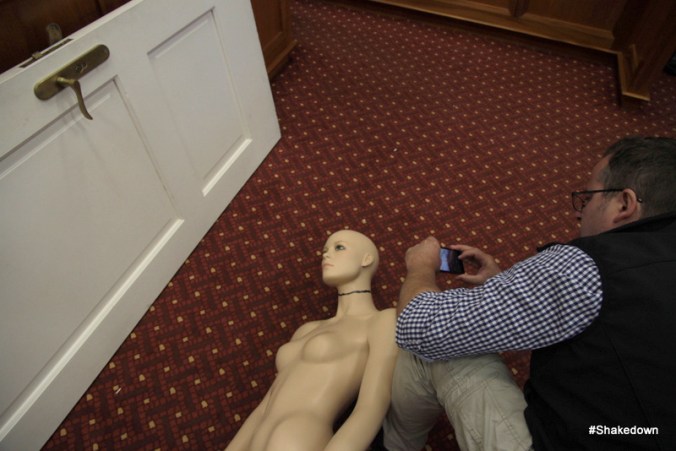

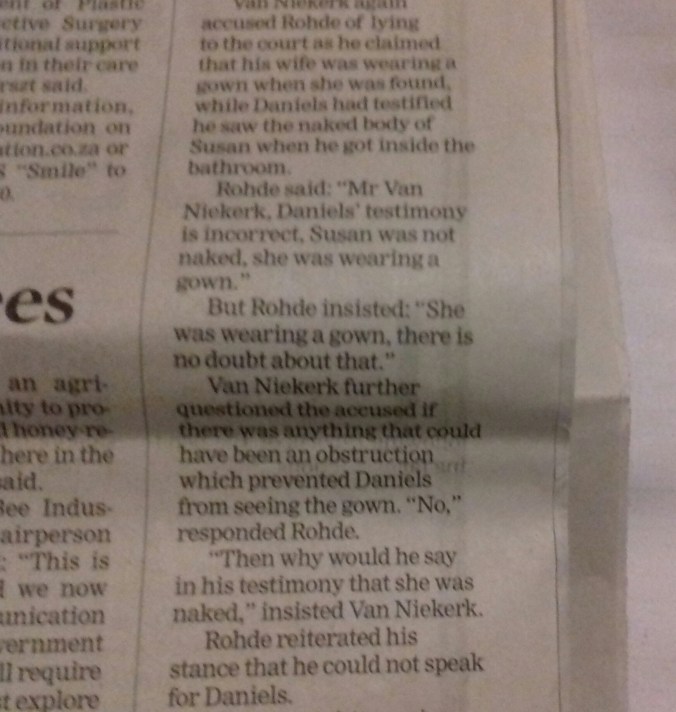
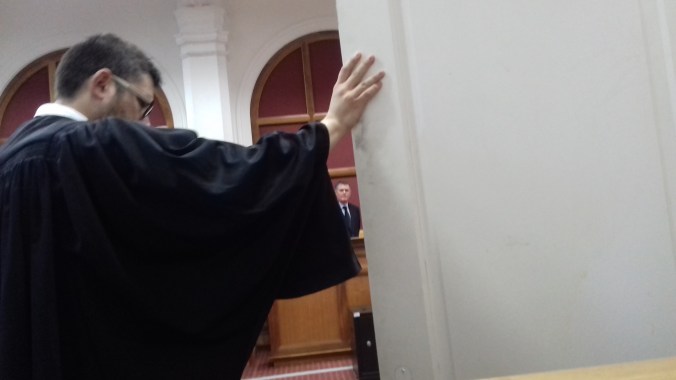



 Nobody knows why Henri committed mass murder, not even on Day 69 of his mammoth trial. Since the state didn’t need to prove motive, they didn’t. Henri was convicted of intentionally murdering his family, and attempting to murder his sister. The law doesn’t require that anyone explain why he did it, it’s sufficient to prove simply that he intended to. That may be sufficient for the law, but it’s not sufficient for human beings.











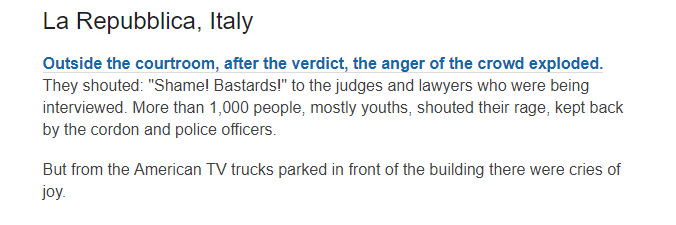

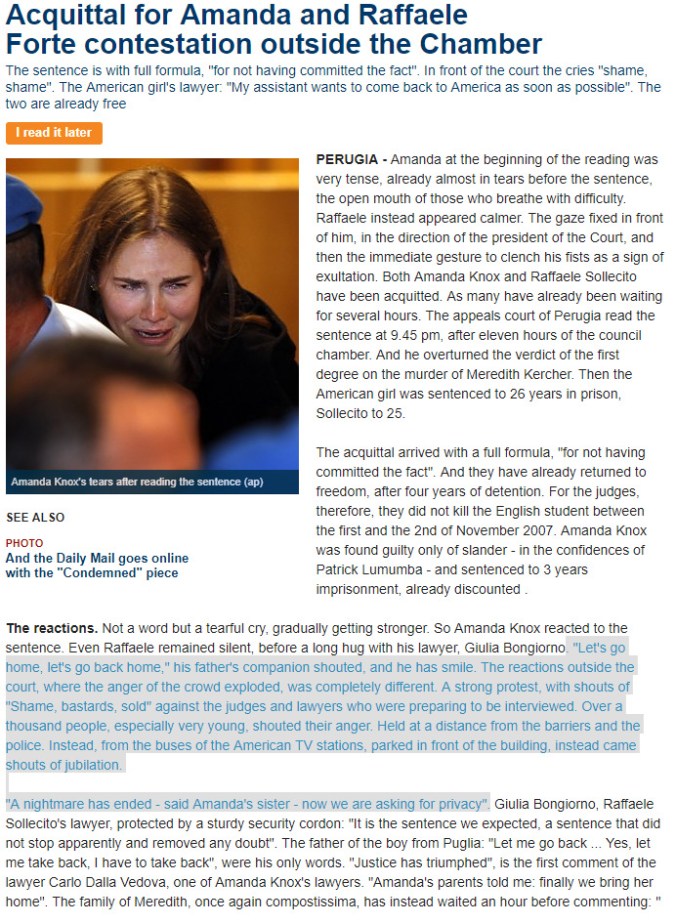










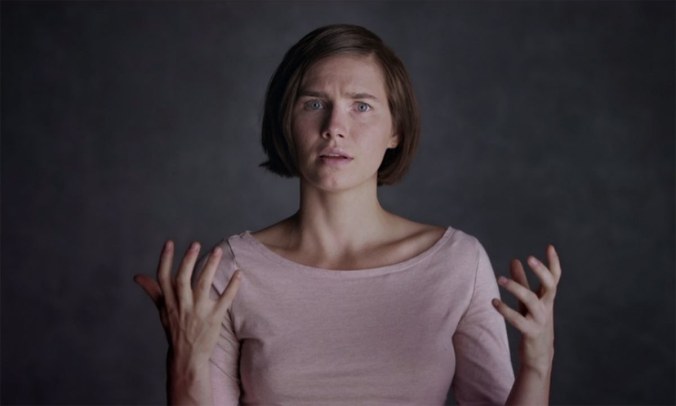











 Okay, so things were a bit dodgy, and didn’t quite add up, but Van Gogh said he cut off his ear, and said he’d shot himself. Why would say that if he hadn’t? That was the pertinent question that deserved an authentic answer. To get to it would require a deep dive, and that would take time and effort.











 #SHAKEDOWN