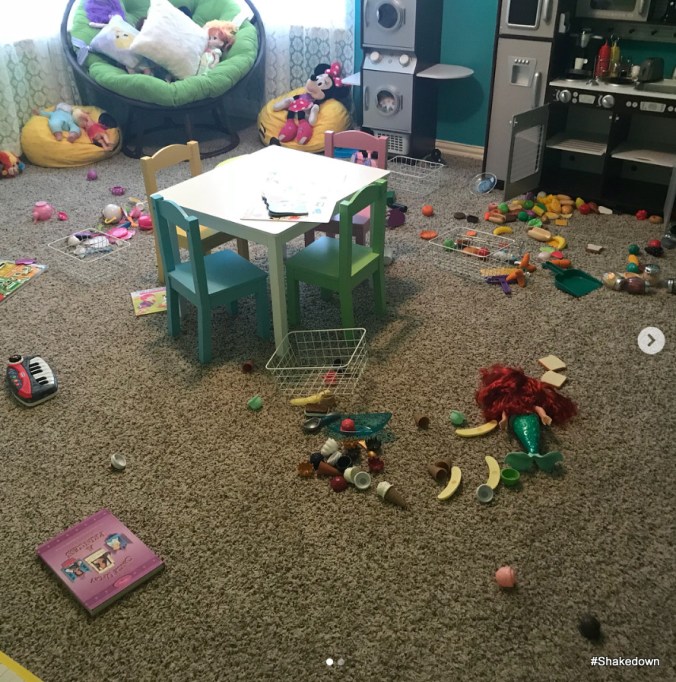
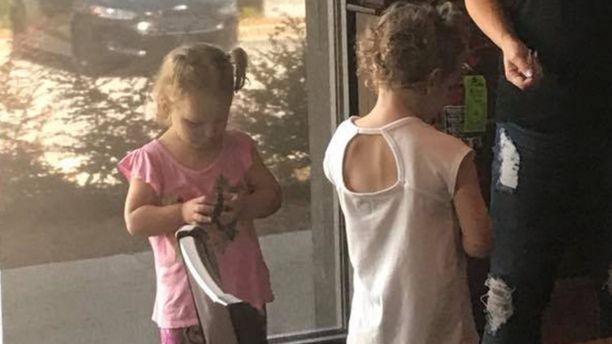
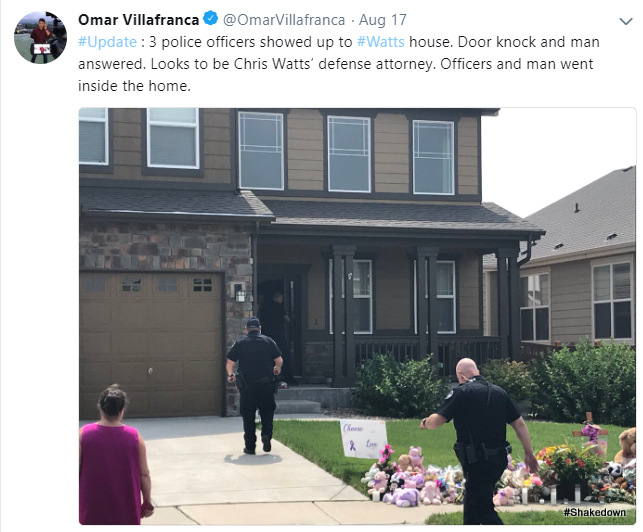
You Haven’t Seen These Watts Family Photos

Fullscreen capture 20180929 060205Fullscreen capture 20180929 060313Fullscreen capture 20180929 060308Fullscreen capture 20180929 060248Fullscreen capture 20180929 055831Fullscreen capture 20180929 055402Fullscreen capture 20180929 055605Fullscreen capture 20180929 055702Fullscreen capture 20180929 055500Fullscreen capture 20180929 060241Fullscreen capture 20180929 060235Fullscreen capture 20180929 055810Fullscreen capture 20180929 055850Fullscreen capture 20180929 055838Fullscreen capture 20180929 055219Fullscreen capture 20180929 055537Fullscreen capture 20180929 060053Fullscreen capture 20180929 060332

Chris Watts: The crime scene at CERVI 319 just got a LOT more complicated

8 inches.  A petroleum engineer has told HLN that the access hatch in his expert opinion is too small to fit even the bodies of small children through. The crime scene at CERVI 319 just got a lot more complicated.

It makes an enormous difference whether the bodies of Bella and Celeste were dumped through the top of the drum or through the bottom. Much of that difference has to do with time, on the one hand, but if it required a lot of unfastening and fastening of bolts, and Chris Watts stepping inside the tanks, then the possibilities for getting his clothing covered in evidence [including oil] goes up significantly.

Was that why Chris Watts took off his shoes?

There’s also a remote possibility that one or both bodies of the children may have been altered in some way in order to force one or both of them through the narrow thief hatch at the top.

If the head could fit through, then a large amount of force and gruesome crunching of bones may have allowed him to dump the smaller child [Celeste] through the upper hatch.

What’s more, HLN‘s expert believes the opening of the manway hatches could have taken as long as an hour. That would be long, sweaty work that would have gone on until after sunrise. It may also account why Chris Watts effectively ran out of time when he was digging Shan’ann’s grave.

What’s also noticeable, and HLN didn’t comment on this aspect, are the clear residues of oil right outside the manway openings on the ground, especially below the tank on the far side.

Fullscreen capture 20180928 033629

The other tank also shows what appears to be a smaller black stain.

These stains could have been made by Watts, or by the cops, when they drained the tanks into order to gain access to them.

The amount of oil found in the drums when investigators arrived on the scene could also indicate whether they were completely or partially drained at the time, based on the rate of filling up over the course of four days.

Since it took a substantially longer period of time to locate/retrieve the bodies of the two girls after Shan’ann’s remains were discovered, it may be that there was a lot of oil in one or both tanks that had to be drained before the tanks could be properly accessed. This could indicate that at least one body may have been dumped through the thief hatch.

On the other hand, the time lapse could have been due to sourcing the appropriate technical assistance at Anadarko, and the red tape involved in getting permission to access a controlled site and system.

The autopsy results could shed some light on the question of whether there was forcing, processing or even dismembering in order to make use of the thief hatch. The continued reluctance of the district attorney to release the autopsy results is making this case more mysterious, compelling and disturbing than it already is.

An example of “He Has No Game”

In this clip Shan’ann abruptly leaves the kitchen, leaving Chris Watts stuck for a few seconds in the front of camera. He clearly doesn’t want to be there. Notice also how he refers to Shan’ann only as his “wife”, and when she returns, he’ s sort of unceremoniously bumped out of picture.

There’s virtually no interaction here between husband and wife, is there.

https://youtu.be/MOvkUwij_0M?t=44s

Shan’ann, in contrast to Chris Watts, is a on-the-ball, but she’s so on-the-ball she has her husband dressed up in the Thrive uniform and reduced to a prop. If you don’t want to be prop, and you keep being foisted into these mini-productions, that’s got to cause resentment – both ways.

Analysis of the blinds of Chris Watts’ Home

A window into the Watts home – that’s what we’re looking for. A way of seeing inside, seeing what happened to this picture-perfect family. A window is what teams of lawyers, armies of reporters, legions of trial watchers and a handful of true crime writers are desperately trying to find. A way of looking in, penetrating through the lies and absent evidence, to see the truth.

The autopsy report provides one way to see back in time. It’s a sort of biological window. Forensics and fingerprints sketch additional aspects of the scene. But what about the ACTUAL windows of the Watts home?

28911775001_5822952482001_5822949617001-vs

As part of ongoing targeted research into this case, I’ve made a detailed study of the house, the house plans and the neighborhood. I wanted to see what the neighbors could see looking in, but also which windows in the Watts home made certain areas of the home less private than others. In effect, I was trying to fathom where in the house the three murders were executed.

In other true crime narratives, I’ve found this technique, this process of orientation within the civic design of the suburb, vital. My deepest insights into the difficult Zahau case came largely from understanding precisely how the prominent Spreckels Mansion fitted into Coronado’s Ocean Boulevard. My work into that case suggested Rebecca Zahau could easily have been seen from her position on the balcony she was supposed have committed suicide from. That may not seem to be a big deal, except she was naked when she was supposedly killed herself.  But if she was murdered, her murderer could have been seen too. 

Much of my analysis into the Zahau case was based on the idea of a murderer who was using the balcony to stage a suicide, but didn’t want to be seen doing so…and did the crime scene bear this theory out?

I’ve approached the Watts crime scene in much the same way. If the murders were committed inside by two different people, were they all committed at night? Were they all committed upstairs, downstairs,  in the same room or in different rooms? Were the lights on or off? Were the windows and blinds open or closed? Were any crimes committed in the basement? Did anything happen in the basement?

The Scott Peterson case also involves blinds that were opened on December 23rd by Margarita Lava, the Peterson’s maid, and yet remained closed throughout Christmas Eve and Christmas Day. Not just the blinds facing the road, ALL the windows were covered.

JBL.source.prod_affiliate.11

Now, back to the Watts home.

What do we know for certain?

We know that the windows looking into the garage allowed Nickole Atkinson to confirm that Shan’ann’s car was there, and that the kids seats were in it too. This aspect alone may be the reason Chris Watts was confronted and caught as soon as he was. Had there been no windows into the garage, Nickole couldn’t have known anything was amiss, and critical time would have gone by in which more critical items of evidence could have been removed.

Interestingly, once the garage became part of the crime scene, the small square windows were covered up against prying media, revealing just how “transparent” the Watts home could be to prying eyes.

Fullscreen capture 20180922 003336

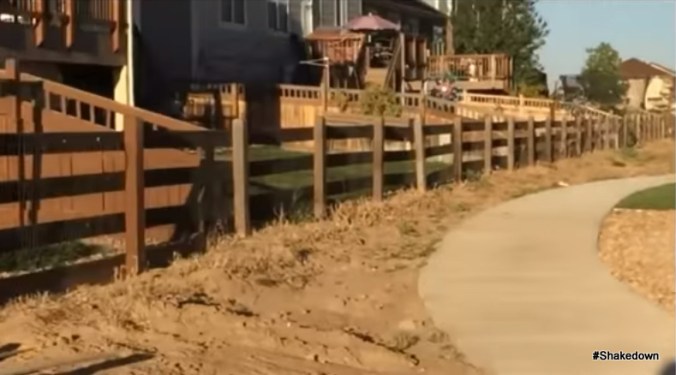
Looking closer, there are so many windows in the Watts house it’s almost a house of glass. This is the back view.

Fullscreen capture 20180923 211411

A view from the side with the Watts house on the right.

Fullscreen capture 20180923 211619

Notice the basement window below. Chris Watts’ man cave [as it’s marketed in the realty brochures] appears to be a kid’s cave, at least from the outside. Notice the Mickey Mouse window covering.

Fullscreen capture 20180923 211457

Fullscreen capture 20180923 211511

If the murders were premeditated, and if Chris Watts committed all of them, then he’d need to be very careful about windows wouldn’t he?

The subdivision is filled with other double story houses with excellent line of sight, and the houses alongside the Watts home are also RIGHT alongside.
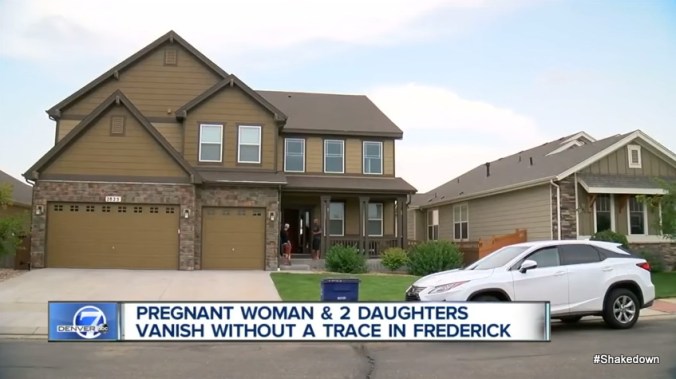
Fullscreen capture 20180830 105440Fullscreen capture 20180923 211602Fullscreen capture 20180923 211606

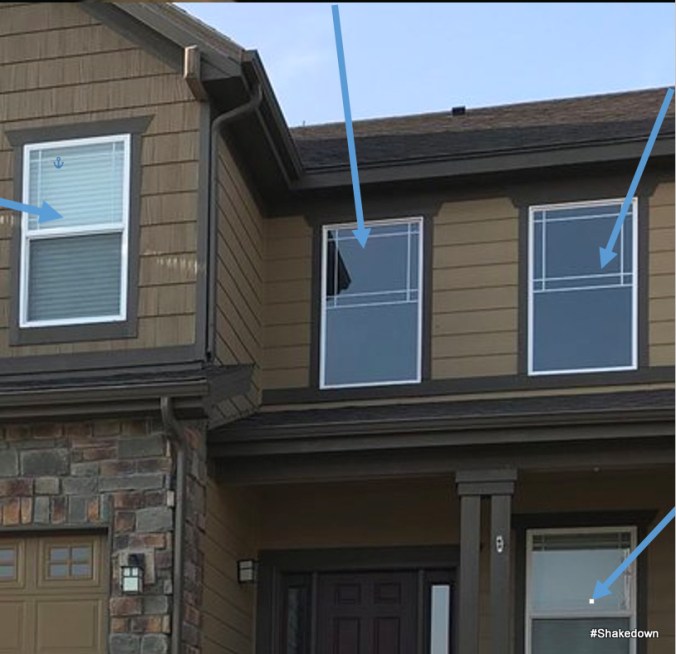
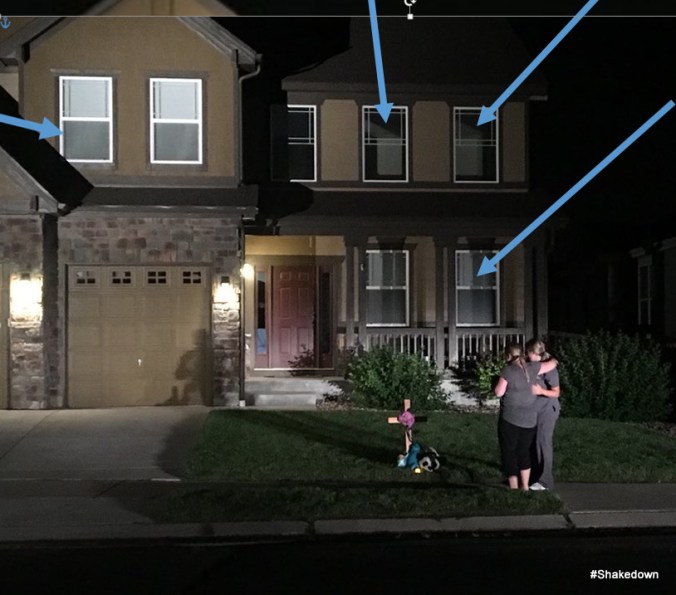
An aspect that stood out from a cursory run through of the house was firstly how many windows had the blinds drawn, and secondly, the fact that three windows on the top floor facing the road that weren’t closed.

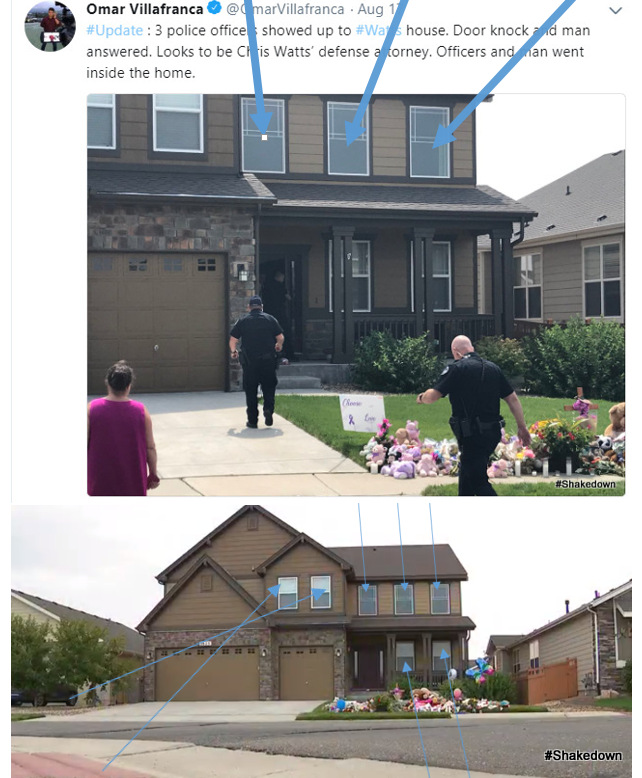
Fullscreen capture 20180924 030538Fullscreen capture 20180924 030913Fullscreen capture 20180924 031348Fullscreen capture 20180924 031523Fullscreen capture 20181208 182827Fullscreen capture 20181208 182758

I also examined the blind issues by looking at other images of the house, before it became a crime scene. What were the Watts’ in the habit of doing regarding the blinds?

In Shan’ann’s long monologue LIVE video on a Saturday morning in May, the blinds above the couch and behind her are down.

When Chris was mowing the lawn in May, the blinds look similar to every other picture, don’t they? Also, in a tightly backed subdivision, wouldn’t most people have the blinds drawn not so they can commit murder in private, but just  – ordinarily?
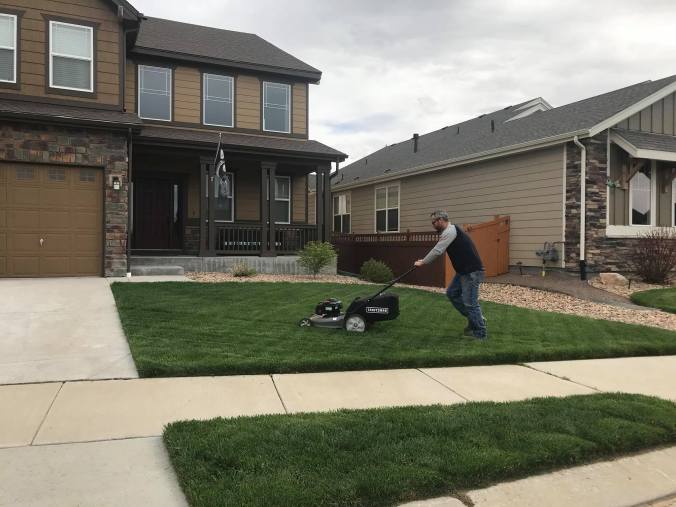
31959303_10155415202111935_4697942735691186176_o

When Shan’ann told her children she had a baby in her belly, the blinds are drawn there too.

If all the blinds were always drawn, but the three windows on the upper floor were open, what if they’d been left open intentionally, so that neighbors could see Bella and Celeste moving inside. So that, until the last minute, Chris could show that they were still alive. It was potentially another version of taking them to a birthday party on Sunday. It gave Chris Watts plausible deniability.

It also suggested, if this line of inquiry was correct, that the one room where the children weren’t murdered was the upstairs room with the blinds open.

Neat theory, right?

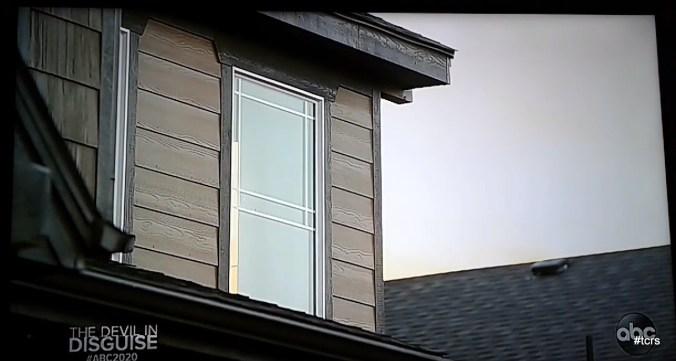
The problem was those upstairs windows aren’t part of children’s bedrooms, or in fact ANY room. They’re lighting above the lounge. I wasn’t able to find clear pictures in the Watts home confirming these windows, but Shan’ann’s video in the lounge suggests a high ceiling like the one below.

This similar model home provides an idea where the three “upstairs” windows fit into the house as seen from the inside. We can also see why these blinds might be left open most of the time.

Fullscreen capture 20180922 000102

I also checked the moon stats for August 12th and 13th. I wondered whether, when Nickole dropped Shan’ann off, whether the lights inside the house were on. A bright Colorado moon might explain how many lights needed to be on, if moonlight was spooling through three open, upper windows.

Nickole will probably shed light [pun intended] on this question in due course. But for the time being, I wondered whether – if the lights inside were off – how the light of the new moon would shine through those three upper windows, and perhaps allow Shan’ann to go inside without turning lights on [and waking her family]. It also addressed whether Chris could be using moonlight through the top windows to illuminate his “kill scene”.

But that theory didn’t go anywhere either. The bright new moon set at around 21:00 on August 12th.

What the research does show, and I’ve taken this research a lot further in TWO FACE II, is where in the house the crime scene probably took place that assured some privacy. Privacy not only in terms of line of sight, but line of sound.

Strangling crimes can involve muffled sounds, and if the murderer isn’t careful, and hasn’t taken precautions, muffled screams that might be audible to nearby neighbors.

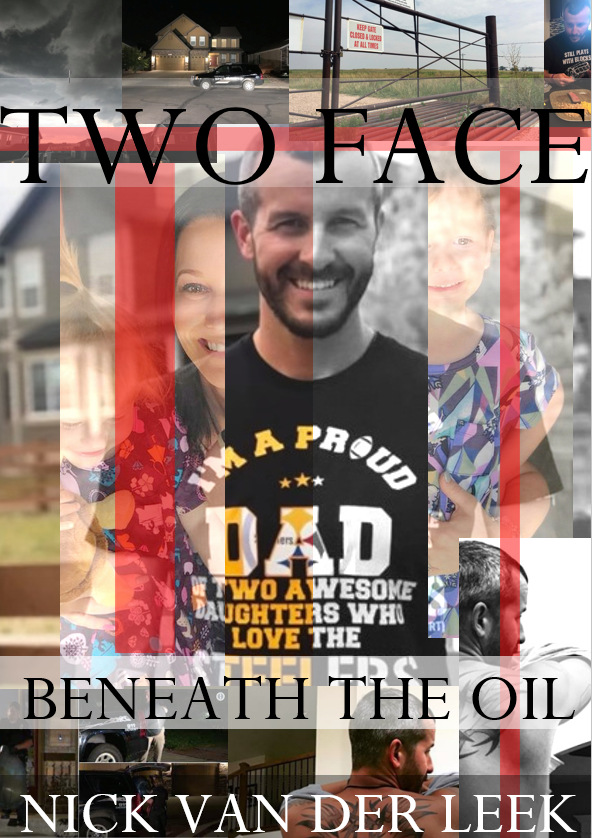
TWO FACE BENEATH THE OIL will be available soon.
Fullscreen capture 20180921 224552

Chris Watts’ “photographic memory” provides a unique window into his mind, and his psychology

There’s something very unusual about Chris Watts. He has what a former teacher has described as “a photographic memory”. What criminal psychology teaches is not to look at the thing itself, but at the things surrounding it. So although we ought to understand and make sure whether the terminology is accurate, what we can say broadly is that photographic memory is often associated with introversion, and social dysfunction.

Think Sheldon Cooper. Smart, but badly out of whack in ordinary social settings, and even worse at engaging with the opposite sex.

https://youtu.be/KSIg9m1rn9w

The “photographic memory” [also known as eidetic memory] tends to involve shared traits, including lefthandedness. Was Chris Watts left-handed?

More interesting in terms of this case is the psychological connection between “photographic memory” and the inverted personality. It may explain why Shan’ann said Chris Watts “has no game”. If it was a real problem, it may have irritated Shan’ann and she may have felt her husband was weak, when it was more a question of wiring than his attitude to her or to her marriage.

Watts arraignment hearing

GREELEY, CO – AUGUST 21: Christopher Watts is in court for his arraignment hearing at the Weld County Courthouse on August 21, 2018 in Roggen, Colorado. Watts faces nine charges, including several counts of first-degree murder of his wife and his two young daughters. (Photo by RJ Sangosti/The Denver Post)

TWO FACE is available exclusively on Amazon.com

Chris Watts: Voted most likely to succeed in the Class of 2003

“This was one of the smartest students I ever had. The guy had a photographic memory. His biggest passion outside of automotive was NASCAR. He knew chapter and verse, everything you could ask about NASCAR. Anything. In fact, I told him before he graduated, I said, ‘Chris, if I ever had a student who was going to be tremendously successful, it’s you.’ He wanted to work his way up and be on a NASCAR team. Probably a crew chief.”

Those who know Watts described him as a remarkably intelligent youth. In 2003, he and another senior at Pine Forest placed third at the N.C. Automobile Dealers Association competition in Winston-Salem, receiving a certificate and a $1,000 scholarship to Universal Technical Institute and NASCAR Technical Institute in Mooresville.

A remarkably intelligent mechanic?

A genius multiple murderer who was caught and arrested within hours of committing his perfect murder?

ChrisWatts_Sophmore

Now that’s a glowing endorsement. Of course everything is relative. “Smartest” student? Compared to whom?

CWatts_Sophmore

PICK OF THE CROP: Chris Watts’ sophomore picture. That’s him in the middle row, two thumbs right of the central black line.

Joe Duty remembered his former student as extremely introverted and quiet. Watts would sit in class and hardly say a word, Duty said. Others who remember Watts from high school described him as a boy that every girl had a crush on, but shy and awkward.

Most of the above info is sourced at this link. The more we find out about Chris Watts, the more he seems to fade from view.

Which makes one wonder [hit play below]…


The #1 Clue That Proves Premeditation?

Since the trial is still pending, it requires the title to have a question mark rather than an exclamation mark.  There appears to be plenty of debate springing up now around whether Shan’ann could have committed a crime, but no matter who committed what, it seems the general consensus is that the crime happened spontaneously.

They had an argument – that night or early morning – because Chris Watts said they did.

There are many, many obvious reasons why this isn’t a signature case for a crime of passion  which is an act committed impulsively during an explosive venting of rage.  It happens when the perpetrator feels themselves pushed over an emotional cliff. Chris Watts classifies this crime as precisely that – that he killed Shan’ann in a rage as a reaction to her despicable crimes. That’s his excuse.

But is it true?

Well, this is what that passion looks, sounds and feels like.

So what’s the #1 clue that appears to show premeditation?

It’s Chris Watts’ stoicism on the morning of August 14. We now know that Shan’ann, Bella and Celeste were dead by then, but also that Chris Watts knew that then too. He didn’t look particularly bothered, in fact showed no signs of distress, grief or remorse. Part of his act was that he was innocently unmoved, even chuckling at times.

The defense will argue that all people process their grief differently. But actually that’s not true. When grief is genuine it can’t be held back. It creeps on you in its raw, unfiltered form and overwhelms you. When grief is absent, well, it’s difficult to fake and decent lie detectors and true crime buffs pick up on that immediately.

That’s why Chris Watts’ interview scorched the internet, and why this case remains so top of mind. People are still asking themselves:

Where’s the grief? Where’s the humanity? How can someone lie like that, to the whole world [and perhaps to themselves?]

Crimes of passion happen on impulse. The wave comes and just as quickly goes. When the perpetrator recovers himself, he’s quickly remorseful, regretful, reproachful and even apologetic.

When there’s premeditation there’s a much deeper sense of “plans have gone awry”. When there’s premeditation much more is happening in the head than in the heart, but that’s not to say the heart didn’t play a huge role in getting the ball rolling. And after the crime, the heart of a premeditator is still pulling the strings in his head, but from a distance and behind the scenes. Something in his heart is why he’s still continuing to kick the can down the road even though the game is up.

In his television interview is there a sense, perhaps, of disappointment following a momentary sense of triumphant, excitement and freedom?

What we fail to see in premeditated cases is that the murderer is turned on by the fantasy of getting rid of someone who they see as milestones around their necks. Casey Anthony’s partying during the first four weeks of Caylee’s death/disappearance is a classic example in true crime of the unadulterated joy in breaking free of one’s lot in life.

When it’s been a long, long time coming and he’s finally doing it,  strangling the life out of someone he despises, there’s satisfaction and relief in the deed. It’s not a question that he’s reluctant to commit murder, but irresistibly drawn to the idea, like a moth to flame.

The more interesting, sinister and terrifying question is the same one that haunts the Scott Peterson case:

When did he start day-dreaming about murdering his family, and what moment, what snide remark triggered the first impulsive homicidal thought? 

COULD Shan’ann have killed her children? What do the stats say?

The question of whether Shan’ann COULD have killed her own children will be at the center of the defense case in the Chris Watts trial. Whatever the merits of this case, and in spite of what appears likely, in court a case is only as strong as what can be proven in court.

As much as we’d like to believe a parent killing their child [born or unborn] is monstrous and complete anathema to society, the reality is it’s not only common, it’s an every day occurrence around the world.

2infanticide0919

About two decades ago, the stats from a UN census showed that in a single year approximately 90 million fetuses or small infants were aborted/murdered throughout Asia. This number isn’t pertinently about mother’s killing their offspring per se, but rather the pre-selection of female first-born children for killing.  The abortion-of-girls-scourge is so serious in South Korea, women have to be actively recruited to immigrate to the country because of the mismatch between male and female adults in that country.

What this proves is that cultural incentives [in this case in favor of male first borns] can completely dominate the psychology of adults in terms of their offspring. How the family appears is thus mercilessly enforced within certain cultural and/or socioecomomic constructs.

Child Murder by Mothers: Patterns and Prevention is a peer reviewed [if somewhat dated] research paper published in the US National Library of Medicine. This study pertinently focuses on the mother’s role in the murder of infants. The research paper’s conclusions read as follows:

A mother’s motive for filicide may be altruistic, acutely psychotic, or due to fatal maltreatment, unwanted child, or spouse revenge. In addition, many mothers who do not attempt filicide experience thoughts of harming their child. Maternal filicide motives provide a framework for approaching filicide prevention. Suicidality, psychosis and depression elevate risk, as does a history of child abuse. Mentally ill filicidal mothers have very different risk profiles than mothers who fatally batter their children. Prevention is difficult, because many risk factors, such as maternal depression and social disadvantage, are common among non-filicidal mothers.

Fullscreen capture 20180923 212135

In Wikipedia’s introduction to the concept, the final sentences reads, troublingly:

In many past societies, certain forms of infanticide were considered permissible…

But further exploration on the topic reveals all-too-common economic and practical imperatives, both in humans and the animal kingdom. In many societies, including progressive Japan, having twins was considered bad luck, or a taboo, and one or both children were often killed to restore the fates.

Marvin Harris estimated that among Paleolithic hunters 23–50% of newborn children were killed. He argued that the goal was to preserve the 0.001% population growth of that time…A frequent method of infanticide in ancient Europe and Asia was simply to abandon the infant, leaving it to die by exposure (i.e. hypothermia, hunger, thirst, or animal attack).

In at least one island in Oceania, infanticide was carried out until the 20th century by suffocating the infant,while in pre-Columbian Mesoamerica and in the Inca Empire it was carried out by sacrifice…In Kamchatka, babies were killed and thrown to the dogs. American explorer George Kennan noted that among the Koryaks, a Mongoloid people of north-eastern Siberia, infanticide was still common in the nineteenth century. One of a pair of twins was always sacrificed.

According to studies carried out by Kyoto University in non-human primates, including certain types of gorillas and chimpanzees, several conditions favor the tendency to infanticide in some species (to be performed only by males), among them are…the absence of nest construction…

In Eskimo societies, children born in winter were killed by smashing their heads with a rock, or a block of ice, stuffing grass into the baby’s mouth or tossing them into the sea. Research differs, but infanticide among the Inuit was believed to reach as high as 80% amongst some groups.

We can see that though the idea is taboo in Western society, the practice remains fairly common in some present societies too, including those referred to above.

There is a world of difference between killing an infant in a bad season, so to speak, and the wiping out of an entire family – unborn Niko, Celeste, Bella and the children’s mother Shan’ann. No matter how common the killing of a single child is, the annihilation of a family by the head of the household [as is being alleged here] is exceedingly exceedingly rare.

30582225_10155357801421935_9158521398322929197_n

In terms of the particulars of the Watts case, we must also draw a distinction here between infanticide and filicide. I’m not sure that infanticide is the correct definition to use in the Watts case, from the defense case perspective. This is because, strictly speaking, the ages of Bella [4]  and Celeste [3] place them outside the strict definition. An infant is up to 1 year of age. But the statistics around filicide are nevertheless similar to those of infanticide, until a particular inflection point.

t1larg.anthony.swimming.pool

First the definition:

Filicide is the deliberate act of a parent killing their own child. The word filicide derives from the Latin words filius meaning “son” or filia meaning daughter, and the suffix -cide meaning to kill, murder, or cause death.

“Filicide” may refer both to the parent who killed his or her child, as well as to the criminal act that the parent committed.

Now the inflection point. At what age do the statistics show fathers to be the more likely killers of their children?

A 1999 United States Department of Justice study concluded that between 1976 and 1997 in the United States, mothers were responsible for a higher share of children killed during infancy, while fathers were more likely to have been responsible for the murders of children aged eight or older.

Furthermore, 52% of the children killed by their mothers (maternal filicide) were male, while 57% of the children killed by their fathers (paternal filicide) were male. Parents were responsible for 61% of child murders under the age of five. Sometimes, there is a combination of murder and suicide in filicide cases. On average, according to FBI statistics, 450 children are murdered by their parents each year in the United States.

Strangely, in America the trend is the reverse to that in Asia. Male children are slightly more likely to be killed by their mothers, and almost two thirds more likely to be killed by their fathers. Although the data is fairly stale, the preliminary evidence from a purely statistical approach is that fathers are significantly less likely to kill their own children than their mothers, especially when they’re female.

Just as in infanticide, spousal revenge is also a potential factor in filicide. Whether these numbers or trends are fielded in court by Chris Watts’ defense team or not, what remains clear is that the reverse is also true. If the case is made that one parent killed their children out of spousal revenge, the possibility exists that the other parent could just as easily be culpable of the same accusation. What really has to be shown is which spouse had the bigger bone to pick with the other, and ultimately, if it was revenge, revenge for what? 


Chris Watts: What possibilities exist for his Defense Case?

“It’s too early for conjecture.” “Wait for the case to be heard in court.” “We’re missing key evidence so we can’t possibly know what happened…”  These are some of the responses to an analysis of the case. If you’re Chris Watts’ defense team, then your job is going to be conjecture. Your job is going to be collecting evidence and drafting a reasonable-as-possible version to field in court. What might that entail?

As it happens, when you’re in the business of true crime [as I am] then it’s also your job to figure out these cases. To apply your mind from a lawyer’s perspective, from the cop’s perspective, from a narrative perspective [as narrator], and from the perspective of the media impact on everything. Someone writing a book about a case is similar to the lawyer’s perspective in that one has to present a theory about what happened. In layman’s terms – you have to tell a story that integrates all the evidence and adds up.

A narrative and what the media say isn’t the same thing. The media highlight fragments here, and fragments there, and basically play the role of passing on information. For this reason the media can become a PR vehicle for a particular angle in a case, especially high profile cases. Media that doesn’t serve an agenda in this regard isn’t doing its job, but it’s important to bear this in mind.

Usually one can quickly identify particular journalists who trumpet a particular narrative. Some become useful if not vital tools for the defense case. We’re not quite there yet with this case, but it’s early. We’re getting there.

800px-Weld_County_Courthouse_from_Lincoln_Park

Before drilling down into the possibilities of the defense case, it’s worth noting what the value is in thinking about a case before it goes to trial. The value in thinking about something – that’s the value. We can make up our own minds, we can listen and look for information. And we can think about it. When the trial unfolds, we can and should hold the court accountable to uphold the law, and to pay attention to and care about the details of a case just as we do. In other words, when we’re discerning about a particular set of legal circumstances, we hold the justice system to a high standard.

It would be good if we could do so in general, rather than only when a high-profile crime comes around, but paying attention to a crime and how its dealt with is always better than paying no mind whatsoever.

Those interested in the Watts case – everyone – ought to be encouraged to think about it. To personalise it. To try to understand it. And most important, to learn from it.

Now, without further ado, let’s see what the defense are dealing with, and what’s likely to play out in the Weld County Court.

Fullscreen capture 20180922 003341

  1. It has been confirmed, of course, but the Chris Watts case is looking more and more like it’s headed to being heard as a death penalty case. For reference, Jodi Arias, and Casey Anthony were both tried in death penalty hearings in cases that looked and felt like slam dunks. Neither Jodi nor Casey were sentenced to death, and Casey was famously acquitted.  The O.J. Simpson case – involving double murder, premeditated – was also a candidate for a death penalty trial. The district attorney decided not to set the bar that high, and OJ still beat the charges. So not having a death penalty trial is no guarantee of success either. In the Scott Peterson case, he was found guilty and sentenced to death. That was on March 16, 2005. Thirteen years later, Scott Peterson is still around, and still appealing his case.
  2. Can he afford a decent defense lawyer? Top defense lawyers don’t come cheap, but that doesn’t mean Chris Watts won’t be able to afford one, regardless of whether his finances are hanging by a thread or not. Steven Avery and Damien Echols of the West Memphis Three were all in far worse shape financially than Chris Watts, and both were able to attract not only top defense lawyers, but some of the best and brightest defense teams in the country. The same applied to Casey Anthony. Jose Baez wasn’t in it just for blow jobs, in his book he describes the “priceless” marketing involved in simply being associated with the country’s most high-profile defense case. This case promises to be that too.
  3. What will Chris plead? Guilty or not guilty? Don’t be too surprised if he pleads not guilty, arguing that this was a case of justifiable homicide.
  4. Accidental death? It’s not unusual for the defense narrative to evolve. The Casey Anthony and Jodi Arias trials are classic examples of a flip-flopping defense. A flip-flopping defense isn’t good, but that doesn’t mean it can’t or won’t create reasonable doubt. Strangely though, the same standard [or lack of] doesn’t apply to the prosecution side of things. Any flip-flopping from a prosecutor makes his case seem frivolous and unfairly targeted – and thus unfair.
  5. Defense assets. What are the main assets, the best cards the Watts defense have to play [or to hold]? In the same way that the survivor knows best what the true family and relationship dynamics are, he’s also in the best position to reveal the stuff that makes him look good. We saw the relationship dynamic memorably contested in the OJ Simpson case, but it’s pretty standard in criminal cases. The defendant is going to field his best case why he’s a nice guy and a loving family, and why Shan’ann’s not. Soon the court will be left wondering – wow, if this family was so happy, how’d everyone end up dead? The Henri van Breda case is another classic example of the survivor speaking on everyone’s behalf, telling the court what a normal, loving family they all were [including the triple axe murdering accused of course]. Another big asset in Chris Watt’s pocket is his inside knowledge of the house and the work site. He knows family dynamic, he knows the crime scenes, he knows the home, he knows what evidence could incriminate but the prosecutors don’t. They have to play catch up.
  6. The biggest hurdle. At this stage it may be too early to say. One could argue that the video surveillance footage showing him leaving, and no one else, is irrefutable. We’ve seen similar footage in, for example, the Zahau case. In the Jodi Arias case a camera’s metadata was incredibly damning, but incredibly, still not sufficient on its own to condemn Jodi. The confession may also be a huge hurdle, but as we saw in the Amanda Knox case, if it can be shown to have been made under any kind of duress, or violating any protocols, it can be thrown out.  The same applies to the interview given by Watts himself on the morning of August 14. This statement could be argued prejudiced Watts his right to a fair trial, irrespective of whether he consented to do the interview voluntarily. All of Chris Watts’ lies, like Casey Anthony’s, don’t necessarily amount to a strong case for the prosecution. The defense could conceivably shrug it off and say, he was dishonest, it was foolish, it was self-preservation, he was emotionally compromised.
  7. Biggest asset. #5 touched on a few assets, but chief among them is:

A. Shan’ann’s emotional state of mind. If the defense can prove that Shan’ann was overwrought, exhausted, angry, angry, vindictive, and vengeful because of the affair, and perhaps because of the difficulties of her job, then she can be cast as the “real” enemy in this story. She’s the villain of the tale. Jodi Arias did this to devastating effect during her murder trial, and arguably, Casey Anthony did an even better job accusing a phantom nanny, her father, her brother as well as implicating a utility worker.

B. While sketching a portrait of Shan’ann as unhinged, emotional, even suicidal, Chris Watts can contrast himself [with some basis in fact] as the perfect husband, and a loving father. In this respect, Shan’ann’s own endorsement on Facebook will likely come into play on his behalf. Oscar Pistorius did something similar in his criminal trial. 

8. Court TV? Will the case be broadcast live? The defense will argue against it, and it’s possible the court may not allow it. It’s a tough one. But Colorado courts seem to be fairly strict, and their policy towards the media thus far has been somewhat closed and conservative.

9. Who’s in his corner right now? At present [and subject to change and correction] Chris Watts’ defense team appear to comprise:

James Merson [Defense lawyer]

Richard Eikelenboom [Forensics expert and blood spatter analyst, worked on JonBenet Ramsey case]

Megan Ring [Public Defender]

The fact that a woman appears to be involved in Chris Watts’ defense will be good for the so-called “optics” of the trial. Also relevant to the defense side of things, though not necessarily integral to it is Kathryn Herold [Deputy State public defender].

Fullscreen capture 20180922 003341

Chris Watts may also have been given a prison diary to jot down notes by his defense team. The idea would be to use these notes in court to address issues such as state of mind, changes in state of mind, and the evolving defense side of things.

The trial narrative is still a long, long road ahead for Chris Watts and trial watchers.

1280px-Pawnee_Grassland_Sunrise

Dr OZ gets into shit for promoting the shit that’s in THRIVE

DR OZ: This little bean has scientists saying they’ve found the magic weight-loss cure for every body type.

“Do you believe there’s a magic weight-loss cure out there…”

DR OZ [Stuttering]: Ah-eh-uh…the word ma-mag… 

According to a People magazine article from June 20, 2014:

Dr. Mehmet Oz recently got a dose of tough medicine after being publicly reprimanded on Capitol Hill for spotlighting certain dietary supplements.

Appearing before senators on Tuesday to testify about the marketing behind a dietary supplement known as green bean coffee extract, Dr. Oz became the target of some harsh words from Sen. Claire McCaskill, chairwoman of the Subcommittee on Consumer Protection, who accused the daytime host of giving viewers “false hope” in products.

“I don’t get why you need to say this stuff when you know it’s not true,” McCaskill said. “When you have this amazing megaphone, why would you cheapen your show?”

Sen. McCaskill also called out Oz for endorsing FBCx, Forskolin, Garcinia cambogia and raspberry ketones as viable weight-loss supplements.

He countered by insisting that he is a “cheerleader” for the audience and his intent is to “engage viewers” with “flowery language.”

https://youtu.be/9Yh3y6QaizY

Fullscreen capture 20180920 212601

Forskolin

What Dr. Oz says: In 2012, Oz called this herbal compound “lightning in a bottle. It’s a miracle flower to fight fats.” 
What we know: The foremost trial that supports the use of Forskolin in weight loss was sponsored by the Sabinsa Corporation – an herbal supplement manufacturer that boasts Forskolin as one of its products.

Garcinia cambogia

What Dr. Oz says: Also known as tamarind, “it may be the simple solution you’ve been looking for to bust your body fat for good,” he said about the small pumpkin-shaped fruit. 
What we know: There have been no large-scale trials suggesting it’s an effective weight loss supplement. “Garcinia seems to be more effective when there’s more concentrated exercise,” says Dr. Margolin, adding, “exercise across the board is always going to help weight loss.”

Raspberry ketones

What Dr. Oz says: He called this chemical found in red raspberries “the No. 1 miracle in a bottle to burn your fat.” 
What we know: Raspberry ketones have only been tested in animals; no study has officially been done on humans to support weight loss.