John Ramsey’s Flight Schedule August 2007 – July 2008

“Private jets cost a lot of money.” — Donald Trump

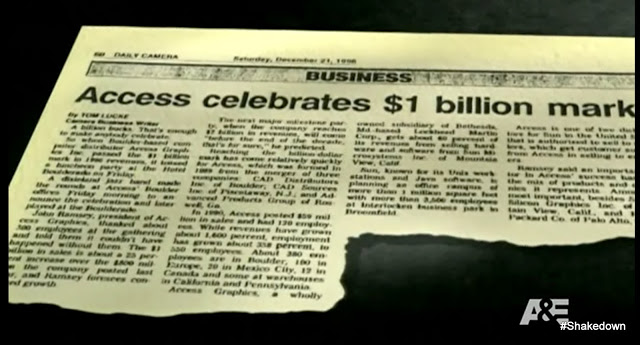
How much was Access Graphics worth when John lost it in November 1997?  According to John in Death of Innocence, Access Graphics was “poised to gross $1.5 billion with operations in 20 countries.”

Thus, between December 15th 1996 and early November 1997, Access Graphics had added 50% to its already enormous revenue stream.  Half a billion in eleven months!  That means the company would likely have doubled its revenues by the end of 1999, around the time of the Grand Jury non-announcement.

It’s easy to imagine that when John was booted out of his own company in 1997 that he “lost everything.”  While he certainly lost out in terms of future earnings, John was nevertheless already worth a fortune, and his expulsion was likely accompanied with a sweet golden parachute.

We don’t know for a fact whether John was paid or incentivized to walk away, but knowing John, had there not been a sweetener involved it’s difficult to imagine John accepting his exit as graciously as he did.  I can’t imagine John riding off without something in his saddlebags.

Although John pleads poverty in Death of Innocence leading up to the Grand Jury trial in 1999, so much so that he said he had to sell his plane, it seems he wasn’t so poor that he had sell the other one.

A Beechcraft in a blue sky when it’s very high up resembles a sequin in the sky, doesn’t it.  A splinter defying the Earth, defying gravity, seemingly defying all odds.  One has to wonder what was going on with the pilot of that Beechcraft, and why it went where it went with such a dizzying frequency.

According to Lisa’s research John still owned one plane, registration N2059W, in 2007/2008, even though he claimed to be having serious financial issues – and he flew N2059W frequently.

This schedule below ties into the timeframe when John was considering running for office a second time.  There’s some talk on the forum thread provided below about Burke leaving Purdue for school in Georgia – which may not be entirely accurate – because we know Burke did eventually graduate from Purdue.

From forumsforjustice.org:

Here’s the flight log for John’s plane, N2059W, for the past four months.  (It’s listed chronologically from the bottom up.)  John has been a very busy little boy and doing HIS part to contribute to air pollution and global warming by using up all the jet fuel he possibly [could].  And he’s not just burning up the sky between Charlevoix, Atlanta and Arkansas… oh no, John likes to spread his favors around to Indiana, Illinois, Louisiana, and both sides of the southern part of Michigan, just to name a few places he’s dropped wing.

He even took a trip out to Winner, South Dakota (population 3137). I can’t imagine what THAT was about.  They must have a rip-snorter of a golf course!

By the way, Adams Field = Little Rock, AR [where Beth Twitty is from]

From flightaware.com:

August 2007:

Date Type Origin Destination Departure Arrival Duration:

08-Aug-2007 BE35/G Boyne City Muni (N98) Cobb County-Mc Collum Field (KRYY) 03:02PM EDT 07:10PM EDT 4:08

10-Aug-2007 BE35/G Cobb County-Mc Collum Field (KRYY) Boyne City Muni (N98) 03:44PM EDT 08:06PM EDT 4:22

15-Aug-2007 B350/G Boyne City Muni (N98) Gerald R. Ford Intl (KGRR) 04:49PM EDT 05:50PM EDT 1:01

15-Aug-2007 B350/G Gerald R. Ford Intl (KGRR) Boyne City Muni (N98) 09:12PM EDT 09:26PM EDT 0:14

23-Aug-2007 BE35/G Boyne City Muni (N98) Grider Field (KPBF) 10:44AM EDT Diverted

23-Aug-2007 BE35/G Boyne City Muni (N98) Vermilion County (KDNV) 10:44AM EDT 12:16PM CDT 2:32

28-Aug-2007 BE35/G Dekalb-Peachtree (KPDK) Adams Field (KLIT) 03:39PM EDT 05:11PM CDT 2:32

29-Aug-2007 BE35/G Adams Field (KLIT) Gerald R. Ford Intl (KGRR) 09:11AM CDT 01:39PM EDT 3:28

One flight in August to Beth Twitty.

From flightaware.com:

September 2007:

Date Type Origin Destination Departure Arrival Duration:

03-Sep-2007 BE35/G Charlevoix Muni (KCVX) Dekalb-Peachtree (KPDK) 04:32PM EDT 08:36PM EDT 4:04

10-Sep-2007 BE35/G Adams Field (KLIT) Dekalb-Peachtree (KPDK) 01:08PM CDT 04:39PM EDT 2:31

23-Sep-2007 BE35/G Gerald R. Ford Intl (KGRR) Adams Field (KLIT) 02:08PM EDT 04:57PM CDT 3:49

25-Sep-2007 BE35/G Adams Field (KLIT) Dekalb-Peachtree (KPDK) 05:21PM CDT 08:00PM EDT 1:39

26-Sep-2007 BE35/G Dekalb-Peachtree (KPDK) Gerald R. Ford Intl (KGRR) 10:28AM EDT 01:46PM EDT 3:18

27-Sep-2007 BE35/G Boyne City Muni (N98) Detroit Metropolitan Wayne County (KDTW) 01:56PM EDT 03:03PM EDT 1:07

28-Sep-2007 B350/G Cherry Capital (KTVC) Marion Muni (KMZZ) 07:57AM EDT 09:26AM EDT 1:29

Two flights in September to Beth Twitty.

From flightaware.com:

October 2007:

Date Type Origin Destination Departure Arrival Duration:

22-Oct-2007 BE35/G Boyne City Muni (N98) Winner Rgnl (KICR) 07:15AM EDT 03:51PM GMT 4:36

25-Oct-2007 BE35/G Winner Rgnl (KICR) Boyne City Muni (N98) 03:36PM GMT 03:46PM EDT 4:10

26-Oct-2007 BE35/G Grayling Aaf (KGOV) Ann Arbor Muni (KARB) 12:50PM EDT 02:07PM EDT 1:17

27-Oct-2007 ZZZZ/ Ann Arbor Muni (KARB) Boyne City Muni (N98) 06:14PM EDT 07:51PM EDT 1:37

November 2007

Date Type Origin Destination Departure Arrival Duration:

12-Nov-2007 BE35/G Boyne City Muni (N98) Adams Field (KLIT) 11:29AM EST 03:46PM CST 5:17

14-Nov-2007 BE35/G Adams Field (KLIT) Fulton County Airport-Brown Field (KFTY) 01:03PM CST Diverted

14-Nov-2007 BE35/G Adams Field (KLIT) Dekalb-Peachtree (KPDK) 01:03PM CST

16-Nov-2007 BE35/G Dekalb-Peachtree (KPDK) Acadiana Rgnl (KARA) 04:43PM EST 06:44PM CST 3:01

17-Nov-2007 BE35/G Lafayette Rgnl (KLFT) Birmingham Intl (KBHM) 06:24PM CST

17-Nov-2007 BE35/G Lafayette Rgnl (KLFT) Dekalb-Peachtree (KPDK) 06:24PM CST

20-Nov-2007 BE35/G Dekalb-Peachtree (KPDK) Charlevoix Muni (KCVX) 12:16PM EST Diverted

20-Nov-2007 BE35/G Dekalb-Peachtree (KPDK) Boyne City Muni (N98) 12:16PM EST

25-Nov-2007 BE35/G Boyne City Muni (N98) Dekalb-Peachtree (KPDK) 01:58PM EST

25-Nov-2007 BE35/G Boyne City Muni (N98) Mc Ghee Tyson (KTYS) 01:58PM EST

25-Nov-2007 BE35/G Mc Ghee Tyson (KTYS) Dekalb-Peachtree (KPDK) 06:47PM EST 07:55PM EST 1:08

28-Nov-2007 BE35/G Dekalb-Peachtree (KPDK) Adams Field (KLIT) 08:40AM EST

Three flights in November to Beth Twitty.

From flightaware.com:

December 2007

Date Type Origin Destination Departure Arrival Duration:

04-Dec-2007 BE35/G Boyne City Muni (N98) Adams Field (KLIT) 10:03AM EST 01:24PM CST 4:21

04-Dec-2007 BE35/G Adams Field (KLIT) Cobb County-Mc Collum Field (KRYY) 02:40PM CST 05:45PM EST 2:05

One flight in December to Beth Twitty.

Although I don’t necessarily agree with the commentary below, it was topical for its time, and as such I’ve included it here.

From forumsforjustice.org:

Posted by Why_Nut, Dec 8, 2007:

Looking at those logs, though, you can see how the voters of Michigan knew that John was a liar through and through when he claimed that Charlevoix and Michigan were his true home. He still finds it seemingly impossible to bring himself to spend more than a couple of weeks or so in a row there without flying out to some other state. I [will] keep an eye on the real estate listings in the area, because I know that there will be a point when we will see him put the Charlevoix house up for sale.

Burke seems to want nothing to do with that place, and the town and state are hurting for money and they keep putting his property taxes up enough that I think John will simply decide to buy property in Arkansas and turn his back on all pretense he had that he liked Michigan for anything other than his old access to Round Lake for the boats he no longer has.

From flightaware.com:

January 2008

Date Type Origin Destination Departure Arrival Duration:

27-Jan-2008 BE35/G Charlevoix Muni (KCVX) Purdue University (KLAF) 11:10AM EST 12:57PM EST

27-Jan-2008 BE35/G Purdue University (KLAF) Charlevoix Muni (KCVX) 06:19PM EST Diverted

27-Jan-2008 BE35/G Purdue University (KLAF) Boyne City Muni (N98) 06:19PM EST Diverted

27-Jan-2008 BE35/G Purdue University (KLAF) Boyne Mountain (KBFA) 06:19PM EST 08:16PM EST 1:57

15-Feb-2008 BE35/G Boyne Mountain (KBFA) Tri-Cities Rgnl Tn/Va (KTRI) 10:23AM EST 10:57AM EST 0:34

16-Feb-2008 BE38/G Tri-Cities Rgnl Tn/Va (KTRI) Boyne City Muni (N98) 04:41PM EST 08:06PM EST 3:25

23-Apr-2008 BE35/G Boyne City Muni (N98) Sault Ste Marie Muni (KANJ) 11:06AM EDT 11:54AM EDT 0:48

From forumsforjustice.org:

Posted by Cherokee, May 3, 2008:

As Why_Nut pointed out, John still hasn’t filed the necessary paperwork to run for election in Michigan. The deadline is May 13th.

I thought maybe John was too busy cavorting about the countryside in his private plane to notice he’s getting dangerously close to not being a candidate for office. So, I thought I’d take a look at his recent flight logs.

John made a trip to Purdue on January 27th. Burke should have already started classes at Georgia State by then, so I don’t know what that was about. Then John makes a trip to the Kingsport, TN area on February 15th. He spends the night, then flies back to Charlevoix the next day. John’s most recent flight occurred on April 23rd when he flew up to Sault Ste Marie, Michigan near the Canadian border. Apparently, he’s been there for the past 10 days.
From flightaware.com:

April 2008

Date Type Origin Destination Departure Arrival Duration:

23-Apr-2008 BE35/G Boyne City Muni (N98) Sault Ste Marie Muni (KANJ) 11:06AM EDT 11:54AM EDT

04-May-2008 BE35/G Boyne City Muni (N98) Oakland County Intl (KPTK) 03:40PM EDT 04:36PM EDT 0:56

04-May-2008 BE35/G Oakland County Intl (KPTK) Boyne City Muni (N98) 10:42PM EDT 11:44PM EDT 1:02

05-May-2008 BE35/G Boyne City Muni (N98) Oakland County Intl (KPTK) 03:38PM EDT 04:35PM EDT 0:57

From forumsforjustice.org:

Posted by Cherokee, May 5, 2008:

Good grief! John has been burning up the airspace over Michigan the past two days!

First, John flies from Charlevoix down to Pontiac, MI at 3:40 p.m. yesterday. Then last night, he flies back to Charlevoix, arriving close to midnight at 11:44 p.m.

Today, John flies BACK to Pontiac (at almost the exact same time in the afternoon as yesterday’s flight) at 3:38 p.m. He’s still in Pontiac as we speak. I wonder what is so pressing in Pontiac that John has to fly there two days in a row. Wouldn’t it be cheaper and save precious (and expensive) plane fuel to spend the night in Pontiac?

The strange thing is … I didn’t find a record of John flying from Sault Ste Marie back to Charlevoix. John flew to Sault Ste Marie on April 23rd, but there is no flight log for his return! How did he get his plane from Sault Ste Marie to Charlevoix? Obviously, he flew out of Charlevoix to Pontiac, so he had to travel from Sault Ste Marie to Charlevoix SOMEHOW. Hmmmm.

I admire the dedication of these folks on Forum For Justice but the online snooping eventually becomes amusing if little else.  Although John did seem to have a freewheeling lifestyle following Patsy’s death, I’m not sure whether gas guzzling is necessarily a crime.

In July 2008 oil prices hit an all-time record of US$147.27 so Cherokee’s point below – posted in August 2008 –  isn’t without merit.

From forumsforjustice.org:

Posted by Cherokee, August 11, 2008:

Hmmm. It looks like he’s made a couple of trips to Purdue from Charlevoix since the last time we tracked his plane. That’s curious. Burke transferred from Purdue to Georgia State last year, and Purdue wouldn’t be [in] session anyway unless Burke is taking summer school. Is Burke re-enrolling in Purdue after a year at Georgia State?

Whatever the case, John stayed only one hour at Purdue on July 24th, and only 15 minutes on July 27th! 15 minutes on land for a four-hour flight? Did John forget something the first trip and think he had to go back and hand deliver it? Whatever happened to using the US mail? Oh, I forgot. When you have money and your own private plane (and you don’t seem to care about the environment and that there’s a gas crunch going on) you just jet around whenever you feel like it BECAUSE YOU CAN.

By the way, it sure looks like John’s romance with Beth Twitty is kaput. No more flights to HER hometown or out to Arkansas to meet her family.


July 2008

Date Type Origin Destination Departure Arrival Duration:


27-Jul-2008 BE35/G Purdue University (KLAF) Charlevoix Muni (KCVX) 08:09PM EDT 10:07PM EDT 1:58

In August 2016, a month before John and Burke’s appearances on Dr. Phil, it seems N2059W was sold to Jeffrey Morgan, from Kentucky. At that stage, John’s 285 horsepower Beechcraft had sailed from shore to shining shore under John’s command for more than half a century.  Was it sold to raise money to pay for an Apologia War Chest to coincide with the 20-year Anniversary and an anticipated media blitz? Or did the loot from appearing on Dr. Phil mean John could upgrade at last to something shinier and new?

Deconstructing John Andrew

What do Ivanka Trump, Michael Moore, a convicted child murderer on death row called Richard Allen Davis and John Ramsey’s son from his first marriage – John Andrew – have in common?

Not much, obviously, but if each of the first three individuals provides us with any insight into John Andrew, then perhaps we have a formula for gaining a little additional insight into John Ramsey via his eldest son. And if we have more insight into one son of John Ramsey, perhaps we’ll come away with more insight into the other.  Worth playing for?

Let’s start by looking at Ivanka Trump.

  1. Ivanka – like father like daughter?

How much is Ivanka like her father, and what do we learn about her father through Ivanka?  Further, what can be applied, and how much, to the psychology surrounding the Ramsey case?

From theaustralian.com.au:

Now 35, married and a mother of three, Ivanka was but 27 when she wrote The Trump Card: Playing to Win in Work and Life. I can’t remember the book making much of a splash when it landed but now that Ivanka’s dad has been elected president, it has been taken apart and mocked.

As memoirs go, you’d have to agree that it has something of a fatal flaw, in that it lacks a certain self-awareness. Take the opening line which, I kid you not, reads: “In business, as in life, nothing is ever handed to you.”

She goes on: “Yes, I’ve had the great good fortune to be born into a life of wealth and privilege, with a name to match … Yes, I’ve chosen to build my career on a foundation built by my father and grandfather …”

But that doesn’t mean it has been easy. The first time Ivanka had to walk into a board meeting, at the age of 25, she felt sure that all the middle-aged men sitting around the table thought she was there only because of her dad.

In prior narratives, I highlighted the diminishing returns of excess.  As wealth increases self-awareness decreases – is one of the more obvious.  When we see this “excess” and “excessive self-inflatedness” manifest in children we call them “spoiled”.  Spoiled children grow up to be spoiled adults.

The word spoiled suggests a bungled, slipshod or low-grade attitude to one’s fellow man and the world one lives in, but of course what it really is, is superiority.  It’s superiority based on money.  Well, isn’t that the way of the world and if it is, does it really do any harm?

Very wealthy people are a law unto themselves.  They don’t cook, or clean.  They don’t have to apologize when they make mistakes. They sue or fire those who stand up to them.  If they break something they buy something to replace it.  In this sense, when people take on money’s transactional nature, they develop a disposable personality. In many cities around the world we see this disposable personality writ large as throwaway culture.  Surrounding cities are mountains of garbage.  You don’t want it or like it?  Pretend it’s not a problem or throw it away.

Again, we may shrug and say, “What’s the harm in that?”  Well, this incessant keeping up with the Kardashians and comparing oneself to the Jones’ is in my opinion why the Ramseys felt compelled to cover up the murder of their daughter.  They were so caught up in a world of appearances that they simply could not be seen in the impossible light the crime placed them in.  They couldn’t bear to be seen as what they were: inadequate.

Money of course is a sort of cultural weapon used to immunize ourselves against inadequacy and insecurity.  Does it work?  Does Donald Trump strike you as a man secure within himself?  Besides the bluster, how about that hairstyle?  And how about his daughter?

From theaustralian.com.au:

In fact, she says, “we didn’t rise to our positions in the Trump company by any kind of birthright. We had to earn our place. And we’ve all had some kind of advantage somewhere along the way … People think Donald Trump’s daughter could not possibly have ascended to the role of vice-president of his real estate company for any reason other than the fact that I’m my father’s daughter … In fact, despite my title, my pedigree, I’m just like any other young woman in the workplace.”

This is complete nonsense, but also not what I’m looking for.

An interest in the material benefits of money by its very nature makes the interests of human beings secondary. An obsession with money leads to seeing the world and people as a transactional demesne, with money as the ultimate barometer of a person’s ultimate worth.  Soon everything is seen in terms of monetary worth, including one’s spouse, one’s friends, one’s children.

As grand of course as the sequin stars are of the rich and famous, it’s not enough to save them from death.  The rich, like the poor, come into the world naked and no matter how much money they’ve made, the richest of the rich leave the world just as naked, and just as dead as the poorest of the poor.

If money is pageantry it is also death and shit. This is the strange side-effect of buying into transactionality.  In the case of Donald Trump, we clearly see a tussle between “reality” and “Trump’s reality.”  Facts that do not agree or “sit well” with Trump are dismissed as “alternate facts”.  It’s not necessary to stress how dangerous such a narcissistic attachment to one’s own reality can become, especially when a narcissist has massive resources [like the White House] at his disposal to defend his delusions.

But isn’t a narcissistic attachment to one’s own reality in defiance of reality one description of the Ramsey case?

If a transactional approach to the world makes us uncomfortable, it should. Many of us participate in this transactional world up to a point.  Men buy beautiful women, and women make themselves beautiful, high-priced commodities.  But there’s always a fatter cat out there, always a bigger, more beautiful fish swimming in the sea.  If money maketh you then similarly someone with more money or more beauty invalidates you.  Also, if your money isn’t good enough to warp the world to your will, as occurred recently with Trump’s attempt to install a “Muslim ban”, then what is it good enough for?

From theaustralian.com.au:

“When I was a child my home was the top three floors of Trump Towers on Fifth Avenue,” she writes, “and it had my father’s name on it, up there in big, bold letters. In fact, when I went to boarding school, they were the first buildings I’d lived in that didn’t say TRUMP.”

Ivanka’s bedroom was on the 68th floor, and “in many ways it was a lot like the bedrooms of other little girls my age”. Except, of course, that “during this time, Michael Jackson was living one floor below us …” The book is filled with lines like that, including this one: “After my father bought the Plaza …” And: “I went to dad and said, why don’t you surprise Tiffany with a credit card for Christmas?”

Lest you think she was spoiled, Ivanka insists she was not. Her friends from boarding school would talk about “my jet, my villa, my yacht, my stuff” but “there was no room for that type of thinking” at Trump Towers.

  1. Michael Moore on TrumpLand

Michael Moore was exceptional in his prediction that, despite what the polls were showing, Trump would win the election.

MOORE: Trump’s election is going to be the bigger ‘fuck you’ [holds up the finger], ever recorded in human history. And it will feel…good!  [Long pause]. For a day.  Ahh, maybe a week. Possibly a month.   And then like the Brits who wanted to send a message, so they voted to leave Europe, only to find out that if you vote to leave Europe you actually have to leave Europe! And now they regret it!

Referring to the US election in 2016, Moore says:

You used the ballot as an anger management tool.

What the US election shows is that the same obsession with money [Trump’s money in this case], the same hypnosis affects those with it affects those who without.  Half of America using the ballot as an anger management tool [just as Britain had] shows to what extent this transactional psychology has addled entire nations.  In South Africa, black South Africans have voted on entirely racial lines to score some sort of racial payback after years of Apartheid racism.  One racism has been exchanged for another.

Moore goes on to show how slipshod truth is hijacked by those participating in populism:

MOORE: Those of us who are upset about the things in this country that we’re upset about, the way to fix it, you know, isn’t to put Trump in there to blow it up. But…a couple of rightwing websites doctored that piece, right after where “If you vote for Trump and it’ll feel good…”

This is transactionality’s deceptive power.  Take what you want, take what people want to hear, and throw away the rest.

It’s not a very scientific approach to reality is it?  Any long term disconnection with reality creates psychological schisms which manifest in very unhealthy ways.  How can one otherwise explain the cover up of JonBenét’s murder as just as psychologically slipshod?  And wasn’t that low-grade attitude to their circumstances borne out of the same shit –  the Ramseys being spoilt and superior?

From Ivanka we see a flawed way of thinking that may seem perfectly normal to her.  From Michael Moore we see how a narrative can be controlled and also perverted towards a particular end.

  1. Richard Allen Davis and Crime as a form of Emergency Venting

Davis is the man who kidnapped and murdered 12 year old Polly Klaas,

From Wikipedia:

[Richard Allen Davis] Davis was born the third of five children in San Francisco. Both of his parents, Bob and Evelyn Davis, were alcoholics.  His defense attorneys during his trial said that his mother was a strict disciplinarian and punished Davis for smoking by burning his hand.

The couple divorced when Davis was 11. After the divorce the children lived with their father, Bob, a longshoreman. Davis’ father was sometimes unable or unwilling to care for his children, so they shuttled among family members and babysitters. Davis’ father would remarry two times. Davis resented both of his stepmothers.

Bob Davis was mentally unstable and sometimes suffered from hallucinations. He is reported to have taken a gun outside the home and shot at mirages.

Mental instability can be brought on by something as simple as a parent who neglects his own children.

From Wikipedia:

At an early age, Davis tortured and killed animals. According to Ruth Baron, the mother of one of Davis’s childhood friends, “He would douse cats with gasoline and set them on fire. He made a point of letting people know he carried a knife, and he used to find stray dogs and cut them.”

What do Ivanka Trump, Michael Moore’s TrumpLand and Davis have in common?  Have you figured it out yet?

From Wikipedia:

By the time he entered his teens, Davis was deeply involved in a life of crime. He told a psychiatrist that stealing relieved whatever “tensions” were building up inside him. He dropped out of high school in his sophomore year.

At 17, Davis found himself in front of a judge, who told him that he could either go to the California Youth Authority or join the United States Army. He chose the latter. He received a discharge after 13 months’ service.

On October 12, 1973, Davis went to a party at the home of 18-year-old Marlene Voris. That night, Voris was found dead of a gunshot wound. There were seven suicide notes at the scene, and the police concluded that she committed suicide. Friends of Voris believe Davis murdered her. In 1977 he told a psychiatrist that her death had deeply affected him and he had been hearing her voice in his head and also “At times another voice would appear, telling him that she wanted to be assaulted or robbed or raped.”

A crime of course is the ultimate transaction.  One person takes another’s life or innocence in exchange for some sort of psychological “reset”.  Perhaps the criminal has had a bad childhood or is not being treated well.  By committing a crime, some sort of psychic “equilibrium” is regained.  Of course, it would only need to regained in a world operating along the lines of transactionality.

The prosecutor in the Jodi Arias trial once remarked that crimes are either motivated by money or sex.  Joe Kenda adds a third dimension – revenge.  The revenge often has to do with money or sex or a perceived loss of social status [which has an impact on money or sex].

From Wikipedia:

A few weeks after Voris’ death, Davis was arrested for attempting to pawn property he had stolen. He confessed to a string of burglaries in La Honda and served six months in the county jail. Five weeks after his release, on May 13, 1974, he was arrested for another burglary. He was sentenced to 6 months to 15 years in prison; however, he was released on parole after serving a year of his sentence.

When a criminal commits a crime and is convicted, transactions abound.  The criminal gives up his life behind bars to “pay” for the crime.  The various lawyers, judge and jury get “paid” for their involvement in this transaction.  Justice is expressed in transactional terms too – as a rebalancing of the scales.

When a crime is committed but the body and evidence covered up, what is actually going on?  Well, a cover up and staging is an attempt to interfere with or disrupt this transactionality.  The criminal wishes not to “pay” for the crime he’s committed.  If he can muddy the signals that link him to crime, he doesn’t have to.  And he does that by scattering fake signals – hundreds of sequin stars – to throw investigators off track.

An inadequate person, incidentally, does precisely the same.  Instead of admitting they’re not up to scratch, they find ways to bullshit that they are.  In the Polly Klaas kidnapping and murder, what’s likely is that Klaas was alive when the police first found Richard Davis stuck by the side of the road, just as happened to Danielle van Dams kidnapper and murderer, David Alan Westerfield.

From Wikipedia:

[On October 1st, 1993] in a rural area of Santa Rosa…a babysitter returning home noted a suspicious vehicle stuck in a ditch on her employer’s private driveway. She phoned the property owner, who decided to leave with her daughter. As she drove down the long driveway to Pythian Road, the owner passed the suspect. She called 911 when she got to a service station and two deputies were dispatched on the call.

The deputies did not know of the kidnapping [of Polly Klaas] or the suspect’s description…The deputies ran the suspect’s driver’s license number and car plate number, but they came back with no wants or warrants. The deputies tried to convince the property owner to perform a citizen’s arrest for trespassing. Under California law, a citizen must make an arrest for this type of misdemeanor. The property owner would have had to go to the car with the deputies and say “I arrest you.” The deputies then would have taken him into custody. The property owner refused.

This refusal to directly intervene possibly cost the twelve-year-old Polly her life.

From Wikipedia:

The deputies called for a tow truck to get the suspect’s car out of the ditch. They searched it thoroughly before the arrival of the tow truck and did not find evidence of anyone else in the car….

Two months passed.

From Wikipedia:

On November 28, 1993, the property owner was inspecting her property after loggers had partially cleared the property of trees. She discovered items that made her think they might have matched those used in the kidnapping. She called the Sheriff’s Department to report her discovery and deputies and crime scene investigators were dispatched. One of the items found, a torn pair of ballet leggings, was matched by the FBI Crime Laboratory to the other part of the leggings that were taken as evidence on the night of the kidnapping…

In lieu of Davis’ silence, a total of about 4000 people searched for her.

From Wikipedia:

While Davis was being interrogated by Petaluma PD and the FBI, a massive search was launched on Friday, December 3…The search remains today as one of the largest ever conducted in California. The search continued through Saturday, December 4. The search effort produced other items of evidence, but did not produce any evidence of human remains. The search was planned to continue on Sunday, December 5, but on the evening of December 4, Davis confessed to kidnapping and murdering Klaas and led investigators to her body. He had buried her in a shallow grave just off Highway 101, about a mile south of the city limits of Cloverdale, California.

When Davis broke in and kidnapped Klaas, he intended to spend private time with Klaas.  The disposal of the body was done in a way to hide it, not merely to hide the body from view but because Davis didn’t want who he really was to be revealed.  This is the aspect we often miss – the efforts to hide are not simply to hide the victim, but also to hide the identity and the type of person who would do such a thing.

From Wikipedia:

It is debated that [Davis] killed [Polly Klaas] before the arrival of deputies and hid her body in the thick brush on the hillside above where his car was stuck. He then waited for an undetermined period of time after being escorted back to Highway 12, about 1.5 miles from where his car was stuck and drove back up to retrieve her body. He was reportedly out of breath, sweating profusely (despite being a cool night) and had twigs and leaves in his hair when contacted by deputies. It is also debated that he had chosen the grave site in advance, since it would not have been discovered by a casual observer. The grave site area would be directly visible from Highway 101, but not the grave itself. [Davis] had to drive from the Indian Rancheria in Ukiah once a week to meet with his parole officer and he would have seen any police activity in the area.

That’s brazen though isn’t it.  Davis buried Klaas on the route he had to drive once a week to check in with his parole officer.  Who would suspect him of committing a crime while on the way to or back from seeing a parole officer?

It’s almost as brazen as a family standing around, hinting, nudging, winking at a Ransom Note while their daughter lay murdered beneath their feet and the feet of the officers and friends at the scene.

In a transactional world, people can be used as things, used and then disposed of.  This is precisely what abductions and murders involve.  The person becomes really a thing used to a particular psychological purchase by the criminal.

And so, what do Ivanka, Michael Moore’s TrumpLand and the child killing Davis have in common?  Isn’t it obvious?  Grief.  Davis’ grief was a lifelong endowment, Michael Moore’s TrumpLand is a nation unravelling because of its pain and strife. In Ivanka’s case it’s not grief in the sense of misery but grief in the sense of stress and strife.  Ivanka’s already had her clothing line struck from Nordtrom’s, a real world consequence of the Trump brand backfiring, and causing Ivanka’s brand [built entirely on her father’s platform] to implode.  That’s transactionality for you.  Transactionality is a rickety system, and one rigged to blow when the weather changes.  Systemic collapse.  That is also one way, I believe, to describe what the Ramsey family went through – one and all – on Christmas night and the day after Christmas. It was a systemic collapse of family values and human values, all underwritten by cheap transactionality.

Incidentally, if you think transactionality has nothing to do with you, or is somehow world’s apart, think again.  Religion is transactional.  If I’m good I get rewards in heaven.  If I’m bad I go to hell.

Which brings us to John Andrew…

JonBenet Ramsey: Key Individuals

“Maybe your son is capable of more than you know.” — Doctor in The Accountant

Many of the 120+ names mentioned below occur in The Craven Silence, The Day After Christmas and “Star” series, dedicated to the JonBenet Ramsey case.

 Family

  1. JonBenét Ramsey [deceased 1996, age 6]
  2. JonBenét’s  father John Ramsey, former CEO of ACCESS GRAPHICS*, engineer, pilot, naval officer, businessman, author
  3. JonBenét’s mother Patsy Ramsey, former Miss West Virginia [deceased 2006, age 49]
  4. JonBenét’s brother, Burke Ramsey

John Ramsey – Extended Family

  1. JonBenét’s half-sister – Elizabeth ‘Beth’ Pasch Ramsey [deceased 1992, age 22]
  2. JonBenét’s older half-sister – Melinda Ramsey, sometimes resided in Ramsey family home.
  3. JonBenét’s older half-brother – John Andrew, resided in Ramsey family home, when not at college.
  4. JonBenét’s uncle and John Ramsey’s brother – Jeff Ramsey
  5. John Ramsey’s first wife – Lucinda Pasch

 Patsy Ramsey – Extended Family

  1. Patsy’s mother – Nedra Paugh [deceased]
  2. Patsy’s father – Donald Paugh [deceased]
  3. Patsy’s younger sister – Pamela Paugh, former Miss West Virginia

Friends

  1. Fleet Russell White, Jr., identified by John Ramsey as possible suspect
  2. Priscilla Brown White, wife of Fleet and identified by John Ramsey as possible suspect
  3. Fleet White III , son of Fleet and Priscilla, friend of Burke and identified by John Ramsey as possible suspect
  4. Daphne White, daughter of Fleet and Priscilla and friend of JonBenét Ramsey
  5. Glen Stine
  6. Susan Stine, wife of Glen and identified as possible suspect
  7. Doug Stine, son of Glen and Susan, friend of Burke and identified as possible suspect
  8. John Fernie, friend of John Ramsey
  9. Barbara Fernie, friend of Patsy Ramsey
  10. Evan Colby, friend of Burke Ramsey, next door neighbor and identified as possible suspect by John Ramsey
  11. Kyle Colby, Evan’s brother, friend of Burke Ramsey and next door neighbor.
  12. Mike Archuleta, John Ramsey’s pilot and friend
  13. Pam Archuleta, [refers to herself as “Pam Barday” in Dateline documentary] Mike’s ex-wife and friend of Patsy
  14. Stewart Walker, friend of the Ramseys
  15. Roxanne Walker, friend of the Ramseys
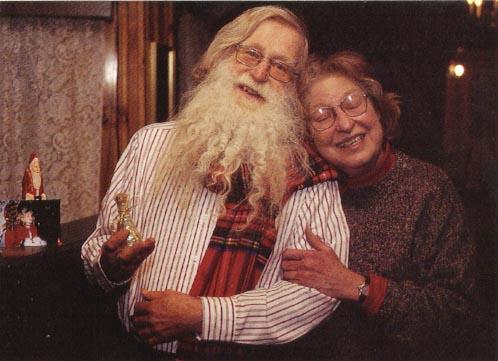
  16. Bill McReynolds, Santa, identified as possible suspect [deceased]
  17. Janet McReynolds, Santa’s wife and identified as possible suspect
  18. Rev. Rolland [Rol] Hoverstock, Episcopal minister in Boulder, Ramsey’s pastor
  19. Leslie Durgin, Mayor of Boulder
  20. Jay “Pasta” Elowsky, John Ramsey’s business associate, owner of Pasta Jay’s
  21. Judith Phillips, family photographer and long-time friend of Patsy [sold portraits of JonBenét after her death to the media without Patsy’s consent]

 Neighbors

  1.  Joe Barnhill, took care of JonBenét’s dogs
  2. Betty Barnhill, wife of Joe [deceased]
  3. Glenn Meyer, boarded with the Barnhills
  4. Luther and Melody Stanton, neighbors and ear witnesses
  5. Diane Brumfitt, neighbor and school counselor
  6. Stephen Miles, neighbor who lived 6 blocks away and identified as possible suspect by John Ramsey
  7. Scott Gibbons, the Ramseys’ neighbor to the north who saw flickering lights in their house during the night on December 25th.

Ramsey Case Prosecution

  1. Alex Hunter, Boulder District Attorney
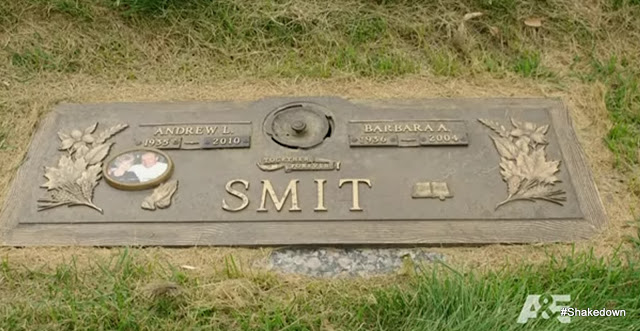
  2. Andrew “Lou” Smit, Retired detective [deceased 2010]
  3. Pete Hofstrom, Assistant District Attorney and alleged Ramsey associate
  4. Michael Kane, Deputy Boulder District Attorney
  5. Bill Wise, First Assistant District Attorney
  6. James Kolar, Investigator for Boulder District Attorney’s office [2005-2006], wrote a book about the case and appeared in CBS documentary

 Boulder Law Enforcement

  1. Rick French, Boulder Police Officer and the first policeman to arrive at the scene at approximately 06:00
  2. Karl Veitch, Boulder Police Officer and the first policeman to arrive at the scene with French at approximately 06:00
  3. Paul Reichenbach, patrol sergeant who searched Burke’s room [arrived at 06:45**]
  4. Barry Weiss, police photographer [arrived at 06:45]
  5. Sue Barcklow, police officer [arrived at 06:45]
  6. John Eller, commander of the Boulder police detective division
  7. Tom Trujillo, Detective sergeant
  8. Steve Thomas, Former Boulder Police Department Detective and author
  9. Linda Arndt, Former Detective and one of first officers at the scene
  10. Fred Patterson, arrived at the scene at the same time as Arndt
  11. Mark Beckner, Boulder Police Chief
  12. Tom Koby, Retired Boulder Police Chief
  13. Tom Wickman, Boulder Police Detective
  14. Bob Whitson, a retired detective sergeant at the Boulder Police [author]
  15. Jane Harmer, Boulder Police Detective
  16. Melissa Hickman, Detective dropped from Ramsey case in April 1997
  17. Thomas Haney, Boulder Police Detective, conducted June 1998 interrogation of Patsy Ramsey
  18. Trip DeMuth, former Boulder prosecutor, conducted June 1998 interrogation of Patsy Ramsey. Left his career at Boulder D.A. in September 2000 to work for Mike Bynum

Ramsey Lawyers & Representatives

  1. Mike Bynum***, Ramsey defense “architect”, Boulder County deputy district attorney in the mid-1970s
  2. John Stavely, an associate in the law firm of Michael Bynum
  3. Patrick J. Burke, Denver-based attorney
  4. Hugh Patrick Furman, University of Colorado law professor
  5. James K. Jenkins, lawyer hired by John Ramsey for his ex-wife Lucinda Pasch
  6. Harold Haddon
  7. Grady Bryan Morgan
  8. John P. Craver, representing John Ramsey in Stephen Miles vs John Ramsey, National Enquirer – Civil Action
  9. William R. Gray, representing John Ramsey in Stephen Miles vs John Ramsey, National Enquirer – Civil Action
  10. Patrick S. Korten, a Washington media consultant, once the top spokesman for the United States Department of Justice, fired in March 1997
  11. Rachelle Zimmer, Ramsey spokeswoman following Korten’s discharge in 1997
  12. Lin Wood , threatened to sue CBS on 21 September for their allegations against Burke Ramsey in The Case Of: JonBenét Ramsey

 Lockheed – possible persons of interest

  1.  Jeff Merrick, Former Ramsey friend and employee at Access Graphics.  The first individual identified as possible suspect by John Ramsey.  John also raised suspicions about Jeff’s wife, Kathy.
  2. Mike Glynn, Ramsey friend, former employee at Access Graphics and named a suspect by John.  Had vacationed with the Ramseys and spent time at their home.
  3. Jim Marino, Ramsey friend, former employee at Access Graphics and also named a suspect by John. Had socialized frequently with John in the 70s and 80s.
  4. Tom Carson, Chief Financial Officer at Access Graphics, involved in Nedra’s dismissal from the company.  Questioned by police after Don Paugh raised suspicions.

Grand Jury

  1. James Plese, Foreman, Age 60.  Licensed Pyrotechnician, employee of the Public Service Co. of Colorado.  Father of two daughters, one was studying to be an attorney.
  2. Loretta P. Resnikoff, Assistant Jury Forewoman, Age 40.  An Accountant with two children.  The daughter of a Navy man.
  3. Elizabeth M. Annecharico, Age 56.  Retired.  A frequent listener of public radio and viewer of news-magazine programs.
  4. Barbara A. McGrath-Arnold, Age 57.  A realtor.
  5. Michelle C. Czopek, Age 40.  A nutritionist with two children. She listened to NPR and was a fan of mysteries.
  6. Frances E. Diekman, Age 60.  Mother of three and grandmother of three. She was a previous employee of the county’s probation office.
  7. Josephine M. Hampton, Age 63.  Also a mother of three, with three grandchildren.   She was quoted telling Pete Hofstrom “her career in management had taught her how to keep a secret.”
  8. Martin W. Kordas Jr., Age 65.  A native of Connecticut, living in Lafayette, CO, since 1990.  He was a war veteran who served in the Navy.
  9. Susan F. LeFever, Age 45.  A California native who moved to Boulder in 1990.  She worked for a nonprofit organization and had prior experience as a juror.
  10. Martin K. Pierce, Age 38.  A former utility company service technician.  He was quoted saying it would “…stick in his mind” if he put someone on trial who didn’t deserve to be there.
  11. Tracey L. Vallad, Age 39.  A part time night student and single mom to two teenagers.
  12. Jonathan N. Webb, Age 32.  A previous resident of Indianapolis, Webb moved to Colorado in 1995.  He has a graduate degree from Georgia Tech, and was attending the University of Colorado for chemical engineering.

Alternate Grand Jurors

  1. Janice McCallister, Age 52. Dismissed February 24, 1999.
  2. Polly Palmer, Age 52.  Dismissed February 24, 1999.
  3. Marcia Richardson, Age 50.  Dismissed February 24, 1999.
  4. Teresa Vanfossen, Age 40.  Dismissed February 24, 1999.
  5. Morton Wegman-French, Consultant to high-tech firms. Dismissed February 24, 1999.

Miscellaneous

  1. Warren Schmelzer, engineer who accused John Ramsey’s friend Jay Elowsky of attacking him in a parking lot
  2. Ira Haimann, engineer who was with Schmelzer when Elowsky threatened them with a baseball bat
  3. Tom Hand, architect in charge of remodeling Ramsey residenceDavid S. Sanderton, a Boulder-based criminal defense and civil rights attorney, Republican candidate for Boulder County District Attorney
  4. Francesco Beuf, JonBenét’s pediatrician
  5. Ellis Armistad, Team Ramsey investigator
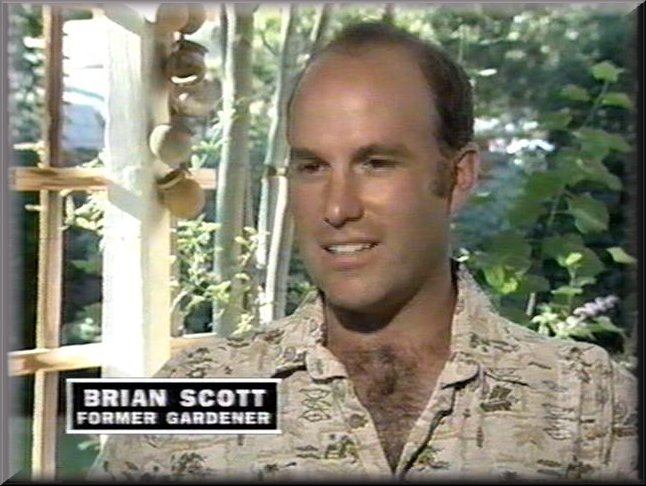
  6. Brian Scott, gardener
  7. Jay Pettipeace, House painter
  8. Diane Hallis, former employee at Access Graphics [witnessed John Ramsey’s behavior in the office after JonBenét’s death]
  9. Mervin Pugh, wife of Linda Hoffman Pugh, Ramsey handyman, alcoholic, and identified as possible suspect
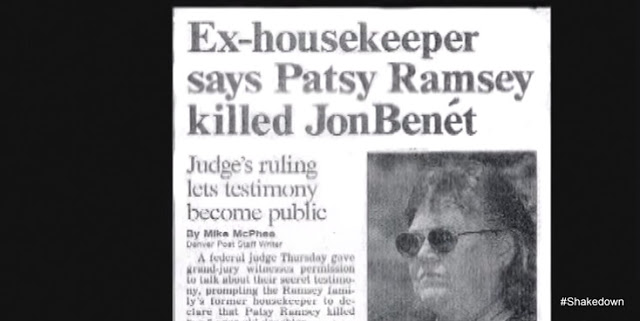
  10. Linda Hoffman Pugh, Ramsey housekeeper, Mervin’s wife, and identified by Patsy as possible suspect
  11. Linda Wilcox, Ramsey housekeeper
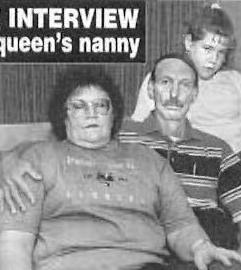
  12. Shirley Brady, Ramsey nanny
  13. Susan Savage, Ramsey nanny
  14. Kristine Griffin, JonBenét’s babysitter
  15. Pamela Griffin, JonBenét’s costume designer
  16. Randy Simons, JonBenét’s photographer
  17. Paula Woodward, Emmy-award winning author featured in A&E documentary
  18. Jim Clemente, investigator in CBS documentary
  19. Laura Richards, investigator in CBS documentary
  20. Beth Karas, former New York prosecutor, appeared in Investigation Discovery documentary
  21. Diane Dimond, television journalist and reporter, appeared in Investigation Discovery documentary, covered JonBenét Ramsey case from start to finish
  22. John Mark Karr, confessed to the crime in August 2006 [False confession]
  23. Charlie Brennan, Daily Camera reporter, filed a lawsuit on behalf of the Reporters Committee for Freedom of the Press for the release of Grand Jury Indictments, and won
  24. Carol McKinley, journalist sued with Fox News by the Ramseys
  25. Judge Robert Lowenbach, authorized the partial release of Grand Jury indictment documents on October 23, 2013
  26. Joe Kenda, former Colorado Springs Police Department homicide detective. Featured on the television show, Homicide Hunter.

*A computer services company and a subsidiary of Lockheed Martin

**Some accounts have Reichenbach arriving at the Ramsey residence at 06:10 on December 26th, 1996.

***Besides being a lawyer and friend of John Ramsey, Bynum together with a group of investors purchased the Boulder home where JonBenét was killed.

20 Questions: Think you know the Casey Anthony Case? Test your knowledge with this Pop Quiz

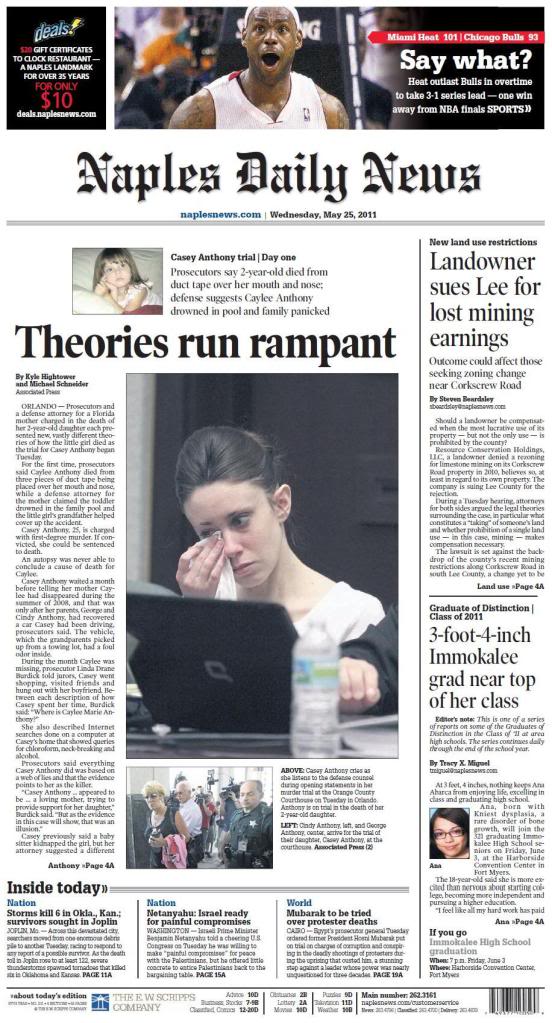
It’s easy to be dismissive about the Casey Anthony case.  It’s a slamdunk, right?  Fact is, Casey was ultimately acquitted on the charge of first-degree premeditated murder of her daughter Caylee.

76617f540131fe28c3f9206b18e632bb--casey-anthony-the-desk

The prosecution weren’t able to prove how Caylee died, there was uncertainty about when she died, and very little clarity on when the two-year-old’s body was disposed of, or by who. There were no witnesses.

Not since Slaughter, a mammoth investigation involving 8 separate profiles of mass shooters, have I encountered a case with such a complex timeline, crime scene and cast of characters. What makes this case so difficult is the lengths of time involved – the 31 days it took to report the crime, and a much longer period to recover Caylee’s remains.

Despite the confusing murk of time, a true crime aficionado should have a handle on the basics. We should know what we know, right? Well, do we? Do you?

Below is a list I’ve compiled while researching Treachery, a narrative that navigates the first phase of the Casey Anthony case. It focuses entirely on the 31 days between Casey’s disappearance and Cindy’s 911 call. Just focus on 31 days – sounds simple, right?

When there are 3 or more different versions to each day, the case explodes into an extremely intricate, layered mess. Finding the thread of what actually happened on a daily basis during those 31 days is possible, with persistence, especially by relying on Casey’s cell phone data [pings, texts] and social media.

The story is certainly there but it’s buried under mountains of lies and deceits. It’s also important to be aware of the lies and what they’re pointing away from in order to fathom the psychological patterns, and this is where the caseload becomes enormous.

The deluge of misinformation is ultimately a distraction from the missing little girl. At the end of it all, what do we really know and understand about this case?

How many of the 20 questions below can you answer off the top of your head?

  1. Exactly how far from the Anthony’s home were Caylee’s remains eventually found?419C7ACD00000578-0-image-a-15_1498064981670
  2. When were Caylee’s remains discovered?
  3. Roughly how much money did Casey steal from her parents?car
  4. Who recovered Casey’s ’98 Pontiac Sunfire from Johnson’s Wreckers, and at what time?

5. At what time did Cindy call 911?

6. What did George and Cindy both do for several hours after the Sunfire was retrieved?

4AA6E04B00000578-0-image-a-1_1522276963482

7. What movie did Casey and her boyfriend Tony plan to watch on the night of June 15th?

8. Where did George do his security shift that night?

9. How did Cindy find out where Casey was staying after not knowing for 31 days?

10. What did Cindy say to Tony when she confronted Casey in his apartment?

11. How much money did Amy have left in her bank account on the night of June 15th?120705022401-casey-anthony-03-horizontal-large-gallery12. Where did cadaver dogs pick up traces of Caylee’s remains [besides the Sunfire]?
13. Did the cadaver dogs pick up cadaver odor at the dump site?

14. How can one make chloroform at home [name two ordinary household products]?caylee_anthony-5743-NaplesDaily052511

15. Was the browser history of the Anthony’s computer deleted?

16. What did Casey say had happened to Caylee on June 15th?

17. What did Cindy say had happened to Caylee?

18. What is “Zanny-the-Nanny” code for?

19. If Casey did murder her daughter, what was her motive?

20. How did Caylee die?

7_4_11_no-upc

Britain’s youngest double murderers provide psychological code for Henri van Breda’s motive, and vice versa [ANALYSIS]

Earlier this month, Judge Desai expressed reluctance during Henri van Breda’s sentencing hearing because of Henri’s youth. He was barely 20 years old at the time of the triple axe murders. He turned 20 in November. The murders happened the following January. He was almost a teenager when it happened. He’s a 23-year-old now. What are we to make of this argument?

Does age matter when it comes to mass murder?

We get some clarity on this issue from the brutal double murders by two 14-year-olds from Spalding, Lincolnshire, in Britain. Their horrific crime in April 2016 involved the murder of Kim’s mother and 13-year-old sister by Lucas, a boy to whom she’d expressed feelings of pique about her mother.

Without knowing much about the crime, to hear Kim’s confession, one could swear Lucas had “just” stabbed his mother and sister once each, and then smothered them to death [as if that wasn’t bad enough]. In other words, it was a fairly painless, innocent crime, and they didn’t inflict any more pain than necessary. That’s the impression conveyed through what is said and in the manner of how it is said. Zero emotion because there’s apparently nothing to be emotional about.

Speaking in a flat tone, Kim told the cops matter of factly that she was “okay with it” [it being the fact that her boyfriend had killed her mother and younger sibling].

4221396001_5465669710001_5465651736001-vs

You have to hear Kim speaking to get the lack of emotion in her voice. Click on the YouTube video below, it opens at the moment Kim confesses to cops.


That volunteering of information is an ominous sign. “It wasn’t like it was torture, or anything…”  In other words, it was okay. Kim was okay with it. She didn’t do it, and Lucas didn’t do any harm. They did what they had to do. They killed Kim’s mother and sister and that’s it. No big deal.

Murder-weapon

Lucas gives a similar flat unemotional account:

In the audio, Lucas confessed in a calm, undramatic voice and said: “I went into her mum’s room and stabbed her in the neck while she was asleep on her side and smothered her face with a pillow. And after I knew she had gone, I went into Katie’s room – which is the same room as Kim’s – and I thought I stabbed her, but… I thought I stabbed her, but I’m not a hundred per cent sure – it was, like, her on a mattress and then I smothered her face with a pillow too.”

He admits killing Elizabeth then admits he killed Katie because he thought she would call the police. Asked to confirm if that was the only reason, Lucas casually replied: “Pretty much.”

The audio of Lucas’ account, in a similar soft, matter-of-fact flat tone, can be heard at this link, scroll to the video at the bottom.

nintchdbpict0002812207611

So these are confessions. Is it the truth though?

I often say in true crime that not all liars are murderers, but all murderers are liars. No matter what Lucas and Kim told the police, there is such a thing as forensic and autopsy evidence. That tells a different story about what happened. There was blood on the walls, on the ceilings, everywhere. The mother and child weren’t quietly or carefully executed, it was a planned [premeditated] murder which both teenagers plotted together over several days, and what’s more, the murders were extremely gratuitous.

I was okay with it.

The murderers enjoyed themselves while committing their crimes. In other words, they’re sadists.

Fullscreen capture 20180624 171930

I would argue that Henri van Breda is sadistic as well.

Fullscreen capture 20180624 172459

The Mirror provides the following description of the crime scene:

They meticulously plotted the stabbings and agreed Markham should knock three times on a rear window, before climbing into the property through a bathroom window, opened by Edwards. Markham later went to the house but Edwards had fallen asleep so he was unable to get into the property, the court was told.

The next night, Edwards fell asleep again. But on April 13, Edwards heard three knocks on the window of the bedroom she shared with Katie at around midnight. She let Markham into the bathroom and he passed her a bag containing spare clothing and four knives, the court heard. The original murderous plan was said to have been for Markham to kill Elizabeth and for Edwards to stab Katie, it was said.

However, Markham offered to kill both victims after his girlfriend told him she did not want to kill her sister. The Crown Court heard how the teenage boy used a kitchen knife to stab the mum and daughter after attacking them as they slept.

Elizabeth was stabbed eight times – including five times in the hands as she desperately tried to defend herself. One of the two blows to her neck almost completely cut through her windpipe.

Fullscreen capture 20180624 080932It’s important to look at these kids to intuit the sort of behaviour Henri van Breda was doing not only before the crimes but after. It’s precisely because these criminals are so young that their motives are so difficult for adults to figure out. One has to think like a young person in order to fathom their reality, and the operative dynamic.

Teen killer Kim Edwards was the “driver” behind the meticulous murders of her own mum and little sister who were butchered in their beds, it can now be revealed. The schoolgirl, who claimed her mum “favoured” her sister, mapped out a detailed plan to stab the pair through their voice boxes to stifle their screams. She roped in Markham to carry out the “brutal executions” and later shared a bath with him so they could wash the blood off themselves, a court heard.

The evil couple, likened to Bonnie and Clyde during a trial, also watched four Twilight vampire films and had sex as they “revelled” after the double killing last April.

But even the reason – that the mother favoured the younger sibling – isn’t quite why the mother had to be gotten rid of. There are many families like that, where there’s sibling rivalry and teenagers fuming over impressions of favouritism. Anyone who thinks this crime occurred – in all its brutality – just because of run-of-the-mill rivalries doesn’t understand true crime psychology. So what was it? What really triggered the crime:

On April 9, Edwards barricaded herself into Markham’s room with him after her mum told her she would turn out like her absent dad – described in court as a drug addict. They only left the room at 2pm the next day, when they climbed out of a window. On April 11, the pair then had a conversation in the back garden of the Edwards’ family home, during which they agreed to kill Elizabeth and Katie.

On April 13th, Kim’s mother Elizabeth and Katie were murdered.

What happened after the murder? The couple got to do what they wanted to be able to do, and had been limited in doing. Screwing, watching movies for as long as they liked, and perhaps shooting themselves up with drugs.

Fullscreen capture 20180624 174202

getimage (3)

According to the Independent:

Over the course of the next 36 hours the besotted teenagers, then both 14, had sex, shared a bath and watched Twilight vampire films before police arrived.

The exact same scenario of inappropriate emotion haunts the Van Breda case. There’s also the contention that because of the mixed blood traces in the shower, Henri washed the waterfall of his family’s blood off his body, then calmly smoked cigarettes without anyone to tell him not to.

unnamed

Consider Kim Edwards’ words:

I was okay with it…it gave me peace of mind.

This was Kim’s feeling after the crime. Basically I’m glad I did it, I don’t have to be so anxious now…

Fullscreen capture 20180624 075155.jpg

Just as these young teenagers didn’t show any emotion whatsoever, Henri was flat and emotionless when he called emergency services, he was flat and emotionless throughout the trial, and he was flat and emotionless when he was found guilty on all charges and sentences to life. It’s the same zombie-affect throughout.


In the case of the Twilight Killers, the motive is really entitlement. I want to be with my boyfriend [both their families were against their relationship, they’d run away together before], I want to be allowed to do what I want to do.

The jealousy over the sibling is a factor, and the parent’s preferential treatment of the other sibling feels unfair, but it’s a smokescreen to the much uglier thing that hangs over the crime.

Of course the hidden thing is the thing that removed the inhibition to commit murder, the thing that makes one laugh and celebrate the slaughter of someone else, as if it’s part of a fun day. That hidden thing is drugs.

The drugs aren’t the reason for the crime, but they set the underlying psychology that is already there [whether in one individual, or shared by two] into motion.

Lucas and Kim were both sentenced to life imprisonment, which in Britain is 20 years. When they appealed their sentences, arguing their youth as a mitigating factor, the sentences were commuted from 20 years to 17.5 years. The Judge, in pronouncing sentence, nevertheless remarked:

“When committing the murder, he had a sense of calmness and happiness…”

Fullscreen capture 20180624 073001

The #1 Reason Why Susan Rohde DIDN’T Kill Herself

Jason Rohde’s defence has two explicit goals: firstly to make the case that Susan was suicidal, and secondly, to cast reasonable doubt on the prosecution’s theory of events.

If we invert the defence case and pretend Van der Spuy is the prosecutor, and Susan’s ghost is on the stand accused of murdering her self, could Van der Spuy get a conviction based on Jason’s and Dr Peter’s testimony [assuming the latter was admissible]?

In true crime, God and the devil are in the details. But often, especially in fairly simple cases like this one, the court gets sucked into the forest, and once deep within the verges of the treeline, we no longer see the wood for the trees. Once we hover outward and upward, like I drone, higher and higher, what do the woods reveal that ultimately decides this case on way or the other?

It’s quite simple. The vast majority of people who commit suicide suffer from depression. The number is about 2/3rds. That ought to be enough, but allow me to sharpen the details of the depression forest, and how it ties into a genuine suicide scenario.

  1. More than 66% of people who succeed in killing themselves have severe depression at the time of their deaths.
  2. One out of every 16 people [6.25%] diagnosed with depression, go on to kill themselves.
  3. People with major depression are 20 times more likely to kill themselves than the general population. 20 times more likely it’s twice, or three times or fives times more likely. 20 times more likely is a LOT more likely, like saying you’re more likely to die of a car accident near a road than away from one.
  4. Those who have had multiple battles with depression are at a greater risk.
  5. Depression and drug addiction of any kind raise the odds of suicide even further.

In order to make the psychological case for Susan committing suicide, we need proof that she had depression. Not that she was depressed. Depression. Depression is a totally different ball game to a temporary mood swing. A depressed person can feel better when circumstances change, someone in a depression is stuck and can’t fix, ameliorate or escape their malaise, no matter what they do.

The University of California provides the following colloquial definition of depression:

Everyone feels down at times. The breakup of a relationship or a bad grade can lead to low mood. Sometimes sadness comes on for no apparent reason. Is there any difference between these shifting moods and what is called depression? Anyone who has experienced an episode of depression would probably answer yes. Depression, versus ordinary unhappiness, is characterized by longer and deeper feelings of despondency and the presence of certain characteristic symptoms (see below). This distinction is important, because in severe cases, depression can be life threatening, with suicide as a possible outcome. Depressed people may also fail to live up to their potential, doing poorly in school and staying on the social margins. Depression is frequently ignored or untreated; the condition often prevents people from taking steps to help themselves. This is unfortunate, as effective help is available.

I realise the above definition isn’t very scientific, but it’s adequate for our purposes. There is a huge difference between feeling depressed and depression. Someone suffering from depression may clearly feel depressed, going through different coils of darkness and mental misery. Although a depressed person can become someone who suffers from depression, being depressed isn’t the same thing as depression.

suicide-records-1933_500

In 1929, the Great Depression [economic depression mind you] struck America and the world. People didn’t commit suicide immediately, in 1929, following the stock market crash. It took a few years for the economic depression to addle the mind – men lost their jobs, felt crap, fought with their wives, felt crap, lost their homes, and then once the depression set in and became severe hopelessness, that’s when tens of thousands of Americans elected to kill themselves. Suicide fever peaked in America in 1932, 3 years after the crash, at 23 000. The rest of the world also showed a similar rising tide.

the-great-depression-2-19-638

It’s a like comparing a cough or a sniffle to having the flu. It might become the flu, or it might now. When you begin to have symptoms of a cough, that’s different from actually having the influenza and being bedridden, completely taken over by the symptoms. Clearly there is a link between the cough and the flu, and someone with flu may cough.

What we want to know is where along the spectrum was Susan. Depressed, or suffering from depression? Coughing, nose running, feeling tired, or head aching, fever and a full-on debilitating mental flu that overcomes the whole body – mind, energy, motivation etc.

The above quote suggests that depression involves “long and deep feelings of despondency.” Did Susan have long and deep feelings of despondency? Clearly, she did. So clearly she had depression, didn’t she?

I don’t think Susan had depression, though she had good reasons to feel depressed and despondent. There is subtlety in the idea of “long feelings of despondency”. What that means is these feelings persist, they endure for a long period of time and eventually these anxieties begin to swarm and chew away at one’s resilience, gnawing away at one’s spirit, one’s esteem, one’s identity and one’s natural state of bliss.

Depression is difficult to beat precisely when the message of the depression is self-evident. It’s difficult to bullshit depression. Depression has a good reason for being there, and is an urgent message to the Life Force saying “please stop doing this to me, you’re killing me by continuing to go down this path…”

In order to disprove Jason Rohde’s version that Susan was suicidal, we have to know how depression works, we have to understand the psychological mechanism, we have to know ourselves and the circumstances of the case. Once again, we can appreciate all of this from the perspective of the drone hovering over the woods, rather than getting lost in the trees. What we want to know is how severe was Susan’s malaise? Was it very severe, severe, or severe but okay? What is the extent of her woods, the woods of her depression? Does it cover endless hillsides, or is a forest in a particular area? Is it a tall forest, a thick forest or an overgrown copse here and there needing to be tended to?

If Susan’s depression was severe she wouldn’t be able to face a fucking convention. She wouldn’t be able to travel. She would be on social margins, not drifting through them, flirting, dancing and confronting. If Susan’s depression was severe, she may have reached the stage where she’d begun to neglect herself and no longer seek treatment. Or she might become addicted to her medications. None of these things were happening with Susan. Depression makes a person unable to seek help for themselves, and yet we see Susan was talking to her psychologist while she was at the convention!

One strong argument the defence was able to introduce was that Susan sought help after attending a talk on depression and suicide. Does that mean Susan was depressed and suicidal?

Clearly, it means it could. But using the same cough-flu analogy, calling the doctor [a doctor who specialises in treating influenza] when you have a sniffle doesn’t necessarily mean you have the flu, although it could. It’s a great argument to introduce doubt, but it doesn’t make the argument that Susan had depression. There’s no argument that Jason’s affair depressed or, or that it was extremely depression, especially that weekend. The argument is, could a depressing moment cause a distressed woman to suddenly commit suicide. Again, this is like saying, can a cough lead to flu. It can.

The fact is, the suicide narrative doesn’t exist in a vacuum. The other side of the equation is Jason. When we add that aspect to the narrative, still using the flu analogy, then what we have is this: could someone with a cough get the flu, or did she already have the flu when she was in a room filled with people with the flu. The answer to that isn’t that Susan was suicidal, but that the flu that inflected her came from someone in her environment.

From the same University of California source we get these signs of depression:

  • Loss of pleasure in virtually all activities
  • Feelings of fatigue or lack of energy
  • Frequent tearfulness
  • Difficulty with concentration or memory
  • A change in sleep pattern, with either too much or too little sleep; the person may wake up in the night or early morning and not feel rested the next day
  • An increase or decrease in appetite, with a corresponding change in weight
  • Markedly diminished interest in sex
  • Feelings of worthlessness and self-blame or exaggerated feelings of guilt
  • Unrealistic ideas and worries (e.g., believing no one like them or that they have a terminal illness when there is no supporting proof)
  • Hopelessness about the future
  • Thoughts of suicide

Susan in some way or another suffered from all of these signs, but let’s face it, many of us do too. You can feel hopeless thoughts [for example about the future of South Africa, or at the prospect of going to work after a weekend, or when Elton Jantjies comes onto the field] without necessarily feeling depressed whatsoever. Having feelings of fatigue or lack of energy may be completely normal after a long day at work. It may have nothing to do with being depressed. A change in sleep pattern doesn’t make one feel happier, but may have to do with issues besides being depressed.

In other words, those signs of depression are almost worthless except to say in SEVERELY depressed people, many of these symptoms are not only present, but severely and permanently present. One could say some of these symptoms individually could become life threatening, such as weight loss, or sleep deprivation. In one area above all, Susan did have severe problems, and that was with sleep deprivation.

Overall, Susan had many of the symptoms and Jason knew she did. Wasn’t he counting on the evidence to work in his favour, assuming that Susan was depressed enough to reasonably make a case for a suicically depressed person [someone with depression]?

In sum then, this case is about whether we’re able to discern the difference between actual depression and something else that’s a few trees but not quite a wood. Can we tell the difference?

When you examine the #Rohde “depression” thread on Twitter there are a few indicators that Susan either was on the cusp of developing severe [suicidal] depression, or had just begun to develop it. That may work for the accused’s case, but even someone who has just developed depression isn’t necessarily at risk of suicide. It’s like saying just at the moment the flu hits you, do you take sick leave, jump into bed and shut out the world? Typically there is a period of resistance and denial, of fighting back, especially in the initial stages of the more severe malaise.

The fact that Susan was receiving treatment actively, right to the time of her death, clearly shows she wanted to beat the thing. Compare that to someone infected with deadly bird flu – H5N1 – who is so compromised they can’t gurgle to a doctor for help because they’re already in the process of dying.

The difficulty for the Judge is that there is a niggly sense that there just possibly is an argument [not in terms of the evidence, but in terms of the psychology] for Susan being depressed and having depression.

I would argue that that niggly sense isn’t enough. It’s unconvincing. It’s a clear cough, but it’s not becoming the flu, not until that cough is a lot worse. The irony is that incredible as it sounds, there is more evidence Jason was severely depressed than that Susan was.

BBITPV3download (3)unnamedeb846d3eb36641f4b967ebc73e4217e0

We’ve already seen. however, that Judge Salie-Hlophe didn’t fall for these shenanigans, which portends well for her not falling for the suicide narrative.

It must be said, if Jason Rohde did have severe depression in February this year, he made a full recovery within weeks, perhaps even days. There’s no sign of that depression now, if it was ever genuine to begin with, and there was none when he was on the stand in late May [just two months later] either.

Now, real depression doesn’t work that way. It doesn’t turn on like a switch, just as one doesn’t just suddenly get the flu. It doesn’t turn off quickly either, just as flu doesn’t disappear quickly. It’s a process.

The expert psychiatrist who’s entire narrative was thrown out diagnosed Susan with major depression. Again, I’m not sure if Susan could go from being depressed before the weekend to MAJOR DEPRESSION over the course of three days, or one particular evening, at Spier. In Jason’s version, Susan effectively went from depressed to MAJOR DEPRESSION between 03:00 and 07:00/08:00 on July 24th.

In order for depression to wear you down and make you suicidal, it needs time to infest and body and mind. It needs to push out the vital aspects, and spread its spiderwebs of malaise. Susan’s risk of suicide was higher, but so is anyone’s immediate after a break-up.

In the end, the #1 reason Susan didn’t have depression, let alone severe depression, at the time of her death is laughably obvious. If she had depression she would have been using anti-depressants. I had my ears pricked for that one word throughout the testimony. I was gratified when Dr. Peter listed the many medications Susan was on. Anti-anxiety this, sleep-remedy that, this and that but absolutely no anti-depressants.

You’d think someone with depression, and someone receiving treatment from it actively, and especially someone with MAJOR depression would be on the most obvious depression-related medication. Antidepressants. But she wasn’t. Why wasn’t she? Antidepressants don’t make you happier, they make you less sad. In some way they aggravate the original symptoms, such as loss of energy and fatigue. Susan was a fit and healthy woman. She wouldn’t want to mess up either her libido or her fitness by choking her body with toxic mind benders. Antidepressants are in that field of medication, just like flu medications, that can actually alter your mood, actually make you feel sick if you took them when you were healthy to begin with.

In the end, what we want to know is what Susan’s ghost would say on the stand if she could speak. If Van der Spuy asked her if she murdered herself, if she was suicidal, if had depression, the simplest response to dispel all this is one we already know. Susan herself didn’t think she had depression, and neither did her psychologist, otherwise she would have been on anti-depressants. She wasn’t. Susan Rohde didn’t kill herself.

Sue-Decor

The Rebecca Zahau case is a fascinating parallel to the Rohde case, and vice versa. My book on Zahau, the definitive book on this famous American case which also involved the death of a six-year-old boy, is available at this link.

Zahau

Bloodline: The Epic Behind the Epic [Part 2]

Writing the opening to an original epic is hard. Anything that’s original, a unique product that’s uniquely your world is shit hard to bring into the world. It’s an art to get the pieces to fit and work together.

Once the original idea has become concrete and the juices are flowing, getting the first words on the page is the next step.

The trick is to transfer those sparkling eddies in the mind into compelling prose without losing the magic. Getting the beginning right paves the way for everything that follows.

In a way, the first words and paragraph are foundational to a narrative. Everything else is built on them. One wrong word and an entire franchise that could have been, that should have been, goes up in smoke.

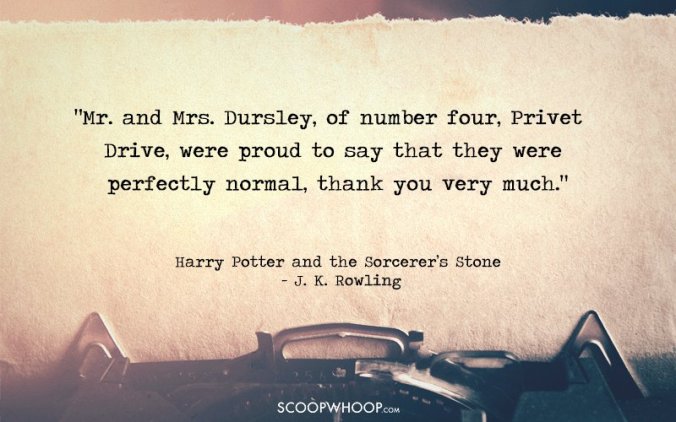
In the unlikely event you do hit all the right notes right off the bat, well then you may go on to craft the next Harry Potter.

355703690

Blockbuster movies are faced with the same perils. How to get the optics just right, to set strong written narrative to motion picture that works.

So how do you get your epic to the perfect start?

This is my story, and it’s not necessarily about how to write the perfect opening as much as its about what goes into it. Like all art, mastery comes with time. You feel your way there after a lot of trial and error…

In 1987, every single day I would arrive at school with a fresh draft of the first chapter [rewritten], and in the first minutes before class, I’d hand it over to my best friend [the smartest kid in the class] for his assessment. And every time he’d say: “It’s good.” “Really good or just good?” “It’s really good.” “Is there anything you think I could improve.” “I’m not sure if you need to be so descriptive about pine-needles…”

I was never satisfied. I wanted it to be a lot better than good, so I’d go back and fine-tune. This went on every day for weeks, then months. When Alan finally said the opening was great, or perfect, I felt I’d pressured him into getting that response. I wanted to blow his socks off, not just write something that was good.

Over a long period I settled on a scenario. For the sake of authenticity, I wanted to anchor the setting in history. I found something like this at the local library [there was no internet or Wikipedia in those days]:

Saint Marcellus’ flood or Grote Mandrenke (Low Saxon/ɣroːtə mandrɛŋkə/; “Great Drowning of Men”)[1] was a massive southwesterly Atlantic gale (also known as a European windstorm) which swept across the British Isles, the Netherlands, northern Germany, and Denmark (including Schleswig/Southern Jutland) around 16 January 1362, causing at minimum 25,000 deaths.[1] The storm tide is also called the “Second St. Marcellus flood” because it peaked 17 January, the feast day of St. Marcellus. A previous “First St. Marcellus flood” drowned 36,000 people along the coasts of West Friesland and Groningen on 16 January 1219.

An immense storm tide of the North Sea swept far inland from England and the Netherlands to Denmark and the German coast, breaking up islands, making parts of the mainland into islands, and wiping out entire towns and districts, such as Rungholt, said to have been located on the island of Strand in North FrisiaRavenser Odd in East Yorkshire and the harbour of Dunwich.[2]

This storm tide, along with others of like size in the 13th century and 14th century, played a part in the formation of the Zuiderzee,[1] and was characteristic of the unsettled and changeable weather in northern Europe at the beginning of the Little Ice Age.

I was fascinated at the prospect of a modern civilisation experiencing the most extreme weather event possible on this planet: an Ice Age. Epic! What would that be like? What would it feel like? How would or wouldn’t technology cope? Would electricity still work when everything iced over? What would generate electricity? Would there even be electricity, or the internet, or TV? Imagine if there wasn’t.

I decided to set my first opening in the 8th century mainly because that was the beginning of Viking seafaring. The first written account of a Viking raid carried out on the abbey of Lindisfarne in northern England took place in 793.

Alan loved it the schema, but it still wasn’t perfect. Every word had to be placed right, it had to be lyrical and powerful. The sentences had to lock into one another so they formed a train that got up to speed quickly and evocatively. It also had to move you in a visceral sense. There were also other huge unknowns to deal with – characters, dialogue, knowing how much or how little description to use to paint each scene.

Once I had the symbolism set out, and the main body of what I wanted to say in place, I had to fiddle with small things; the narrative hairstyle, the footwear and clothing in the 8th century,  ship and house design, basically the colour of the narrative shoelaces and how to tie them.

Eventually the changes were so small, Alan started asking: “This is exactly the same thing you showed me yesterday.” And I’d say: “It’s not, I changed a comma in the second sentence, and replaced “fizzled” with “dissolved.” “Also there were no sandwiches or collared shirts in the 8th century.”

I still remember now the opening I agonised over. I wanted the story to start off with a bang or a deafening screech, the loudest and biggest opening I could think of.

It went something like this:

A thousand Boeing 747’s touch down, out of time, onto a field in late 8th century Germany. The roar turns pine-needles to mush, the throat of the throbbing vortex of wind burns bright red as it vacuums all but one of our furry-clad great grandfathers from the northern seaside escarpment.

The entire village of Sleswig [Sleswick in the common tongue] explodes into splinters and ash. Housecats fly through the ether trailing racing-car miaws, pots spin into clattering frisbees, fiery hearths become flakes of inverted snow. The cremated community funnels through the screaming, smoking chimney; the maw gulps mountainsides, carves coastlines, and scrapes riverbeds into new shapes and configurations.

Brooks explode into shrieks of mist, ploughed Earth raked into seas of stinging sandblast. Inside this planet-altering holocaust, only the lanky figure of Heyerdahl, who’s out on the farm that day  finds his feet in the chaos.

Out of all the Sleswiggians, it’s only his toes that find just enough purchase in the dirt to propel him along Lady Luck’s razor edge. Every slip on this hellish Thursday afternoon means his head dodges a javelin branch just in time, every stumble ducks through yet another toppling avalanche of hills or trees. 

Through the cannonball gale, over liquidised leaves, under flying fenceposts, he scurries towards his children. He’s somewhere inside the stinging murk, a blurry figure, part racing legs, part windblown.

Then, somewhere in the maelstrom Heyerdahl’s grey-green eyes close in unconsciousness. A tendril of the storm lifts him into cartwheeling algorithms of survival. 

Somehow he’s blown onto a boat, the boat pushed far from shore, sailing a course set by the fates.  And so, the next morning, or whenever it was when day reappeared, Heyerdahl comes to flickering consciousness. His pale cheeks are sandpapered and scratched, his forehead bruised and burned, his wrists chafed and raw, his bare feet filled with splinters when he finds himself at sea. His long hair is green and brown with plant sap and soil.

His boat is blown clear across the Atlantic, and so when he arrives unheralded on the American coast, his skiff smashed to splinters on the booming reef, he becomes the first European to do so. He is the last of kin on the edge of the world. He steps off the strand, determined to find his way home following the coast.

He heads north, thinking he’s still in the Old World on the German coast. If Heyerdahl fails to find his way home, to a home that no longer exists, or fails to survive this perilous leg back to the Old World, you and I will never exist. And so, across time and space, we must sit on his shoulder and cheer him on, so that whoever he may be, may be, and so that one day, so will we…

 You can see how ambitious it all was, right? And there was plenty of room for improvement, to add something not thought of, to subtract something that was overstated or repeated, not so? Of course, this version’s not exactly how it was written because I lost the original manuscript, twice.

In the next part I’ll deal with how that happened, and the process of resurrecting the DNA of the story after a long period of hibernation and mourning.

I should probably add that this opening that I spent months perfecting, agonising over, doing literally hundreds of rewrites and subjecting poor Alan to each morning at school, never made it into the actual narrative.

About thirty years later when I rewrote the epic, I found myself back at the ranch in terms of wanting the best possible initiating chapter. The set-up was all important to tell the reader: this is something new and bigger and totally EPIC. But how to execute not just a Big Wow Beginning, but The Biggest Wow Beginning That’s Possible To Conceive.

George Lucas was faced with the same dilemma in Star Wars, and solved cleverly [or clumsily] with the famous yellow scrawl and John Williams’ amazing score.

crawl

I wanted the same majestic opening, the sound of trumpets, the text burning the page like yellow scrawl rising over a darkened cinema audience.

In Bloodline Murmurs of Earth although the original start written three score and two years earlier isn’t there, the echoes of those early scribbles are. The scenario I ended up going with is completely different, but the idea of racing legs, flapping furs, pine trees and loud noises is still there. Does the opening work?

Read Bloodline Murmurs of Earth at this link.

Fullscreen capture 20170629 112829 PM.bmp-2


Rohde Trial: The Art of Strategic Cross-Examination

Today on the Winter Solstice, the longest day of the year, Dr Reggie Perumal’s interminable time on the stand came to an end. I personally sat in on the state pathologist’s testimony on October 12, an experience that shook me. I sat in again on some of Perumal’s testimony-in-chief, such as it was, in the first week of June 2018.

I must admit, I found the epilogue of Perumal’s testimony-in-chief mindnumbingly dull, and actually left court a few minutes before the adjournment to make a few important calls.

The prosecutor also took a timeout in his cross-examination of Perumal, allowing the defence to field another expert witness, Dr. Peter, whose evidence was subsequently thrown out by the defence. This caused the defence to lose a lot of momentum, and allowed the prosecutor to catch up.  It meant the prosecutor could focus all his time analyzing one Mount Everest of information instead of having to wage an assault on two simultaneously.

It’s easy to miss, but Louis van Niekerk is working on his own, effectively, he has no legally qualified sidekick to delegate his work to as Galloway did, whereas Van der Spuy has at least one other lawyer – Tony Mostert – to assist him.

Fullscreen capture 20180621 021733

Van Niekerk, I’m assuming, also has other cases to attend to. If Van Niekerk doesn’t have other legal counsel to rely on, it doesn’t mean he’s not getting any assistance. My fellow  true-crime author Thomas Mollett has been in court actively providing valuable if anonymous support and insight, listening in on the evidence, taking notes and studying the autopsy evidence. Thomas hasn’t attended every day of the trial [neither have I], but I’m pretty sure he’s been at Van Nieker’s right hand on all of the day’s the pathology evidence was fielded [by both pathologists].

Fullscreen capture 20180621 021742

Fullscreen capture 20180621 020930Fullscreen capture 20180621 020927Fullscreen capture 20180621 020932

The exit of Dr. Peter was a mercy; a stroke of good luck to the prosecution, but that still left him with a mountain to climb. Where to start? Where to stop?

In retrospect, we can see there was a pattern, a strategy to Van Niekerk’s cross-examination.  He would examine a tranche of evidence, and then dip into Perumal’s CV, causing him to be a little more circumspect in his criticisms of Khan. Then he’d deal with another aspect of autopsy evidence, not speculatively but by having photos showing what was being put to him [and to the court], and then Perumal would have to make a reasonable comment about it. And then Van Niekerk would hit him with something else from his portfolio of cases.

To be honest, I didn’t like the stop-start quality of the interrogation, it felt messy at times, but court isn’t about entertainment value; if you’re a prosecutor, it’s about getting an witness to concede on as many issues as you can. And Perumal did. Getting a hired gun to concede on anything ought to be like pulling teeth. If you search the #Rohde “Perumal concedes” and #Rohde “Perumal agrees” hashtag-search-term combination, there’s precious little there. And yet Perumal did concede.

I was gobsmacked at just how often and on the crucial evidence Perumal conceded. Van Niekerk vs Perumal was at times like watching someone take candy from a baby. To recap, Perumal conceded that:

  1. He couldn’t be certain about Susan’s cause of death. 
  2. He admitted the noose was loose, contradicting his client.
  3. He admitted the possibility that Susan’s body was dragged into the bathroom.

How did he do it?

Van Niekerk’s beside manner, if that’s the right expression, meant he was firm, but didn’t antagonise the witness unduly. Cross-examination is a dance. Neither party likes what the other party is doing, they have different agendas, so both try to make little concessions to make one another’s life easier. The expert can be a little more yielding [“not dogmatic”] on his opinions, and the prosecutor can go easier on him where he contradicts himself, or on issues of his credibility. Like this one:

And this one:

Van Niekerk left these gut punches for the very end, just as he only accused Rohde of lying right at the end of his testimony.

Van Niekerk could have drilled Perumal very hard on this, and yet he simply brought it up, let Perumal comment, then moved on. What was he doing? I think it was a shot over the bow, firstly to soften the pathologist, and also to inform [or warn] the court that things spoken weren’t always necessarily quite what they seemed.

The other thing to bear in mind, and in this area Gerrie Nel made an error, is the personality of the Judge. A certain style of confronting a witness may aggravate a Judge, and in the Rohde case, the Judge does seem to prefer a gentler approach. The same came be said for Judge Desai. Although he’s affable, he can be quite strict, and prefers a gentle tone from his court. It’s important for prosecutors [and defence advocates] to abide by the tone and timbre of the court, if they wish to be given a little extra legroom. We can see Van der Spuy has gradually been loosing this contest, while Van Niekerk has advanced into her good graces.

Still, whether Van Niekerk punched the concession out of him, or took it like candy from a baby, Perumal conceding that the noose was loose is a huge breakthrough for the state. It directly contradicts Rohde’s version on a crucial aspect of the case.

I don’t want to blow up the cross-examination too much. If anything, Perumal left a lot of residual doubt, and that’s actually his job. Not to provide certainty, but to provide expert testimony about how uncertain everything is. So his concession that Susan’s time of death is uncertain is not really something to crow about, is it? Admitting that there are many possibilities doesn’t necessary amount to a concession, but to a broad reinforcement of the uncertainty surrounding aspects of evidence.

To Perumal’s credit, he wasn’t hired to testify in the Pistorius case because it was thought his post mortem findings supported the state’s case.  There may have been another reason as well. Perumal may have felt walking a tightrope as a hired gun [if that’s what he is] was too risky under the lazer-scrutiny of the media in such a high-profile case. Perhaps that’s why he dodged the Van Breda trial as well. In the Rohde case, he was committed, and the media attention [via the livefeed] came along just before his testimony. Then it was too late to duck, assuming he wanted to.

In my view, it’s important that courtroom players see value in the court narrative. That’s what it is. It’s important to start and end well, and Van Niekerk did in his cross-examination.

I know what you’re thinking. As a professional narrator I would say that. But think about it like this: if you’re scoring a lot of little hits but boring your audience to tears, a lot of those hits miss the mark simply because your audience has tuned out. That’s what happened in the Pistorius trial. As Gerrie Nel pontificated endlessly about the duvet being on or under a pair of jeans, and electric cords here or there, pundits wondered then whether the Judge was a Sleeping Giant, or sleeping through some of the mind-numbing minutiae. We know how that turned out.

In the O.J. Simpson case, the DNA evidence went over the jury’s heads. The mountain of evidence was all valid, and devastating to the defence, but the jury weren’t scientists, and ultimately for them it was much ado about nothing.

In the end, the prosecutor and the defence lawyer are playing to an audience of just one: the Judge.Fullscreen capture 20180611 170252

Arguably the defence lawyer is also playing to his client, satisfying the man paying the bills that his case is being fielded in a compelling fashion [even when it seems dubious and indefensible right off the bat to everyone else].

Fullscreen capture 20180530 103041

For a long time during the Oscar Pistorius trial, Barry Roux seemed to be showing up to build a house of cards. It seemed to be more about the appearance of a defence than an actual defence. That’s what it felt like for me, but it wasn’t like that for everyone. Many people were drawn in by his defence, many people were ultimately fooled, including the Judge. Ultimately, Pistorius’s defence – the way he explained it to the TV cameras, and how it devolved in court – was just that, the appearance of a defence. The imaginary burglar was an apparition Oscar expected us to accept because he was Oscar. Appearances cannot survive the test of scrutiny, and credibility is true crime’s core value.

Test an appearance for long enough, cross-examine in sufficient detail, and a charade crumbles to dust. A liar’s greatest trick is counting on the deceived’s lack of attention. A murderer relies on lack of attention even more, but also uses tricks like staging, covering up, play acting and deception to make his schema stick. When everyone is watching, the game is revealed. I think that’s starting to happen now in this trial.

Fullscreen capture 20180621 021942-001

Rohde Trial: Mirror, Mirror on the Wall, Who is Character Assassinating Who? [WATCH]

Judge Gayaat Salie-Hlophe found time on Wednesday, June 20th to sentence another scumbag who strangled his pregnant girlfriend, 28-year-old Nicola Pienaar, and stole her mother’s car.

Like Rohde, Oosthuizen inverted the abuse narrative, saying that it was his girlfriend who assaulted him, not the other way round:

He said Pienaar was possessive and had, on several occasions, been aggressive towards him and assaulted him. He was embarrassed to report the assaults because as a man it was unusual to report being assaulted by a woman, he told the court. He said he was never violent towards Pienaar but “she was violent to me”. The couple regularly used cocaine, tik, Mandrax and dagga. Oosthuizen further told the court the relationship was dysfunctional, with Pienaar often showing up at his home uninvited and showing signs of being a stalker.

On the night of the incident, the couple had been using drugs and Pienaar attacked Oosthuizen with a knife. “My life was in danger,” he said.

Jacobus Oosthuizen entered the court dressed like a gangster, wearing a back-to-front baseball cap which he removed when he entered the dock and Hlophe read his sentence.

Like Henri van Breda, Oosthuizen took the 22 prison sentence “like a man”, showing no emotion, and also not electing to say anything to the family who were also in the court. As soon as a judge announces a verdict the legal status of a person changes. If they’re found guilty, their characters are officially “assassinated” to use a term that came up today. From then on the media may refer to an “alleged” murderer, for example, as a convicted murderer.

True crime is all about character assassination. Someone is either innocent or guilty. In order for a guilty person to have a chance of escaping punishment, someone else must be the bad guy. Sometimes it’s the victim, often it’s the police.

The lack of emotion in such an emotional scenario – especially sentencing –  says a lot about the transactional inversion that characterise crime and justice in courtrooms around the world. The loss of a life must be paid for in some way. We tend to miss the inversion in the psychology of the criminal during this very public accounting process. During the commission of crimes, criminals are extremely agitated about something, and often, so are their victims. In court they are the polar opposites of their true selves, and they tend to give reasonable explanations for the events surrounding dead people – it was a day just like any other day, nothing unusual. That’s usually not the case.

Oosthuizen arriving looking like a gangster [but not sounding like one] was surprising, especially after weeks and months of seeing Van Bred and Rohde dressed in suits to express their supposed decency.

It’s also important to remember that while defence advocates can be employed full-time in the service of their clients, especially top advocates, judges and prosecutors have a roster of cases to go through. The concentrate on one case during a day, then have to cycle through other cases. Many journalists have the same issue as they jump continuously from one story to the next.

The advantage in writing about true crime full-time is that you get to marinade in a case, and that’s when the small, spicy details emerge. If it takes time and effort to hide these details, to think up clever little stories to bury the truth, then it takes time and effort to reveal them. As soon as one catches onto a thread, the fabric of deception quickly unravels, as do the patterns embedded in the deception. And the more time you spend in true crime, and better one becomes at picking up threads.

It’s often the job of defence experts to spin educated sounding yarns that play into the defence case. The expert-moniker, in this case of the expert pathologist, gives the defence case credibility. But is it credible?

Even before Perumal took the stand there were whispers inside and outside the Western Cape High Court that Perumal was a hired gun. I heard the same thing said about him during the Van Breda trial.

During Louis van Niekerk’s cross-examination of Perumal, credibility issues had to come up, and it was only a matter of time before Van der Spuy blew up about it. The run up to this moment was reported on by Times Live:

Van Niekerk asked Perumal if Judge Siraj Desai‚ in the Van Breda trial‚ accepted his six-page comment for the defence. The expert said it was accepted‚ according his understanding.


But Van Niekerk referred him to Desai’s 300-page judgment and said: “I want to differ with that.” Van Niekerk undertook to provide Perumal with the voluminous judgment before cross-examining him after an objection from Rohde’s counsel‚ Graham van der Spuy.

Van der Spuy said it would be unfair to question Perumal on a document he had not yet read. “I haven’t had sight of this judgment. I have a problem with the witness being cross-examined when I haven’t had sight of [it]‚” said Van der Spuy.

Then Van Niekerk took another swing. In the livefeed one can see Dr. Perumal starting to dance in the dock, literally moving forwards and backwards, and at times avoiding eye contact with the prosecutor. When Van Niekerk actually had the gumption to say the words “place any value” on Perumal’s work, Van der Spuy couldn’t take it any more.

It’s a moment well-worth watching.

The video below kicks off just after 42 minutes of Perumal’s second day of cross examination. This moment was one of the most heated exchanges of the trial, and plenty was riding on the outcome.

VAN NIEKERK: The point is…um…as I understand it, you were made available to defence, but the defence never called you. 

PERUMAL: That’s correct.

VAN NIEKERK: So again, we can’t have any value on-on your involvement, it was no adjudicated by any…

PERUMAL: Well, that’s true I didn’t testify-

VAN DER SPUY [Interrupting]: My Lady, I have a difficulty with this. I dunno if this is some attempt at some form of character assasination. Um…the witness gave details of his experience, and the cases in which he was involved when he was presenting his CV. What is my learned friend trying to achieve by this? When I was cross-examining Dr. Steenkamp, the court stopped me…from investigating her conduct…in this particular matter…with regard to Mrs Rohde…in terms of professional norms and standards. The court stopped me from cross-examining her on that. Yes he’s [glances over to Van Nierkerk] Carte Blanche…to try and…take this man’s character. What is he achieving by all of this?

JUDGE: …the court found…[you] were harassing her… With this respect, I don’t perceive it as character assassination of the expert…

VAN DER SPUY [Sounding grouchy]: So is the court ruling that this may continue? May I just like to get that on record.

JUDGE: I would like to hear to what extent the state wishes to clarify what is set out in the CV of Dr. Perumal. I will decide from that [Van der Spuy interrupts] how to value his involvement, or the extent of his involvement.

VAN DER SPUY: My Lady, my I address the court on the aspect of Dr. Steenkamp?

JUDGE: No, not now. Thank you, proceed. 

VAN DER SPUY: Is the court refusing to let me address it on the-

JUDGE [Raising her hand]: Not now.

Fullscreen capture 20180620 233842

Judge Gayaat Salie-Hlophe allowed the cross-examination to continue, and it will continue tomorrow on two even more high-profile cases [Van Breda and Pistorius]. Things are likely to get very animated on the questions surrounding those cases.

Irrespective of Van der Spuy’s feelings towards his expert, it’s a little tricksy from the defense to be invoking character assassination, isn’t it? Isn’t that precisely what they have been systematically doing to Susan Rohde? Isn’t that why Dr Peter’s was scrubbed by the court as an expert witness?

It’s important to note that if Susan was distressed about her marriage, that’s one thing, but to inflate that and convert that into suicide, especially if it wasn’t a suicide, it’s a particularly cruel kind of character assassination, especially by or on behalf of a former spouse and/or his defence team.

But this question also lies at the heart of the legal case. If the prosecutor manages to shoot down the expert pathologist, then the suicide narrative disappears, and Jason Rohde will likely face a conviction on the murder charge. If the defence sets up a strong enough assassination of Susan’s character as a depressed, suicidal, overwrought victim, then the suicide narrative triumphs, and Rohde will be found not guilty.

The point is, on a charge of murder, someone has to lose their innocence. Who’s it going to be?